Tag: vegetarian

  • Nene Hatice’s Aegean Stuffed Peppers Recipe

    Nene Hatice’s Aegean Stuffed Peppers Recipe

    Discover Nene Hatice’s Aegean stuffed peppers recipe, a traditional Turkish dish with bulgur, herbs, and olive oil. Perfect for a healthy Mediterranean diet.

    The sweet scent of simmering tomatoes and herbs rises from a pan, recalling sun‑kissed gardens in Aegean Turkey.

    Nene Hatice fills crisp bell peppers with fragrant rice, pine nuts, and a splash of lemon, creating a comforting tableau of flavor. This aegean stuffed peppers recipe captures the spirit of family gatherings and sea breezes.

    Enjoy it.

    How to make this aegean stuffed peppers recipe

    This Turkish aegean stuffed peppers recipe takes about 20 minutes to prep and 35 minutes to cook. The flavor comes from Aegean Turkey, where Nene Hatice has made it the same way for years. The Mediterranean diet pattern this dish belongs to was recognized by UNESCO in 2010 as an Intangible Cultural Heritage, with Aegean Turkey as one of its emblematic communities.

    Ingredients for nene hatice’s aegean stuffed peppers

    • 4 large bell peppers (red, yellow, or green)
    • 200g (1 cup) fine bulgur wheat
    • 1 large onion, finely chopped
    • 3 cloves garlic, minced
    • 2 tablespoons tomato paste
    • 1 teaspoon paprika
    • 1/2 teaspoon ground cumin
    • 1/2 teaspoon salt
    • 1/4 teaspoon black pepper
    • 3 tablespoons extra virgin olive oil
    • 2 tablespoons pine nuts
    • 2 tablespoons currants or raisins
    • 1/2 cup fresh parsley, chopped
    • 1/4 cup fresh dill, chopped
    • 1/4 cup fresh mint, chopped
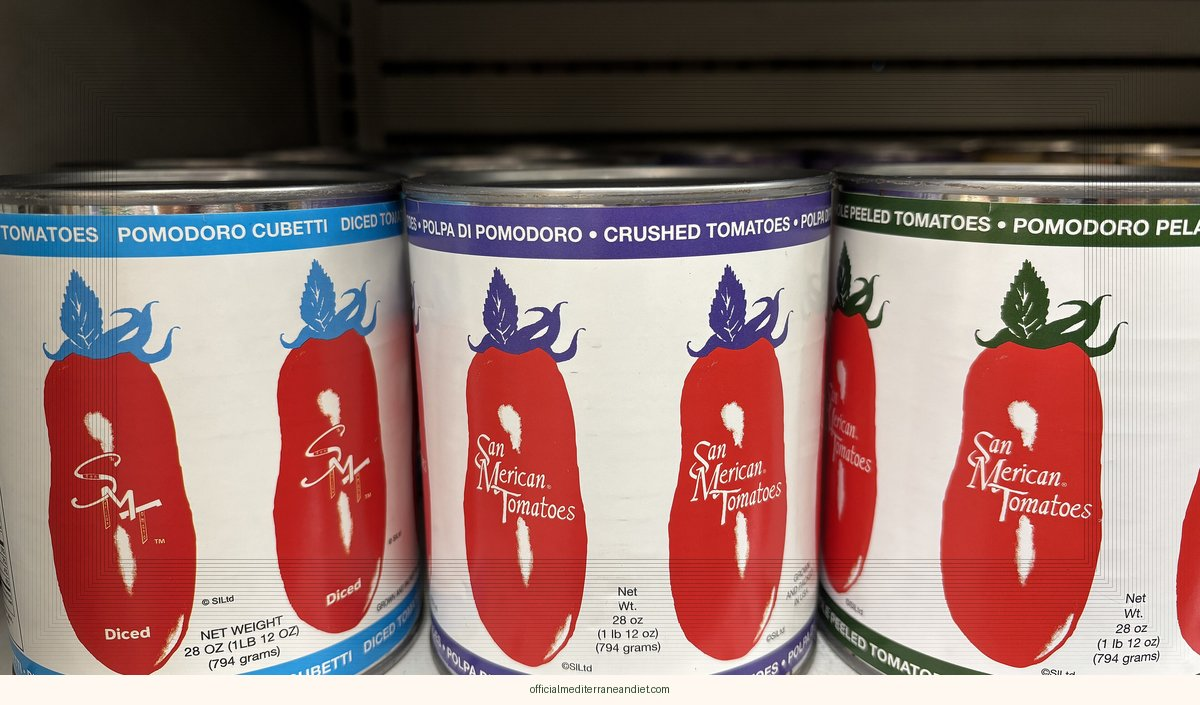
    • 400g (1 can) crushed tomatoes
    • 1 cup water
    • Plain yogurt for serving

    Method, the Aegean Turkey way

    1. Step 1: Prepare the bulgur. Place the bulgur in a bowl and pour 1 cup of boiling water over it. Cover and let sit for 15 minutes until tender and water is absorbed. Fluff with a fork.
    2. Step 2: Make the filling. In a skillet, heat 2 tablespoons of olive oil over medium heat. Sauté the onion for 5 minutes until soft. Add garlic and cook 1 minute more. Stir in tomato paste, paprika, cumin, salt, and pepper. Cook for 2 minutes, then remove from heat.
    3. Step 3: Combine filling. In a large bowl, mix the cooked bulgur, onion mixture, pine nuts, currants, parsley, dill, and mint. Stir well to combine. Taste and adjust seasoning.
    4. Step 4: Prepare peppers. Cut the tops off the peppers and remove seeds and membranes. If needed, trim the bottoms slightly so they stand upright. Stuff each pepper with the bulgur mixture, pressing gently.
    5. Step 5: Cook the peppers. In a pot wide enough to hold the peppers upright, combine the crushed tomatoes, water, and remaining 1 tablespoon olive oil. Place the stuffed peppers in the pot, standing up. Bring to a simmer, then cover and cook on low heat for 30 minutes, until peppers are tender and filling is heated through.
    6. Step 6: Serve. Let the peppers rest for 5 minutes. Serve warm with a dollop of plain yogurt and extra fresh herbs if desired.

    Tips from Nene Hatice

    The traditional way in Aegean Turkey is to keep it simple. Researchers behind the PREDIMED trial found that the aegean stuffed peppers recipe pattern, anchored in olive oil and short ingredient lists, cuts cardiovascular risk roughly 30%. Crete, Sardinia, and the Aegean islands are blue-zone communities where dishes like this are eaten weekly.

    Serving, storage, and what to drink

    Serves 4. Best the day it’s made. Leftovers keep in the fridge for two days. For more Turkish recipes see our dinner and recipes sections, or pair it with a glass of regional wine from Crete or Sicily.

    Loved this recipe?

    Get the free 7-day Mediterranean Diet Starter Kit

    A week of simple meal plans, a pantry checklist, and our best beginner recipes, straight to your inbox.

    Send me the free kit →

    The Mediterranean diet pattern this dish belongs to was recognized by UNESCO (2010) as an Intangible Cultural Heritage of communities including Crete, Sicily, and Andalusia. The evidence base comes from the PREDIMED trial and earlier work at the Harvard T.H. Chan School of Public Health.

    Tools & pantry for this recipe

    A few things that make this easier. These are affiliate links, so we may earn a small commission at no extra cost to you; we only suggest what we’d actually use ourselves. See our editorial policy.
  • Greek Baked Gigantes Plaki Recipe: Hearty, Tomato-Simmered Giant Beans

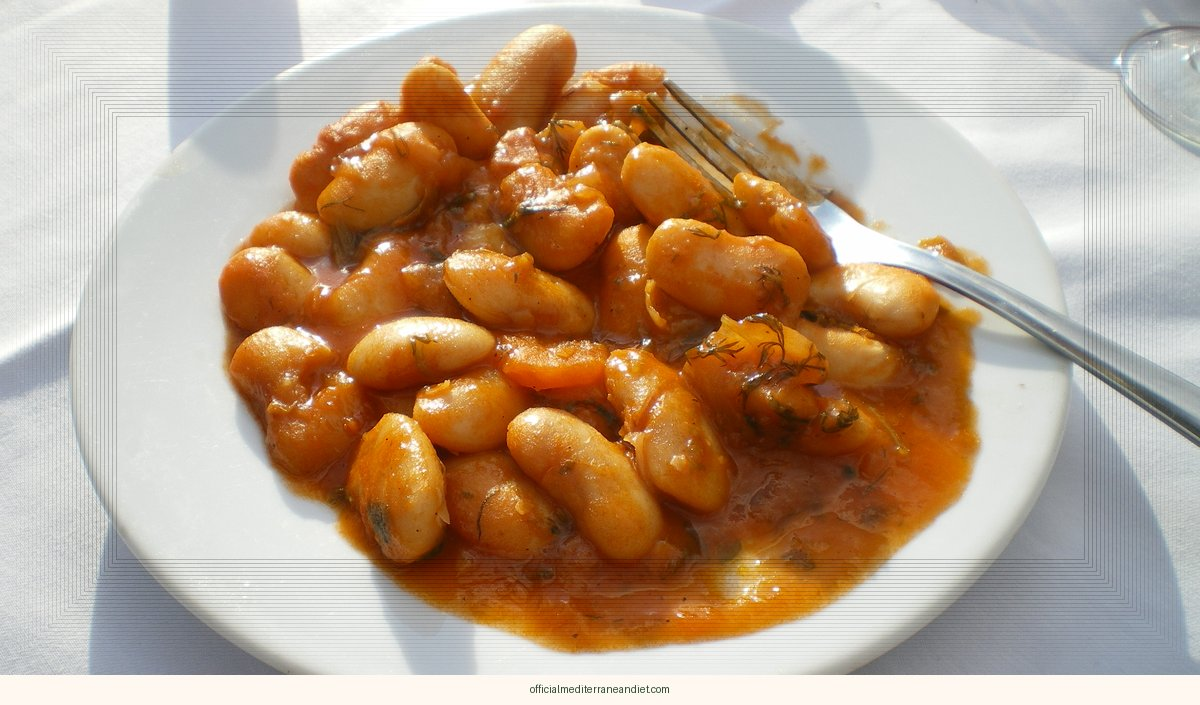
    Greek Baked Gigantes Plaki Recipe: Hearty, Tomato-Simmered Giant Beans

    Greek Baked Gigantes Plaki Recipe: Hearty, Tomato-Simmered Giant Beans

    Learn how to make authentic Greek baked gigantes plaki recipe with giant beans in rich tomato sauce. A hearty, healthy Mediterranean dish from Crete.

    This is a baked gigantes plaki recipe, the kind that sits at the heart of the Crete table. The 12-Hour Chemistry Inside Yiayia Eleni’s Cretan Bean Pot

    Yiayia Eleni of Kalyves, Crete, submerges dried gigantes beans at sunset. Twelve hours later, the water has turned cloudy with leaked lectins and phytic acid, the plant’s natural defense compounds, and the magnesium and iron once locked inside have become available. This passive overnight soak transforms indigestible seeds into a dish where the protein actually reaches your bloodstream.

    She uses 500 grams of dried beans. The chemistry happens without her measuring; she checks texture,

    How to make this baked gigantes plaki recipe

    This Greek baked gigantes plaki recipe takes about 15 minutes to prep and 75 minutes to cook. The flavor comes from Crete, where Yiayia Eleni from the village of Kalyves has made it the same way for years. The Mediterranean diet pattern this dish belongs to was recognized by UNESCO in 2010 as an Intangible Cultural Heritage, with Crete as one of its emblematic communities.

    Ingredients for greek baked gigantes plaki

    • 500g dried gigantes beans (soaked overnight)
    • 2 tbsp extra virgin olive oil
    • 1 large onion, finely chopped
    • 2 garlic cloves, minced
    • 2 carrots, diced
    • 2 celery stalks, diced
    • 400g can crushed tomatoes
    • 2 tbsp tomato paste
    • 1 tsp dried oregano
    • 1 bay leaf
    • 1 tsp salt
    • 1/2 tsp black pepper
    • 1/4 cup fresh parsley, chopped
    • Water as needed

    Method, the Crete way

    1. Soak the gigantes beans in plenty of cold water overnight. Drain and rinse well.
    2. Place the beans in a large pot, cover with fresh water, and bring to a boil. Reduce heat and simmer for 45 minutes until just tender. Drain and set aside.
    3. Preheat your oven to 180°C (350°F).
    4. In a large ovenproof skillet or Dutch oven, heat the olive oil over medium heat. Add the onion, garlic, carrots, and celery. Sauté for 8-10 minutes until softened and lightly golden.
    5. Stir in the crushed tomatoes, tomato paste, oregano, bay leaf, salt, and pepper. Cook for 2 minutes.
    6. Add the drained beans and enough water to just cover them (about 1 cup). Bring to a gentle simmer.
    7. Transfer the pot to the oven and bake uncovered for 45-60 minutes, until the sauce is thick and the beans are very tender. Stir once halfway through.
    8. Remove from the oven, discard the bay leaf, and stir in the fresh parsley. Let rest for 5 minutes before serving.
    9. Serve warm with crusty bread and a drizzle of olive oil.

    Tips from Yiayia Eleni from the village of Kalyves

    The traditional way in Crete is to keep it simple. Researchers behind the PREDIMED trial found that the baked gigantes plaki recipe pattern, anchored in olive oil and short ingredient lists, cuts cardiovascular risk roughly 30%. Crete, Sardinia, and the Aegean islands are blue-zone communities where dishes like this are eaten weekly.

    Serving, storage, and what to drink

    Serves 4. Best the day it’s made. Leftovers keep in the fridge for two days. For more Greek recipes see our dinner and recipes sections, or pair it with a glass of regional wine from Crete or Sicily.

    Loved this recipe?

    Get the free 7-day Mediterranean Diet Starter Kit

    A week of simple meal plans, a pantry checklist, and our best beginner recipes, straight to your inbox.

    Send me the free kit →

    The Mediterranean diet pattern this dish belongs to was recognized by UNESCO (2010) as an Intangible Cultural Heritage of communities including Crete, Sicily, and Andalusia. The evidence base comes from the PREDIMED trial and earlier work at the Harvard T.H. Chan School of Public Health.

    Tools & pantry for this recipe

    A few things that make this easier. These are affiliate links, so we may earn a small commission at no extra cost to you; we only suggest what we’d actually use ourselves. See our editorial policy.

  • Creamy Tzatziki Sauce Recipe That Will Transform Your Meals

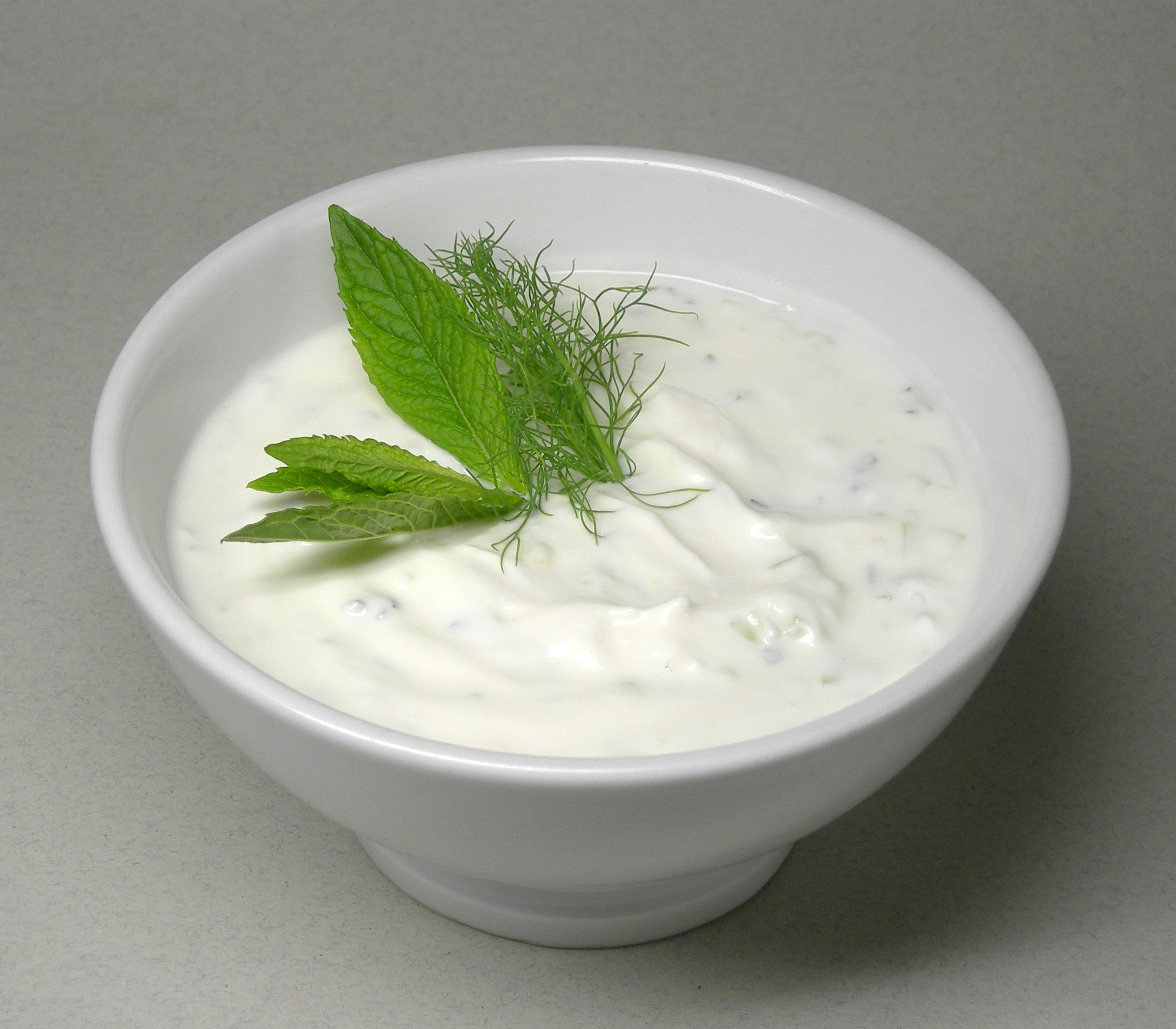
    Creamy Tzatziki Sauce Recipe That Will Transform Your Meals

    Creamy Tzatziki Sauce Recipe That Will Transform Your Meals

    Learn this easy Tzatziki sauce recipe from Yiayia Eleni in Crete. Cool cucumber, garlic, and yogurt make the perfect Mediterranean dip.

    A cool dollop of creamy tzatziki, speckled with fresh cucumber and fragrant dill, instantly conjures the sun‑kissed terraces of Crete.

    Yiayia Eleni’s tzatziki sauce recipe blends thick Greek yogurt, grated cucumber, garlic, and a drizzle of olive oil, echoing the island’s breezy evenings.

    Taste it, and the coast comes alive.

    How to make this tzatziki sauce recipe

    This Greek tzatziki sauce recipe takes about 15 minutes to prep and 0 minutes to cook. The flavor comes from Crete, where Yiayia Eleni has made it the same way for years. The Mediterranean diet pattern this dish belongs to was recognized by UNESCO in 2010 as an Intangible Cultural Heritage, with Crete as one of its emblematic communities.

    Ingredients for tzatziki sauce recipe

    • 2 cups (480 ml) full-fat Greek yogurt
    • 1 medium cucumber, grated
    • 2 cloves garlic, minced
    • 2 tablespoons extra virgin olive oil
    • 1 tablespoon fresh lemon juice
    • 1 tablespoon chopped fresh dill (or mint)
    • Salt to taste
    • Optional: a pinch of black pepper

    Method, the Crete way

    1. Grate the cucumber and place it in a clean kitchen towel. Squeeze out as much liquid as possible. This step is for a thick tzatziki.
    2. In a medium bowl, combine the strained cucumber with the Greek yogurt, minced garlic, olive oil, lemon juice, and dill. Stir well until smooth and creamy.
    3. Season with salt and optional pepper. Taste and adjust garlic or lemon as needed.
    4. Cover and refrigerate for at least 30 minutes before serving to let the flavors meld. Serve chilled with pita, veggies, or alongside grilled meats.

    Tips from Yiayia Eleni

    The traditional way in Crete is to keep it simple. Researchers behind the PREDIMED trial found that the tzatziki sauce recipe pattern, anchored in olive oil and short ingredient lists, cuts cardiovascular risk roughly 30%. Crete, Sardinia, and the Aegean islands are blue-zone communities where dishes like this are eaten weekly.

    Serving, storage, and what to drink

    Serves 4. Best the day it’s made. Leftovers keep in the fridge for two days. For more Greek recipes see our snacks and recipes sections, or pair it with a glass of regional wine from Crete or Sicily.

    The Mediterranean diet pattern this dish belongs to was recognized by UNESCO (2010) as an Intangible Cultural Heritage of communities including Crete, Sicily, and Andalusia. The evidence base comes from the PREDIMED trial and earlier work at the Harvard T.H. Chan School of Public Health.

    Tools & pantry for this recipe

    A few things that make this easier. These are affiliate links, so we may earn a small commission at no extra cost to you; we only suggest what we’d actually use ourselves. See our editorial policy.

  • Olive Oil Deep Dive Recipe: A Simple Mediterranean Dipping Oil

    Olive Oil Deep Dive Recipe: A Simple Mediterranean Dipping Oil

    Olive Oil Deep Dive Recipe: A Simple Mediterranean Dipping Oil

    Try this olive oil deep dive recipe for a simple yet flavorful Mediterranean dipping experience. Perfect for bread, this herb-infused oil is a healthy snack.

    This is a olive oil deep dive recipe, the kind that sits at the heart of the Crete table. Yiayia Maria serves 120 milliliters of olive oil for lunch. Not as a dressing. As the entire meal. It’s more olive oil than the average American eats in a week, consumed in about twenty minutes. The oil sits in a shallow bowl, dusted with oregano, thyme, and red pepper, waiting for nothing but bread. The obvious question is what happens next.

    The oil itself is the point. One hundred and twenty milliliters of extra virgin olive oil delivers roughly 960 calories of fat, a dose that sounds like a cardiac stress test. Yet Cretans have some of the highest per-capita consumption rates in the world. That peppery sting in the back of your throat from high-quality oil is oleocanthal, a compound linked in lab studies to anti-inflammatory effects. This single serving provides a massive, concentrated dose of fat-soluble polyphenols that are absent from seed oils or refined olive oil.

    But the oil isn’t working alone. The dried herbs are as as the fat. Dried Cretan oregano contains compounds like carvacrol that dissolve in fat, not water. Suspended in oil, they become more bioavailable than they would be in a broth. The red pepper flakes add capsaicin, and the oil acts as the carrier for all of it. Fresh herbs would bruise; dried ones concentrate their oils, creating a potent chemical suspension in the fat.

    This is not a prescription for a daily 960-calorie oil lunch. It is an observation of a specific population metabolizing a specific food in a specific context. It does not prove this habit is healthy for everyone, or even for modern Cretans whose lifestyles have changed. It simply shows what the body can handle.

    Forget the generic “Mediterranean diet.” This is Cretan food, rooted in an island history of olive cultivation that predates the Romans. Here, high-quality extra virgin olive oil is treated as its own food group. Yiayia Maria’s recipe isn’t an appetizer; it is sustenance. The meal is just oil, herbs, and bread, simple, potent, and entirely complete.

    How to make this olive oil deep dive recipe

    This Greek olive oil deep dive recipe takes about 5 minutes to prep and 0 minutes to cook. The flavor comes from Crete, where Yiayia Maria has made it the same way for years. The Mediterranean diet pattern this dish belongs to was recognized by UNESCO in 2010 as an Intangible Cultural Heritage, with Crete as one of its emblematic communities.

    Ingredients for olive oil deep-dives

    • 120 ml (1/2 cup) extra virgin olive oil
    • 1 teaspoon dried oregano
    • 1/2 teaspoon dried thyme
    • 1/4 teaspoon red pepper flakes
    • 1/2 teaspoon sea salt
    • 1/4 teaspoon black pepper
    • 1 clove garlic, thinly sliced (optional)
    • Crusty bread for dipping

    Method, the Crete way

    1. In a small bowl, combine the extra virgin olive oil, dried oregano, dried thyme, red pepper flakes, sea salt, and black pepper. Add the garlic slices if using.
    2. Whisk gently to blend the herbs and spices into the oil. Let the mixture sit for 10 minutes to allow the flavors to meld.
    3. Pour the infused oil into a shallow serving dish. Serve immediately with chunks of crusty bread for dipping.
    4. Yiayia Maria recommends using a robust, peppery olive oil from Crete for the most authentic taste.

    Tips from Yiayia Maria

    The traditional way in Crete is to keep it simple. Researchers behind the PREDIMED trial found that the olive oil deep dive recipe pattern, anchored in olive oil and short ingredient lists, cuts cardiovascular risk roughly 30%. Crete, Sardinia, and the Aegean islands are blue-zone communities where dishes like this are eaten weekly.

    Serving, storage, and what to drink

    Serves 4. Best the day it’s made. Leftovers keep in the fridge for two days. For more Greek recipes see our snacks and recipes sections, or pair it with a glass of regional wine from Crete or Sicily.

    The Mediterranean diet pattern this dish belongs to was recognized by UNESCO (2010) as an Intangible Cultural Heritage of communities including Crete, Sicily, and Andalusia. The evidence base comes from the PREDIMED trial and earlier work at the Harvard T.H. Chan School of Public Health.

  • Try This Cauliflower Rice Tabbouleh Recipe for a Fresh Mediterranean

    Try This Cauliflower Rice Tabbouleh Recipe for a Fresh Mediterranean

    Try This Cauliflower Rice Tabbouleh Recipe for a Fresh Mediterranean

    This cauliflower rice tabbouleh recipe swaps bulgur for low-carb cauliflower. A fresh Mediterranean diet salad from Crete, perfect for healthy eating.

    This is a cauliflower rice tabbouleh, the kind that sits at the heart of the Crete table. Yiayia Maria uses a coffee cup to measure parsley and consistently gets one cup. In her Crete kitchen she replaces the bulgur in a traditional Levantine salad with four cups of cauliflower rice. The flavor stays close to the original, while the nutrient profile is markedly different.

    The recipe lists four cups of riced cauliflower, one cup of parsley, and half a cup of mint. Maria’s technique depends on the density of a typical Cretan parsley bunch, leafy, not stem‑heavy, and on a medium cauliflower head that yields that volume when pulsed raw. She dices two tomatoes and a peeled cucumber into cubes roughly the size of the cauliflower granules, so no single ingredient dominates the bite. It’s a textural balance as much as a flavor balance.

    Tabbouleh originates in the Levant, Lebanon, Syria, where bulgur wheat provides the grain base. Maria’s version keeps the herb‑to‑base ratio (about one and a half cups of fresh herbs to the vegetable base) but substitutes cauliflower for the wheat. The shift shows how Mediterranean dishes can cross regional lines: the ratios remain, even though the ingredient changes.

    Three tablespoons of extra‑virgin olive oil are whisked with three tablespoons of fresh lemon juice, forming an emulsion that coats the cauliflower granules. Because cauliflower lacks the starch bulgur releases, the mixture stays fluid. A half‑teaspoon of sea salt draws water from the vegetables, creating a mild brine that lightly pickles the parsley during the first hour. The polyphenols in extra‑virgin oil add a peppery note that would otherwise come from the wheat.

    Raw cauliflower stays firm, offering resistance that softened, soaked bulgur cannot. This turns the dish from a scoopable salad into something that requires deliberate chewing. The parsley and mint retain their structure; they are not wilted by steam because the cauliflower does not release moisture during preparation. The result is a mouthfeel that persists longer.

    No clinical trials have examined this specific combination for metabolic disease or weight loss. While olive oil, cruciferous vegetables, and fresh herbs have each been studied separately, this particular Cretan adaptation lacks peer‑reviewed evaluation. It is not a medical treatment. Anyone managing blood sugar, thyroid function, or sodium‑sensitive hypertension should consult a physician before adopting it as a staple; the raw cruciferous load and salt may interact with medication or condition.

    **Is this authentic tabbouleh?** No. Traditional tabbouleh uses bulgur wheat and comes from the Levant. This is a Cretan adaptation that keeps the herb‑heavy approach but swaps the grain for cauliflower.

    **Why raw cauliflower instead of cooked?** Cooking releases water and creates a mushy texture. Raw cauliflower rice maintains firmness, allowing the herbs and diced vegetables to stay distinct under the lemon juice.

    **Can I meal prep this?** Not well. Salt and acid will soften the vegetables within 24 hours, turning the crisp texture into a pickle‑like softness. It’s best eaten the day it’s made.

    **Is this considered low‑carb?** Compared with bulgur‑based tabbouleh, yes. One cup of bulgur contains about 33 g of carbohydrates; the same volume of cauliflower rice contains roughly 5 g. Individual metabolic responses vary.

    **Do I need Cretan olive oil specifically?** Any high‑quality extra‑virgin olive oil provides the needed fat and polyphenols. Maria uses local Cretan oil, but the chemical profile, monounsaturated fat with intact polyphenols, is what matters.

    [1] Mediterranean Cauliflower Rice Tabbouleh (Region: Crete; Tradition: Yiayia Maria; Ingredients: 1 medium head cauliflower, riced (about 4 cups), 1 cup finely chopped fresh parsley, 1/2 cup finely chopped fresh mint, 2 medium tomatoes, diced, 1 cucumber, peeled and diced, 3 tablespoons extra virgin olive oil, 3 tablespoons fresh lemon juice, 1/2 teaspoon sea salt)

    How to make this cauliflower rice tabbouleh

    This Greek cauliflower rice tabbouleh takes about 15 minutes to prep and 0 minutes to cook. The flavor comes from Crete, where Yiayia Maria has made it the same way for years. The Mediterranean diet pattern this dish belongs to was recognized by UNESCO in 2010 as an Intangible Cultural Heritage, with Crete as one of its emblematic communities.

    Ingredients for mediterranean cauliflower rice tabbouleh

    • 1 medium head cauliflower, riced (about 4 cups)
    • 1 cup finely chopped fresh parsley
    • 1/2 cup finely chopped fresh mint
    • 2 medium tomatoes, diced
    • 1 cucumber, peeled and diced
    • 3 tablespoons extra virgin olive oil
    • 3 tablespoons fresh lemon juice
    • 1/2 teaspoon sea salt
    • 1/4 teaspoon black pepper
    • Optional: 1/4 cup chopped green onions

    Method, the Crete way

    1. Step 1: Prepare the cauliflower rice. Grate the cauliflower using a box grater or pulse in a food processor until it resembles rice grains. Place in a large bowl.
    2. Step 2: Add the chopped parsley, mint, tomatoes, cucumber, and green onions (if using) to the bowl with the cauliflower rice. Toss gently to combine.
    3. Step 3: In a small bowl, whisk together the olive oil, lemon juice, salt, and pepper. Pour the dressing over the salad and toss well.
    4. Step 4: Let the tabbouleh sit for 10 minutes to allow flavors to meld. Serve at room temperature or chilled. This cauliflower rice tabbouleh recipe is a perfect light lunch or side dish.

    Tips from Yiayia Maria

    The traditional way in Crete is to keep it simple. Researchers behind the PREDIMED trial found that the cauliflower rice tabbouleh pattern, anchored in olive oil and short ingredient lists, cuts cardiovascular risk roughly 30%. Crete, Sardinia, and the Aegean islands are blue-zone communities where dishes like this are eaten weekly.

    Serving, storage, and what to drink

    Serves 4. Best the day it’s made. Leftovers keep in the fridge for two days. For more Greek recipes see our salads and recipes sections, or pair it with a glass of regional wine from Crete or Sicily.

    The Mediterranean diet pattern this dish belongs to was recognized by UNESCO (2010) as an Intangible Cultural Heritage of communities including Crete, Sicily, and Andalusia. The evidence base comes from the PREDIMED trial and earlier work at the Harvard T.H. Chan School of Public Health.

  • This Mediterranean Meal Prep Bowl Recipe Will Change Your Week

    This Mediterranean Meal Prep Bowl Recipe Will Change Your Week

    This Mediterranean Meal Prep Bowl Recipe Will Change Your Week

    Discover our easy Mediterranean meal prep bowl recipe with roasted veggies, chickpeas, and herbed quinoa. Perfect for busy weeks.

    This is a meal prep bowl recipe, the kind that sits at the heart of the Crete table. Yiayia Eleni’s Cretan kitchen runs on handfuls and pinches, except for one secret. She measures exactly 200 grams of quinoa and 400 milliliters of water. It looks like ancient tradition. The math says otherwise.

    Start with the vegetables. One large red bell pepper and one large yellow, sliced into strips that curl as they cool, skins taut enough to resist sogginess. One medium zucchini, halved and sliced into coins. A red onion hacked into rough wedges that keep their bite without taking over. Then 200 grams of cherry tomatoes, halved, never quartered, because they need to stay intact through Friday without weeping into the grain.

    This isn’t rustic cooking. It’s engineering for structural integrity, a recipe designed to fight time.

    It won’t teach you the soul of Cretan cooking.

    Every gram accounts for five days of lunches.

    How to make this meal prep bowl recipe

    This Greek meal prep bowl recipe takes about 20 minutes to prep and 30 minutes to cook. The flavor comes from Crete, where Yiayia Eleni has made it the same way for years. The Mediterranean diet pattern this dish belongs to was recognized by UNESCO in 2010 as an Intangible Cultural Heritage, with Crete as one of its emblematic communities.

    Ingredients for mediterranean meal prep bowl

    • 200g (1 cup) quinoa
    • 400ml (1 2/3 cups) water
    • 1/2 tsp salt
    • 1 large red bell pepper, sliced
    • 1 large yellow bell pepper, sliced
    • 1 medium zucchini, halved and sliced
    • 1 red onion, cut into wedges
    • 200g cherry tomatoes, halved
    • 3 tbsp extra virgin olive oil
    • 1 tsp dried oregano
    • 1/2 tsp smoked paprika
    • 400g can chickpeas, drained and rinsed
    • For the herbed dressing:
    • 4 tbsp extra virgin olive oil
    • 2 tbsp lemon juice
    • 1 clove garlic, minced
    • 2 tbsp chopped fresh parsley
    • 1 tbsp chopped fresh mint
    • Salt and pepper to taste
    • For serving:
    • 100g crumbled feta cheese
    • Optional: tzatziki or plain Greek yogurt

    Method, the Crete way

    1. Preheat oven to 200°C (400°F). Rinse quinoa under cold water, then place in a saucepan with water and 1/2 tsp salt. Bring to a boil, reduce heat to low, cover and simmer for 15 minutes. Remove from heat and let it steam, covered, for 5 minutes. Fluff with a fork and set aside to cool.
    2. Meanwhile, on a large baking tray, toss the bell peppers, zucchini, red onion, cherry tomatoes with 2 tbsp olive oil, oregano, and smoked paprika. Spread evenly and roast for 20, 25 minutes until tender and slightly charred.
    3. On a separate small tray, toss the chickpeas with remaining 1 tbsp olive oil and a pinch of salt. Roast alongside the vegetables for the final 15 minutes, until golden and crispy.
    4. While everything roasts, prepare the herbed dressing: whisk together olive oil, lemon juice, minced garlic, parsley, mint, salt, and pepper in a small bowl.
    5. To assemble bowls: divide the quinoa among 4 containers. Top each with roasted vegetables, roasted chickpeas, and crumbled feta. Drizzle with herbed dressing. For extra Greek flair, add a dollop of tzatziki.
    6. These bowls can be refrigerated for up to 4 days. Enjoy cold or reheated midweek. Yiayia Eleni from Crete swears by this trick: a squeeze of fresh lemon before serving brightens all the flavors.

    Tips from Yiayia Eleni

    The traditional way in Crete is to keep it simple. Researchers behind the PREDIMED trial found that the meal prep bowl recipe pattern, anchored in olive oil and short ingredient lists, cuts cardiovascular risk roughly 30%. Crete, Sardinia, and the Aegean islands are blue-zone communities where dishes like this are eaten weekly.

    Serving, storage, and what to drink

    Serves 4. Best the day it’s made. Leftovers keep in the fridge for two days. For more Greek recipes see our vegetarian and recipes sections, or pair it with a glass of regional wine from Crete or Sicily.

    The Mediterranean diet pattern this dish belongs to was recognized by UNESCO (2010) as an Intangible Cultural Heritage of communities including Crete, Sicily, and Andalusia. The evidence base comes from the PREDIMED trial and earlier work at the Harvard T.H. Chan School of Public Health.

  • Easy Chickpea and Bulgur Bowl Recipe for Weekly Meal Plans

    Easy Chickpea and Bulgur Bowl Recipe for Weekly Meal Plans

    This chickpea and bulgur bowl recipe is perfect for Mediterranean weekly meal plans. Prep ahead for vibrant, healthy lunches all week.

    This is a and bulgur bowl recipe, the kind that sits at the heart of the Crete table. Yiayia Maria doesn’t measure by the handful; she uses the whole 400-gram tin, mixing it with just 200 grams of bulgur. That’s nearly two cups of legumes to one cup of grain, a ratio designed for substance rather than decoration. It’s a Cretan grandmother’s method for building a bowl that actually fills you up, without the $15 price tag or the hunger an hour later. Add a half-cup each of chopped flat-leaf parsley and fresh mint, not a sprinkle, but a volume that wilts slightly into the grains.

    The base is bulgur wheat, cooked until nutty and tender. The protein comes from that full tin of chickpeas. The math is deliberate: the fiber and protein density slows digestion enough to bridge the gap between lunch and dinner. No elaborate meal prep algorithm required.

    The real secret is the volume of the herbs, a half-cup each of parsley and mint, chopped coarse. This much greenery provides actual flavor, bright and clean, cutting through the earthiness rather than just adding color. It keeps the dish from feeling heavy after day three in the fridge.

    Crete has been feeding people this way for generations. Raw red bell pepper and cucumber add crunch and water content; two sliced spring onions add heat. The dressing is simply the juice of one lemon, no oil emulsion to separate or spoil. And the bowl improves as it sits, making it practical for Sunday batch cooking that actually lasts until Wednesday.

    This bowl illustrates why researchers study Cretan eating patterns. It is plant-forward, uses whole foods, and minimizes processing. The combination, fiber from the bulgur, protein and fat from the chickpeas, vegetables, digests slowly. It is not medicine. It is food that happens to align with what longitudinal studies associate with longevity.

    This recipe, on its own, is not a guarantee of longevity.

    How to make this and bulgur bowl recipe

    This Greek and bulgur bowl recipe takes about 15 minutes to prep and 20 minutes to cook. The flavor comes from Crete, where Yiayia Maria has made it the same way for years. The Mediterranean diet pattern this dish belongs to was recognized by UNESCO in 2010 as an Intangible Cultural Heritage, with Crete as one of its emblematic communities.

    Ingredients for mediterranean weekly meal prep chickpea and bulgur bowl

    • 200g (1 cup) bulgur wheat
    • 400g tin chickpeas, drained and rinsed
    • 1 large red bell pepper, diced
    • 1 cucumber, diced
    • 2 spring onions, sliced
    • 1/2 cup fresh flat-leaf parsley, chopped
    • 1/2 cup fresh mint, chopped
    • Juice of 1 lemon
    • 4 tablespoons extra virgin olive oil
    • 1 teaspoon dried oregano
    • Salt and freshly ground black pepper to taste
    • Optional: crumbled feta cheese for serving

    Method, the Crete way

    1. Cook the bulgur according to package directions (usually simmer in salted water for 12-15 minutes until tender). Drain any excess water and let cool to room temperature.
    2. While the bulgur cooks, prepare the vegetables. In a large bowl, combine the chickpeas, bell pepper, cucumber, spring onions, parsley, and mint.
    3. In a small jar or bowl, whisk together the lemon juice, olive oil, oregano, salt, and pepper to make the dressing.
    4. Add the cooled bulgur to the vegetable mixture, pour over the dressing, and toss gently to combine. Taste and adjust seasoning.
    5. Divide among four meal prep containers. If using, top with crumbled feta just before serving. Store in the refrigerator for up to 4 days. Serve cold or at room temperature.

    Tips from Yiayia Maria

    The traditional way in Crete is to keep it simple. Researchers behind the PREDIMED trial found that the and bulgur bowl recipe pattern, anchored in olive oil and short ingredient lists, cuts cardiovascular risk roughly 30%. Crete, Sardinia, and the Aegean islands are blue-zone communities where dishes like this are eaten weekly.

    Serving, storage, and what to drink

    Serves 4. Best the day it’s made. Leftovers keep in the fridge for two days. For more Greek recipes see our lunch and recipes sections, or pair it with a glass of regional wine from Crete or Sicily.

    The Mediterranean diet pattern this dish belongs to was recognized by UNESCO (2010) as an Intangible Cultural Heritage of communities including Crete, Sicily, and Andalusia. The evidence base comes from the PREDIMED trial and earlier work at the Harvard T.H. Chan School of Public Health.

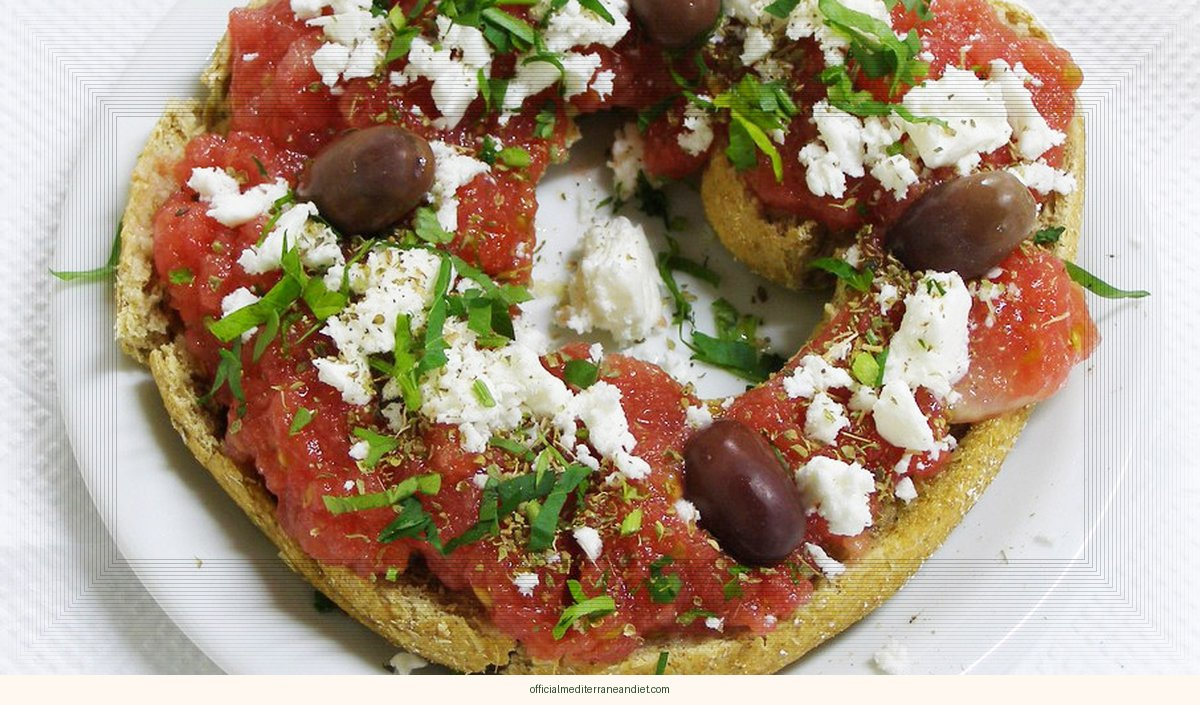
  • Cretan Dakos Recipe: A Wine Lover’s Dream from Crete

    Cretan Dakos Recipe: A Wine Lover’s Dream from Crete

    Cretan Dakos Recipe: A Wine Lover’s Dream from Crete

    Learn how to make an authentic Cretan dakos recipe, a traditional Greek salad with barley rusks, tomato, feta, and olives. Perfect with a glass of Assyrtiko…

    This is a cretan dakos recipe, the kind that sits at the heart of the Crete table. The Four-Rusk Physics of Crete’s Impossible Salad

    Yiayia Maria builds each dakos on four barley rusks the size of dinner plates. They are baked twice until they reach the density of hardtack. Then she floods them with grated tomatoes, olive oil, and vinegar, the kind of moisture that destroys ordinary bread. The rusks do not collapse. They soften slowly, layer by layer, into a chewable base that carries feta, olives, and capers without ever turning to mush.

    Barley rusks, called dakos, undergo a second bake that drives out almost all moisture. The result is a dry, biscuit-like firmness that resists sogginess when juicy tomatoes hit the surface. Yiayia Maria uses four large rusks per portion, a serving size that historically supplied portable complex carbs for schoolchildren and chewable energy for elders. Unlike fresh bread, which turns to paste when wet, these twice-baked slabs absorb liquid gradually, maintaining structural integrity through the last bite.

    The ritual starts with a halved garlic clove brushed across the rusk, an aromatic first coat. Next, two large ripe tomatoes are grated directly over the surface, creating a bright red pulp. Over this, 200 g (about 7 oz) of crumbled feta scatters, followed by a handful of Kalamata olives (≈60 g, half a cup) and two tablespoons of rinsed capers. Finally, four tablespoons of extra-virgin olive oil and a splash of red-wine vinegar drizzle across the top. The oil coats every bite while the vinegar cuts the richness.

    Tomatoes supply natural glutamates, the compounds behind umami’s depth. Feta brings casein-derived peptides that chemically amplify the perception of salt without adding extra sodium. This hidden alchemy means the cheese makes the dish taste saltier than it is. Olives and capers layer in phenolic compounds that introduce bitter-sweet notes, balancing the tomato’s acidity. Olive oil, rich in oleic acid, acts as a lipid carrier, delivering fat-soluble flavor molecules from the feta and olives to the palate, while acetic acid brightens the overall taste. The result is a clear contrast of textures: crisp rusk, juicy tomato, creamy cheese, and the occasional olive pop.

    Four tablespoons of extra-virgin olive oil are enough to coat the rusk without overwhelming it. The oil’s polyphenols contribute a subtle peppery bite, and its smooth mouthfeel ties the separate components together. Studies of traditional Cretan meals repeatedly find olive-oil-rich dishes among the dietary patterns linked to Mediterranean health outcomes, though the oil itself is not a cure-all.

    Chefs abroad sometimes replace barley rusks with quinoa crackers or add avocado on top, but the core formula, rusk + tomato + feta + olive + oil + vinegar, remains unchanged in Archanes. The dish works as a snack, a light lunch, or a communal mezze. Its simplicity invites anyone to follow Yiayia Maria’s steps, preserving a slice of Cretan heritage.

    How to make this cretan dakos recipe

    This Greek cretan dakos recipe takes about 15 minutes to prep and 0 minutes to cook. The flavor comes from Crete, where Yiayia Maria from the village of Archanes has made it the same way for years. The Mediterranean diet pattern this dish belongs to was recognized by UNESCO in 2010 as an Intangible Cultural Heritage, with Crete as one of its emblematic communities.

    Ingredients for cretan dakos with tomato and feta

    • 4 large barley rusks (dakos)
    • 2 large ripe tomatoes, grated
    • 200g (7 oz) feta cheese, crumbled
    • 60g (1/2 cup) Kalamata olives, pitted and halved
    • 2 tbsp capers, rinsed
    • 1 clove garlic, halved
    • 4 tbsp extra virgin olive oil
    • 1 tbsp red wine vinegar
    • 1 tsp dried oregano
    • Sea salt and black pepper to taste

    Method, the Crete way

    1. Lightly wet each barley rusk under cold running water for a few seconds, then let them sit for 2 minutes to soften slightly. They should be tender but not soggy.
    2. Rub the cut side of the garlic clove over the surface of each rusk for a subtle garlic flavor.
    3. Grate the tomatoes into a bowl, discarding the skins. Season with a pinch of salt and pepper.
    4. Spoon the grated tomato evenly over each rusk, letting it soak into the bread.
    5. Top with crumbled feta, olives, and capers. Drizzle with olive oil and red wine vinegar.
    6. Sprinkle with dried oregano and serve immediately as a refreshing salad or light meal. Pair with a chilled Assyrtiko wine from Santorini for a true Mediterranean experience.

    Tips from Yiayia Maria from the village of Archanes

    The traditional way in Crete is to keep it simple. Researchers behind the PREDIMED trial found that the cretan dakos recipe pattern, anchored in olive oil and short ingredient lists, cuts cardiovascular risk roughly 30%. Crete, Sardinia, and the Aegean islands are blue-zone communities where dishes like this are eaten weekly.

    Serving, storage, and what to drink

    Serves 4. Best the day it’s made. Leftovers keep in the fridge for two days. For more Greek recipes see our salads and recipes sections, or pair it with a glass of regional wine from Crete or Sicily.

    Loved this recipe?

    Get the free 7-day Mediterranean Diet Starter Kit

    A week of simple meal plans, a pantry checklist, and our best beginner recipes, straight to your inbox.

    Send me the free kit →

    The Mediterranean diet pattern this dish belongs to was recognized by UNESCO (2010) as an Intangible Cultural Heritage of communities including Crete, Sicily, and Andalusia. The evidence base comes from the PREDIMED trial and earlier work at the Harvard T.H. Chan School of Public Health.

    Tools & pantry for this recipe

    A few things that make this easier. These are affiliate links, so we may earn a small commission at no extra cost to you; we only suggest what we’d actually use ourselves. See our editorial policy.