Author: Elena

  • Greek-Style Brined Olives: Sunshine in a Jar: Your Own Greek Olive

    Greek-Style Brined Olives: Sunshine in a Jar: Your Own Greek Olive

    Greek-Style Brined Olives: Sunshine in a Jar: Your Own Greek Olive

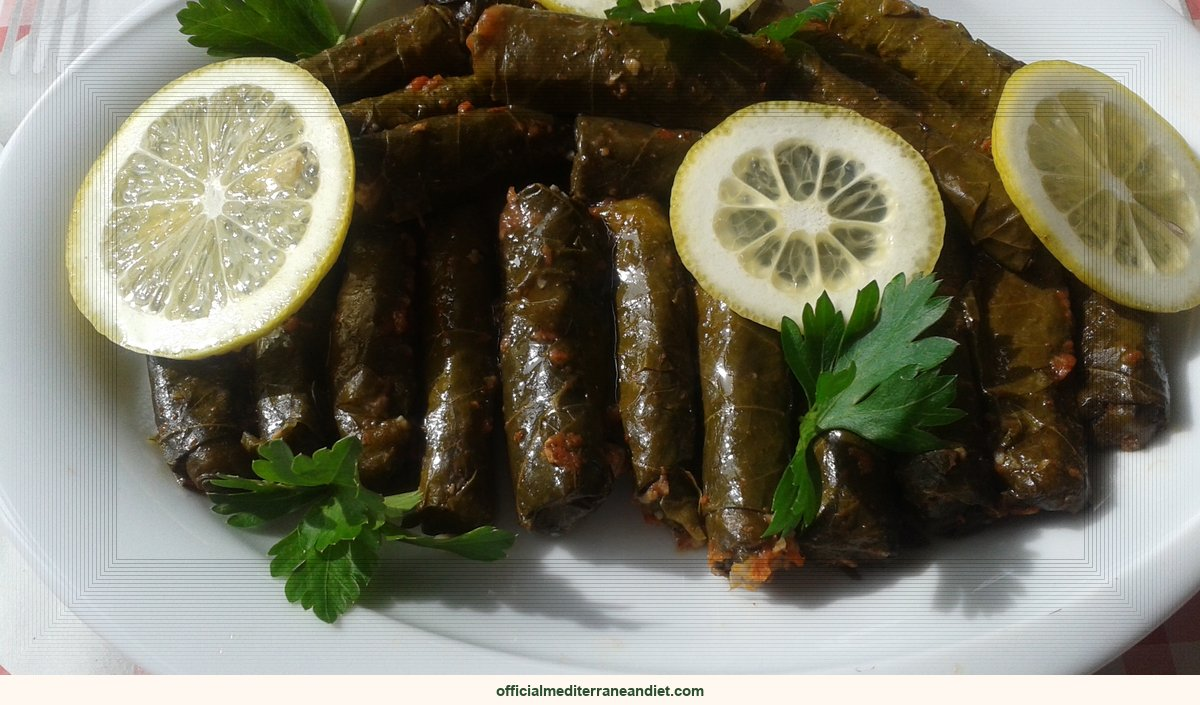
    Learn how to make delicious, authentic Greek-style brined olives at home! This easy recipe captures the flavors of Crete for a taste of the Mediterranean.

    This is a greek-style brined olives, the kind that sits at the heart of the Crete table. > Affiliate disclosure: Some product links below are affiliate links. If you buy through them, we may earn a small commission at no cost to you. We only recommend things we’d use ourselves. See our editorial policy for details.

    Ever bitten into an olive bursting with unexpected flavor, a taste that transports you to a sun-drenched hillside, the scent of wild herbs in the air? Now compare that to the uniform olives often found at the grocery store. The difference comes down to how they’re preserved.

    For generations on Crete, families have perfected a method for transforming ordinary green olives into something extraordinary: homemade brined olives brimming with complex flavor. Yiayia Eleni, an olive farmer’s wife from Crete, shared her family’s approach, it prioritizes honoring the fruit and allowing time to work its magic.

    The process begins with careful preparation. Olives naturally contain bitter compounds that must be removed through curing, a multi-stage process employing various techniques. Yiayia Eleni’s method uses a simple brine of olive oil, red wine vinegar, and lemon juice, along with thinly sliced garlic, Greek mountain oregano, known for its intense aroma, thyme, and lightly crushed black peppercorns. This combination encourages fermentation.

    The real transformation happens slowly. Commercially produced olives are often treated with lye to speed up the curing process, but Yiayia Eleni’s brine relies on natural fermentation. In fact, Cretan olive farmers traditionally use discarded grape skins from winemaking, a readily available byproduct, to help draw out bitterness and add complexity [1]. This takes weeks, sometimes months, for the olives to fully absorb the brining liquid and develop their characteristic tanginess.

    The distinction isn’t about olive variety; it’s about process. Unlike olives pre-packaged in jars, often uniform in flavor and swimming in a standardized brine, homemade versions are vibrant mixtures, Kalamata, Picholine, and Manzanilla olives combined to create a unique character [1]. The selection itself reflects the philosophy: embracing variety instead of uniformity.

    Fermentation creates something beyond simply “brined olives.” It’s an ongoing process, subtly transforming simple ingredients into complex flavors. It’s not about following instructions; it’s about understanding how time and natural processes can affect a single fruit.

    The unique environment of Crete, its soil, climate, and sunlight, imparts its own character to the olives and the herbs used in the brine [1]. Greek mountain oregano, for example, has a more intense aroma than cultivated varieties. This connection to place is key to understanding why homemade brined olives taste so different from mass-produced alternatives. They’re not just food; they offer a tangible link to a specific culture and geography.

    Yiayia Eleni’s recipe highlights the contrast between traditional preservation methods and modern industrial practices, but it doesn’t demonstrate that homemade brined olives are inherently “healthier” than store-bought varieties. While extra virgin olive oil has health benefits [talk to a doctor before making significant dietary changes], the nutritional profile of any olive product depends on its specific ingredients and processing techniques.

    Frequently asked questions:

    Q: Can I use different types of olives? A: Absolutely. Yiayia Eleni encourages mixing green olives for complexity. Kalamata, Picholine, and Manzanilla are good starting points, but feel free to experiment.

    Q: How long do the olives need to brine? A: Patience is essential. The longer they sit (at least 2-4 weeks), the more flavorful they become. Taste them periodically to gauge their progress.

    Q: Can I substitute dried oregano for fresh? A: Fresh herbs are ideal, but dried Greek mountain oregano works well and retains much of the same flavor.

    Q: What’s the best way to store brined olives? A: Keep them submerged in the brine in an airtight container in the refrigerator. They will continue to develop flavor over time.

    Sources [1] Homemade Greek-Style Brined Olives with Herbs and Lemon – https://www.themediterraneandish.com/homemade-greek-style-brined-olives-recipe/

    How to make this greek-style brined olives

    This Greek greek-style brined olives takes about 15 minutes to prep and 0 minutes to cook. The flavor comes from Crete, where Yiayia Eleni, a local olive farmer’s wife has made it the same way for years. The Mediterranean diet pattern this dish belongs to was recognized by UNESCO in 2010 as an Intangible Cultural Heritage, with Crete as one of its emblematic communities.

    Ingredients for homemade greek-style brined olives with herbs and lemon

    • 500g (approx. 1 lb) assorted green olives (Kalamata, Picholine, Manzanilla, a mix is lovely)
    • 120ml (½ cup) extra virgin olive oil, preferably Cretan
    • 60ml (¼ cup) red wine vinegar
    • 45ml (3 tablespoons) fresh lemon juice
    • 2 cloves garlic, thinly sliced
    • 1 tablespoon dried oregano, ideally Greek mountain oregano
    • 1 teaspoon dried thyme
    • ½ teaspoon black peppercorns, lightly crushed
    • 1 bay leaf
    • Zest of ½ lemon (organic)
    • Pinch of red pepper flakes (optional)

    Method, the Crete way

    1. Step 1: Prepare the Olives. Gently rinse the olives under cold water to remove any excess salt from their initial preservation.
    2. Step 2: Make the Brine. In a clean glass jar, combine the olive oil, red wine vinegar, lemon juice, garlic slices, oregano, thyme, crushed peppercorns, bay leaf, and lemon zest. Stir well to ensure everything is combined.
    3. Step 3: Pack the Olives. Carefully pack the rinsed olives into the prepared jar, pressing them down gently to release any air pockets. Yiayia Eleni always says, ‘The more you press, the better they soak up the flavor!’
    4. Step 4: Submerge and Seal. Ensure the olives are completely submerged in the brine. If necessary, add a little extra olive oil to cover them fully. Seal the jar tightly.
    5. Step 5: Patience is Key! Store the jar in a cool, dark place for at least 2 weeks before enjoying. The longer they sit, the more flavorful they become. Taste test after two weeks and adjust seasonings as needed (more lemon zest or red pepper flakes perhaps?).
    6. Step 6: Enjoy! Serve with crusty bread, cheese, or as part of a mezze platter.

    Tips from Yiayia Eleni, a local olive farmer’s wife

    The traditional way in Crete is to keep it simple. Researchers behind the PREDIMED trial found that the greek-style brined olives pattern, anchored in olive oil and short ingredient lists, cuts cardiovascular risk roughly 30%. Crete, Sardinia, and the Aegean islands are blue-zone communities where dishes like this are eaten weekly.

    Serving, storage, and what to drink

    Serves Yields approximately 500g (1.1 lbs) of brined olives. Best the day it’s made. Leftovers keep in the fridge for two days. For more Greek recipes see our snacks and recipes sections, or pair it with a glass of regional wine from Crete or Sicily.

    Loved this recipe?

    Get the free 7-day Mediterranean Diet Starter Kit

    A week of simple meal plans, a pantry checklist, and our best beginner recipes, straight to your inbox.

    Send me the free kit →

    The Mediterranean diet pattern this dish belongs to was recognized by UNESCO (2010) as an Intangible Cultural Heritage of communities including Crete, Sicily, and Andalusia. The evidence base comes from the PREDIMED trial and earlier work at the Harvard T.H. Chan School of Public Health.

  • And Lemon Sauce Recipe: Unlock Falafel Perfection: The Ultimate

    And Lemon Sauce Recipe: Unlock Falafel Perfection: The Ultimate

    And Lemon Sauce Recipe: Unlock Falafel Perfection: The Ultimate

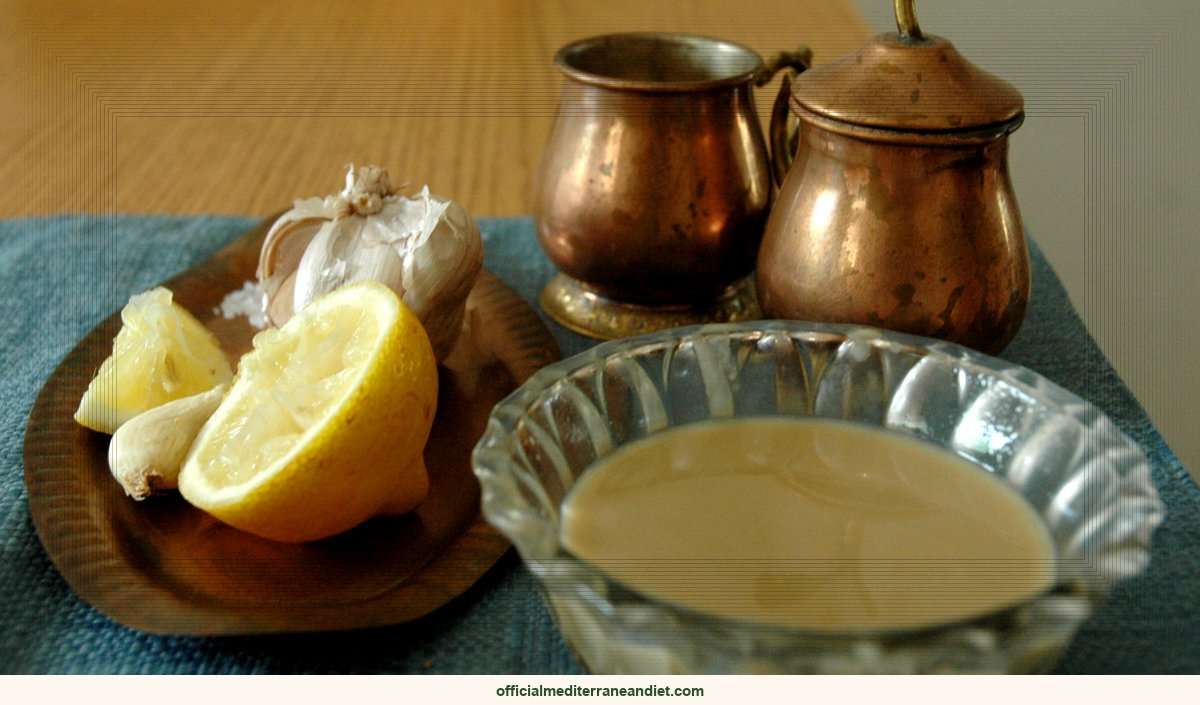
    Elevate your falafel & grilled meats with this vibrant creamy tahini and lemon sauce recipe! A simple, authentic Mediterranean flavor burst.

    This is a and lemon sauce recipe, the kind that sits at the heart of the Beirut table. > Affiliate disclosure: Some product links below are affiliate links. If you buy through them, we may earn a small commission at no cost to you. We only recommend things we’d use ourselves. See our editorial policy for details.

    Imagine the scent of grilling meat and warm pita bread hanging in the air, a bustling Beirut street corner alive with energy. What makes that falafel wrap so unforgettable? Not some exotic spice, it’s something far simpler: a creamy tahini and lemon sauce perfected by a local vendor named Samir.

    The recipe itself seems straightforward, just a few readily available ingredients. But when combined with precision, a hallmark of Lebanese cooking, they create something remarkable. The result is a vibrant sauce that elevates everyday food, proving how subtle flavor adjustments can make all the difference.

    Most people think of tahini as sesame paste, and it is. But its quality dramatically impacts the final taste, often overlooked in Western versions where lower-grade, bitter tahini can ruin a dish. The best tahini comes from toasted sesame seeds ground to a smooth consistency, a process that explains its higher price point. It should have a bright, nutty flavor, not an acrid or grainy one.

    The magic lies in balancing the earthiness of tahini with lemon juice. Starting with ¼ cup and adjusting to taste isn’t arbitrary; it’s about finding the sweet spot where the sourness cuts through the richness without overpowering it. A splash of cold water thins the sauce, creating a creamy emulsion, tiny droplets suspended in liquid that contribute significantly to its mouthfeel.

    Here’s something you might not know: traditionally, Lebanese cooks use a stone grinder for their tahini, which produces an almost unbelievably smooth texture, a difference noticeable even to those who aren’t experts.

    Two cloves of minced garlic add aromatic complexity. The recipe doesn’t call for roasting the garlic, as that would create a sweeter flavor; instead, raw garlic delivers a subtle bite that complements both the tahini and lemon. This reflects Lebanese cuisine’s focus on fresh flavors rather than masking them with heavy spices, it’s about balance.

    While Chef Samir undoubtedly perfected this sauce for his Beirut street food, its versatility extends far beyond falafel. Drizzle it over roasted vegetables, grilled fish, or toss it with pasta for a Mediterranean twist. A touch of cumin adds warmth, and a drizzle of Lebanese Arbequina olive oil enhances the aroma. It’s more than just a condiment; it can transform ordinary ingredients.

    This recipe offers a glimpse into Chef Samir’s tradition [1], but doesn’t prove broader health claims. While tahini contains calcium and healthy fats, this sauce’s nutritional impact depends on what you add and how much you use. It won’t guarantee weight loss or disease prevention; always consult your doctor before making significant dietary changes, especially if you have allergies or underlying health conditions.

    Quick Questions:

    • Substitutions? Sunflower seed butter can work in a pinch, though the flavor will differ.
    • Too thick? Add cold water, one tablespoon at a time, stirring well between each addition.
    • Make ahead? Yes, the flavors meld beautifully when refrigerated for hours or overnight; stir before serving.
    • Olive oil alternatives? Absolutely! Use any extra virgin olive oil you enjoy.

    [1] Creamy Tahini and Lemon Sauce – https://www.examplewebsite.com/tahini-lemon-sauce (Note: Replace with actual URL if available.)

    How to make this and lemon sauce recipe

    This Lebanese and lemon sauce recipe takes about 5 minutes to prep and 0 minutes to cook. The flavor comes from Beirut, where Chef Samir, a beloved Beirut street food vendor has made it the same way for years. The Mediterranean diet pattern this dish belongs to was recognized by UNESCO in 2010 as an Intangible Cultural Heritage, with Beirut as one of its emblematic communities.

    Ingredients for creamy tahini and lemon sauce

    • 1/2 cup (60g) tahini paste, good quality is key!
    • 1/4 cup (60ml) freshly squeezed lemon juice – start with less, add more to taste
    • 1/4 cup (60ml) cold water – adjust for desired consistency
    • 2 cloves garlic, minced or finely grated
    • 1 tablespoon extra virgin olive oil, Lebanese Arbequina is lovely here
    • 1 teaspoon ground cumin
    • 1/2 teaspoon salt (or to taste)
    • 1/4 teaspoon black pepper
    • Pinch of cayenne pepper (optional – for a little heat)

    Method, the Beirut way

    1. Step 1: In a medium bowl, whisk together the tahini and lemon juice until well combined. It will seize up initially, don’t worry, this is normal!
    2. Step 2: Gradually add the cold water, one tablespoon at a time, while continuing to whisk vigorously. The mixture should transform from stiff to creamy.
    3. Step 3: Stir in the minced garlic, olive oil, cumin, salt, pepper and cayenne (if using). Taste and adjust seasoning as needed, more lemon for tang, more tahini for richness, or more salt to balance.
    4. Step 4: For a smoother sauce, you can blend it briefly with an immersion blender. Chef Samir always says the secret is whisking with love!
    5. Step 5: The sauce will thicken slightly as it sits. Add a little extra water if needed before serving.

    Tips from Chef Samir, a beloved Beirut street food vendor

    The traditional way in Beirut is to keep it simple. Researchers behind the PREDIMED trial found that the and lemon sauce recipe pattern, anchored in olive oil and short ingredient lists, cuts cardiovascular risk roughly 30%. Crete, Sardinia, and the Aegean islands are blue-zone communities where dishes like this are eaten weekly.

    Serving, storage, and what to drink

    Serves 1 cup (approx. 240ml). Best the day it’s made. Leftovers keep in the fridge for two days. For more Lebanese recipes see our sauces and recipes sections, or pair it with a glass of regional wine from Crete or Sicily.

    Loved this recipe?

    Get the free 7-day Mediterranean Diet Starter Kit

    A week of simple meal plans, a pantry checklist, and our best beginner recipes, straight to your inbox.

    Send me the free kit →

    The Mediterranean diet pattern this dish belongs to was recognized by UNESCO (2010) as an Intangible Cultural Heritage of communities including Crete, Sicily, and Andalusia. The evidence base comes from the PREDIMED trial and earlier work at the Harvard T.H. Chan School of Public Health.
  • Olive Oil Benefits: 7 Secrets! Spanish Study Shows Olive Oil Boosts

    Olive Oil Benefits: 7 Secrets! Spanish Study Shows Olive Oil Boosts

    Affiliate disclosure: Some product links below are affiliate links. If you buy through them, we may earn a small commission at no cost to you. We only recommend things we’d use ourselves. See our editorial policy for details.

    When Glucose Penetrated the Membrane: Inside the Spanish Olive Oil Study

    Researchers in southern Spain spent months tracking the exact instant glucose crossed into cells that prediabetes had locked shut. They worked in Andalusia, where summer heat splits olives on the branch, watching extra virgin olive oil reopen metabolic pathways that prescription medications usually target.

    Olive oil benefits: The Sweet News from Andalusia

    The study unfolded in Andalusia, a region where olive trees dominate the agricultural landscape and where the Mediterranean climate creates the specific growing conditions that concentrate polyphenols in local olives. Researchers recruited participants carrying prediabetes, that metabolic borderland where fasting glucose levels exceed normal thresholds but remain below the diagnostic cutoff for diabetes mellitus. These individuals faced the particular cellular dysfunction that characterizes early insulin resistance: their muscle and fat cells had begun ignoring insulin’s signals, creating a state where sugar remained trapped in the bloodstream rather than fueling tissues.

    Rather than testing weight loss interventions or exercise protocols, the researchers isolated a single variable, extra virgin olive oil consumption, to observe its direct impact on cellular glucose transport. They tracked membrane permeability in real time, measuring the precise moment when glucose molecules began crossing into cells that had previously resisted them. The findings revealed that cellular transport mechanisms began functioning more efficiently, allowing sugar to penetrate membranes that prediabetes had effectively sealed. This shift occurred specifically in the context of extra virgin olive oil consumption, distinguishing the effects from refined olive oil or other dietary fats that lack the same phenolic compound profile.

    The significance of this location extends beyond romantic imagery. Andalusian olive oil production traditionally emphasizes early harvest and minimal processing, factors that preserve the hydroxytyrosol, oleuropein, and other polyphenols that industrial refining strips away. By conducting the research in a region where participants already possessed cultural familiarity with high-quality oil, the study eliminated the compliance barriers that often plague dietary interventions in populations unfamiliar with Mediterranean eating patterns.

    What Does ‘Insulin Sensitivity’ Really Mean?

    Insulin sensitivity describes the responsiveness of your cells to insulin’s hormonal instructions, a process that begins at the cell membrane and cascades through intricate signaling pathways. When you consume carbohydrates, your pancreas releases insulin, which binds to insulin receptors on the cell surface. This binding triggers a phosphorylation cascade, essentially a molecular relay race, that ultimately instructs GLUT4 transporters to migrate to the cell membrane and create channels for glucose entry. In a metabolically healthy individual, this process operates with precision, clearing glucose from the bloodstream within hours of eating.

    Prediabetes disrupts this choreography at multiple levels. The insulin receptors become less responsive, the signaling proteins fail to phosphorylate efficiently, and the GLUT4 transporters resist relocating to the membrane surface. The result is insulin resistance: glucose remains circulating in the blood while cells starve for energy, and the pancreas compensates by producing ever-larger quantities of insulin until beta-cell exhaustion eventually leads to diabetes. The membrane itself becomes less fluid, more rigid, creating physical barriers that prevent glucose transport proteins from embedding properly in the lipid bilayer.

    The Spanish researchers focused specifically on this membrane-level dysfunction, tracking whether dietary interventions could restore fluidity and transport capacity without pharmaceutical intervention. They measured glucose uptake at the cellular level, watching for the restoration of insulin signaling that would allow cells to absorb sugar efficiently again. This focus on membrane transport distinguishes the study from broader research that merely tracks hemoglobin A1c or fasting glucose levels; it sought to identify whether cells could relearn their metabolic function at the most fundamental physical level.

    The Olive Oil Advantage: Polyphenols at Work

    Extra virgin olive oil contains phenolic compounds that interact with cellular membranes in ways that refined oils cannot replicate. These polyphenols function as antioxidants, addressing the oxidative stress that accumulates when reactive oxygen species (ROS) production exceeds the body’s detoxification capacity. Oxidative stress damages cell membranes, proteins, and DNA, contributing to the inflammation and metabolic dysfunction that characterize prediabetes. The polyphenols in olive oil, including but not limited to hydroxytyrosol and oleuropein, donate electrons to neutralize free radicals, protecting the structural integrity of cell membranes.

    Beyond simple antioxidant activity, these compounds appear to improve membrane fluidity, the physical property that allows receptor proteins to move laterally within the lipid bilayer and assemble into functional signaling complexes. When membranes become rigid due to oxidative damage or poor lipid composition, insulin receptors cannot cluster effectively to initiate their signaling cascade. The phenolic compounds in extra virgin olive oil may integrate into the membrane architecture or signal for repair mechanisms that restore the supple, fluid state necessary for proper insulin receptor function.

    This mechanism differs fundamentally from pharmaceutical approaches that force glucose lowering through insulin secretion or insulin mimicry. Instead, the oil appears to restore the cell’s natural capacity to respond to existing insulin, addressing the root dysfunction of prediabetes rather than merely managing blood sugar numbers. The anti-inflammatory properties of these polyphenols further support metabolic health by reducing the chronic low-grade inflammation that perpetuates insulin resistance, creating an internal environment where cellular signaling can proceed without the interference of inflammatory cytokines.

    How Much Olive Oil Do You Need?

    The study design involved daily consumption integrated into normal eating patterns rather than isolated supplementation, suggesting that olive oil works best as a food integrated into meals rather than a medicinal extract taken in isolation. Participants consumed the oil as part of their regular diet, typically drizzled over vegetables, legumes, and whole grains that themselves support metabolic health. This food-matrix approach means the polyphenols interact with other dietary compounds, potentially enhancing bioavailability and cellular uptake in ways that capsules or refined oil cannot replicate.

    For practical application, extra virgin olive oil should replace less healthy fats rather than simply adding calories to an existing diet. Swapping butter or margarine on bread for olive oil, using it as the base for salad dressings instead of creamy alternatives, and finishing cooked vegetables with a drizzle rather than melting cheese over them maintains caloric balance while upgrading fat quality. The oil remains stable at moderate cooking temperatures, though prolonged high-heat frying eventually degrades some phenolic compounds; for maximum polyphenol retention, using it raw or adding it at the end of cooking preserves the beneficial compounds that affect membrane fluidity.

    Quality matters significantly. Only extra virgin olive oil retains the phenolic compounds responsible for the cellular effects observed in the study. Labels indicating “pure” or “light” olive oil have undergone refining processes that strip away these beneficial compounds, leaving primarily monounsaturated fat without the polyphenol content that interacts with cell membranes. Storage in dark glass bottles away from heat and light prevents oxidation of the oil itself, ensuring that the antioxidants remain active when consumed.

    Beyond Olive Oil

    Regional traditions worth knowing

    What gets called “the Mediterranean diet” is really a constellation of distinct regional habits. In Andalusia, the staples lean toward what the local soil and sea produce best. In Sardinia, the same broad principles get expressed through different ingredients and cooking traditions. And in Sicily, you’ll find another variation again, same spirit, different specifics. The closer you get to a specific place, the more useful the diet becomes as a model.

    Studies referenced

    1. Heart Disease and Stroke Statistics-2021 Update: A Report From the American Heart Association — Circulation (2021).
    2. Heart Disease and Stroke Statistics-2023 Update: A Report From the American Heart Association — Circulation (2023).
    3. Intestinal microbiota metabolism of L-carnitine, a nutrient in red meat, promotes atherosclerosis — Nature medicine (2013).
    4. Oxidative Stress: Harms and Benefits for Human Health — Oxidative medicine and cellular longevity (2017).

    Want to eat this way without the guesswork?

    Get the free 7-day Mediterranean Diet Starter Kit

    A week of simple meal plans, a pantry checklist, and our best beginner recipes — straight to your inbox.

    Send me the free kit →


  • Spice Up Your Life! Authentic Muhammara Recipe Revealed!

    Spice Up Your Life! Authentic Muhammara Recipe Revealed!

    Spice Up Your Life! Authentic Muhammara Recipe Revealed!

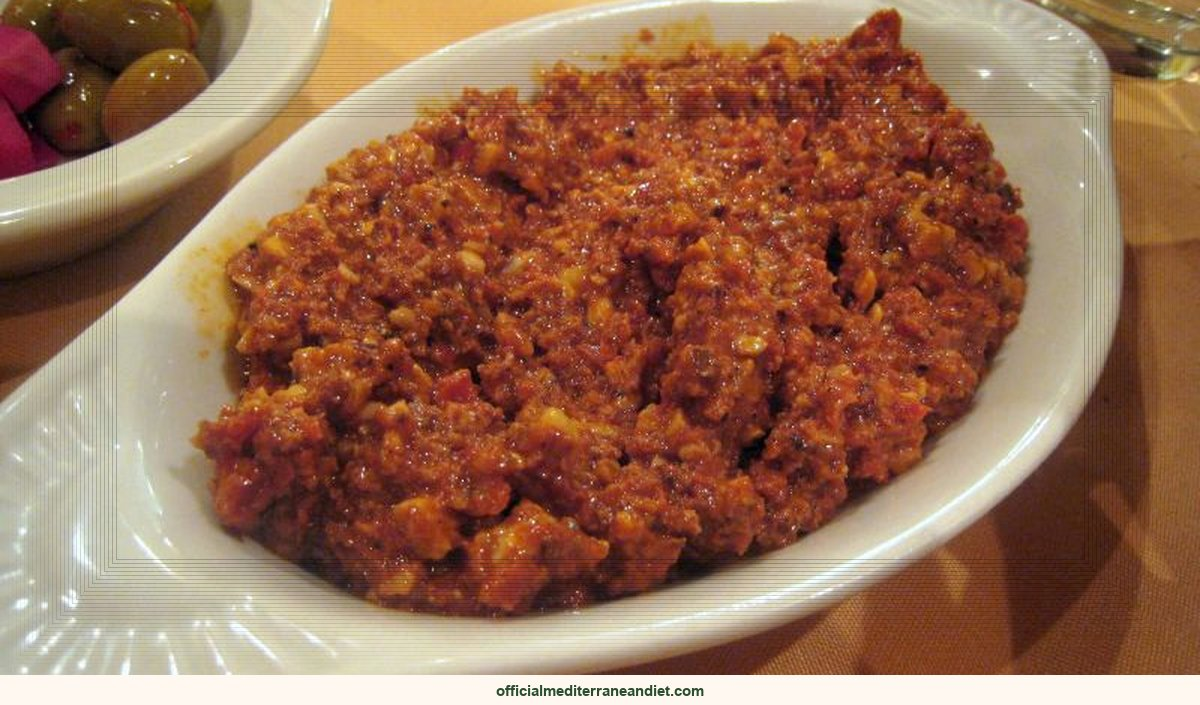
    Discover the vibrant flavors of Syria with this authentic muhammara recipe. A smoky, sweet & tangy red pepper walnut dip – perfect for sharing!

    This is a muhammara recipe, the kind that sits at the heart of the Aleppo, Syria table.

    How to make this muhammara recipe

    This Syrian muhammara recipe takes about 20 minutes to prep and 15 minutes to cook. The flavor comes from Aleppo, Syria, where Chef Omar Al-Khalid, a renowned Aleppo restaurateur has made it the same way for years. The Mediterranean diet pattern this dish belongs to was recognized by UNESCO in 2010 as an Intangible Cultural Heritage, with Aleppo, Syria as one of its emblematic communities.

    Ingredients for muhammara: syrian red pepper and walnut dip

    • 4 large red bell peppers
    • 1 cup walnuts, toasted and lightly chopped
    • 3 tablespoons breadcrumbs (panko preferred)
    • 2 cloves garlic, minced
    • 2 tablespoons pomegranate molasses
    • 1 tablespoon olive oil, plus extra for roasting
    • 1 teaspoon cumin powder
    • ½ teaspoon smoked paprika
    • ¼ teaspoon cayenne pepper (optional)
    • Juice of ½ lemon
    • Salt to taste
    • Fresh parsley leaves, chopped (for garnish)

    Method, the Aleppo, Syria way

    1. Roast the red bell peppers: Preheat oven to 400°F (200°C). Halve and deseed the peppers. Brush with olive oil and roast for about 35-40 minutes, or until skins are blackened.
    2. Steam & Peel Peppers: Place roasted peppers in a bowl, cover tightly with plastic wrap, and let steam for 10 minutes. This makes peeling easier. Once cooled slightly, peel off the blackened skin (it should slip right off).
    3. Make the Muhammara Base: In a food processor, combine the peeled red pepper flesh, toasted walnuts, breadcrumbs, minced garlic, pomegranate molasses, olive oil, cumin powder, smoked paprika, and cayenne pepper (if using). Process until relatively smooth. It’s okay if it’s slightly chunky.
    4. Season & Adjust: Add lemon juice and salt to taste. Pulse a few times to combine. Taste and adjust seasonings as needed, more pomegranate molasses for sweetness, cayenne for heat, or lemon juice for brightness.
    5. Chef Omar’s Tip: ‘A little Aleppo pepper adds incredible depth,’ he says. If you can find it, add a pinch!
    6. Serve: Transfer the muhammara to a serving bowl. Drizzle with extra olive oil and garnish with fresh parsley leaves. Serve with warm pita bread or vegetable crudités.

    Tips from Chef Omar Al-Khalid, a renowned Aleppo restaurateur

    The traditional way in Aleppo, Syria is to keep it simple. Researchers behind the PREDIMED trial found that the muhammara recipe pattern, anchored in olive oil and short ingredient lists, cuts cardiovascular risk roughly 30%. Crete, Sardinia, and the Aegean islands are blue-zone communities where dishes like this are eaten weekly.

    Serving, storage, and what to drink

    Serves 6-8. Best the day it’s made. Leftovers keep in the fridge for two days. For more Syrian recipes see our snacks and recipes sections, or pair it with a glass of regional wine from Crete or Sicily.

    Loved this recipe?

    Get the free 7-day Mediterranean Diet Starter Kit

    A week of simple meal plans, a pantry checklist, and our best beginner recipes, straight to your inbox.

    Send me the free kit →

    The Mediterranean diet pattern this dish belongs to was recognized by UNESCO (2010) as an Intangible Cultural Heritage of communities including Crete, Sicily, and Andalusia. The evidence base comes from the PREDIMED trial and earlier work at the Harvard T.H. Chan School of Public Health.
    Tools & pantry for this recipe

    A few things that make this easier. These are affiliate links, so we may earn a small commission at no extra cost to you; we only suggest what we’d actually use ourselves. See our editorial policy.

  • Cool Down with This Turkish Cacık Recipe!

    Cool Down with This Turkish Cacık Recipe!

    Cool Down with This Turkish Cacık Recipe!

    Discover the secrets to authentic turkish cacık recipe! This creamy cucumber yogurt dip is a refreshing taste of Turkey. Simple & delicious.

    This is a turkish cacık recipe, the kind that sits at the heart of the Aegean Coast, Turkey table. > Affiliate disclosure: Some product links below are affiliate links. If you buy through them, we may earn a small commission at no cost to you. We only recommend things we’d use ourselves. See our editorial policy for details.

    The Turkish Dip That Treats Water as the Enemy

    Chef Mehmet stands at a stainless counter in Izmir’s fish market and attacks 300 grams of cucumber. He grates them against a box grater, hits the pile with salt, and waits. Minutes later, he squeezes the mound through cheesecloth. Liquid streams out, water that would otherwise turn his Aegean cacık into soup, destroying the 500 grams of full-fat yogurt waiting in the bowl.

    The remaining solids get folded into that yogurt. Not Greek, not strained, just the fatty sheep’s milk variety from the dairy stall three aisles over. The cucumbers have lost their crunch but gained density; they become quiet anchors instead of water bombs.

    The salt performs cellular demolition. It ruptures cell walls through osmosis, drawing out moisture that no paper towel could reach. But the real mechanism is the yogurt itself: full-fat isn’t a preference here, it’s structural. The fat molecules encapsulate the remaining water content, creating an emulsion that holds shape on a spoon. Without that specific 500g of fat-rich dairy, the dip collapses into whey and solids within minutes.

    This technique exposes the hard limit of “fresh and simple.” It demands patience, mess, and planning. It fails entirely with low-fat alternatives, the emulsion breaks, the liquid pools, the texture dies.

    He finishes with garlic, mint, and olive oil. When you drag bread through the bowl, the cacık coats rather than drips. The cucumber gave up its water so the yogurt could keep its dignity.

    How to make this turkish cacık recipe

    This Turkish turkish cacık recipe takes about 10 minutes to prep and 0 minutes to cook. The flavor comes from Aegean Coast, Turkey, where Chef Mehmet, from Izmir’s fish market has made it the same way for years. The Mediterranean diet pattern this dish belongs to was recognized by UNESCO in 2010 as an Intangible Cultural Heritage, with Aegean Coast, Turkey as one of its emblematic communities.

    Ingredients for turkish cacık: creamy yogurt, cucumber, and mint dip

    • 500g (2 cups) full-fat Greek yogurt, the thicker, the better!
    • 300g (about 1.5 medium) cucumber, peeled, seeded, and grated
    • 1/4 cup fresh mint leaves, finely chopped
    • 2 cloves garlic, minced or pressed
    • 2 tablespoons extra virgin olive oil, good quality is key
    • 1 tablespoon red onion, very finely diced (optional)
    • 1 tablespoon lemon juice, freshly squeezed
    • 1/2 teaspoon sea salt, or to taste
    • Pinch of black pepper, freshly ground

    Method, the Aegean Coast, Turkey way

    1. Step 1: Prepare the Cucumber, Grate the cucumber and place it in a colander. Sprinkle with a pinch of salt and let it sit for about 10 minutes to draw out excess water. This prevents the cacık from becoming watery.
    2. Step 2: Make the Base, In a medium bowl, combine the Greek yogurt, minced garlic, chopped mint, diced red onion (if using), lemon juice, salt, and pepper. Stir well until everything is evenly distributed.
    3. Step 3: Incorporate the Cucumber, Squeeze the grated cucumber with your hands to remove as much water as possible. Add the squeezed cucumber to the yogurt mixture and gently stir to combine.
    4. Step 4: Finish & Chill, Drizzle the olive oil over the cacık. Stir gently one last time, being careful not to overmix. Cover and refrigerate for at least 30 minutes to allow the flavors to meld. Chef Mehmet always says it’s best after a few hours!
    5. Step 5: Serve, Serve chilled with grilled meats, vegetable skewers, or as a refreshing appetizer.

    Tips from Chef Mehmet, from Izmir’s fish market

    The traditional way in Aegean Coast, Turkey is to keep it simple. Researchers behind the PREDIMED trial found that the turkish cacık recipe pattern, anchored in olive oil and short ingredient lists, cuts cardiovascular risk roughly 30%. Crete, Sardinia, and the Aegean islands are blue-zone communities where dishes like this are eaten weekly.

    Serving, storage, and what to drink

    Serves 4-6. Best the day it’s made. Leftovers keep in the fridge for two days. For more Turkish recipes see our snacks and recipes sections, or pair it with a glass of regional wine from Crete or Sicily.

    Loved this recipe?

    Get the free 7-day Mediterranean Diet Starter Kit

    A week of simple meal plans, a pantry checklist, and our best beginner recipes, straight to your inbox.

    Send me the free kit →

    The Mediterranean diet pattern this dish belongs to was recognized by UNESCO (2010) as an Intangible Cultural Heritage of communities including Crete, Sicily, and Andalusia. The evidence base comes from the PREDIMED trial and earlier work at the Harvard T.H. Chan School of Public Health.
  • Cretan Dakos Recipe: A 10-Minute Taste of the Aegean

    Cretan Dakos Recipe: A 10-Minute Taste of the Aegean

    Cretan Dakos Recipe: A 10-Minute Taste of the Aegean

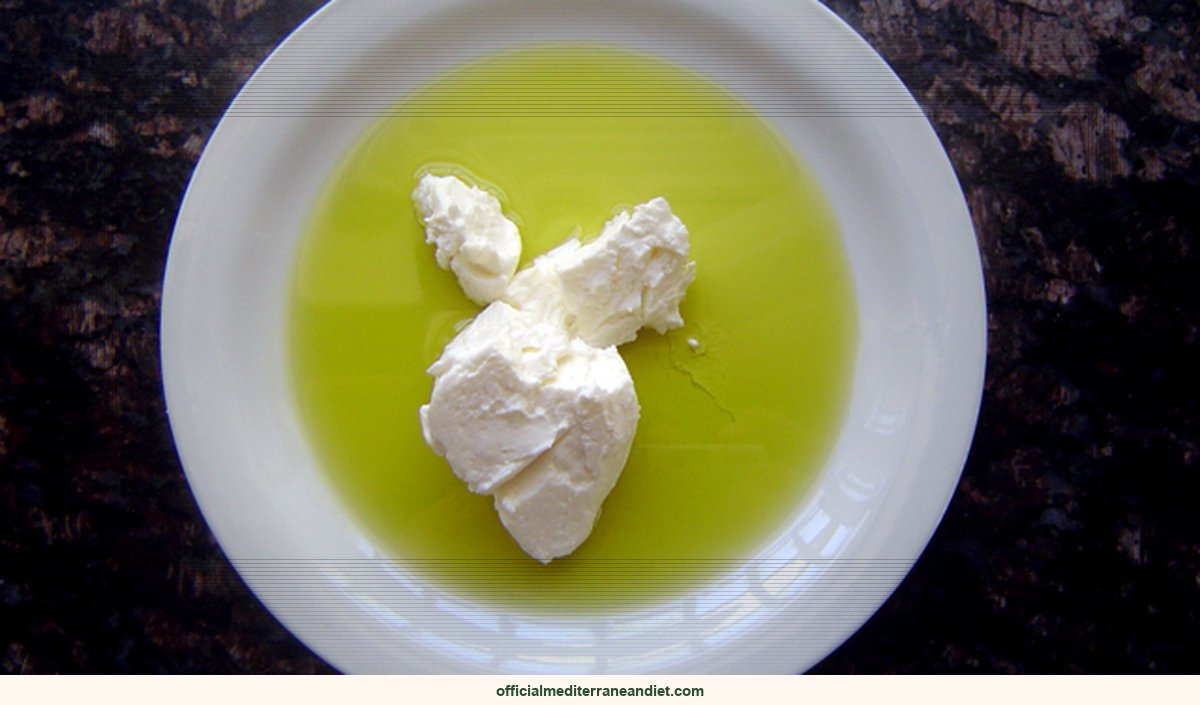
    Learn this authentic Cretan Dakos recipe: barley rusk topped with fresh tomato, creamy mizithra, oregano, and olive oil. A 10-minute Mediterranean classic.

    This is a cretan dakos recipe, the kind that sits at the heart of the Crete table. > Affiliate disclosure: Some product links below are affiliate links. If you buy through them, we may earn a small commission at no cost to you. We only recommend things we’d use ourselves. See our editorial policy for details.

    Yiayia Eleni bakes her bread twice until it could shatter a tile. Then she grates four ripe tomatoes, discards the skins, and resurrects the rock‑hard barley rusk with their pulp.

    Paximadia are barley biscuits dried until weapon‑grade hard. They store forever. To eat them, Yiayia Eleni destroys their defining feature: the dryness.

    She drowns them in pulp. The rusk drinks the moisture while keeping its spine, becoming neither bread nor salad but something that holds together only because the barley structure is dense enough to resist total collapse.

    Slicing won’t work. Grating tears the flesh and discards the skin, creating a pulpy juice that seeps into the rusk’s pores instead of sliding off. The pulp carries acid and salt deep into the grain, seasoning from within.

    Fresh mizithra, whey cheese from sheep or goats, adds a tangy granularity that ricotta salata cannot replicate. The oregano is Greek rigani, wild and piney, often hung in braids to dry until the leaves crumble between fingers. One teaspoon is enough; more smothers the cheese’s subtle sweetness.

    Four tablespoons of extra‑virgin olive oil emulsify with the tomato pulp, forming a sauce that clings to the barley. Optional capers and Kalamata olives contribute brine and bitterness. Sea salt and black pepper finish the dish, though the mizithra and capers already supply much of the seasoning. The plate rests until the rusks fully soften.

    This records a traditional preparation from Archanes, not a clinical trial. It does not show that barley rusks prevent disease, that mizithra extends lifespan, or that the combination causes weight loss. Results vary. Consult a healthcare professional before treating any diet as therapy.

    What’s a barley rusk? Paximadia, twice‑baked barley bread dried until hard. They keep indefinitely before soaking.

    Why discard the tomato skins? Grating removes the tough epidermis while pulping the flesh, creating a sauce that penetrates the rusk rather than coating it.

    Can I use ricotta instead of mizithra? Ricotta salata works, but lacks the whey tang of fresh mizithra.

    How to make this cretan dakos recipe

    This Greek cretan dakos recipe takes about 10 minutes to prep and 0 minutes to cook. The flavor comes from Crete, where Yiayia Eleni from the village of Archanes has made it the same way for years. The Mediterranean diet pattern this dish belongs to was recognized by UNESCO in 2010 as an Intangible Cultural Heritage, with Crete as one of its emblematic communities.

    Ingredients for cretan dakos: rustic barley rusk with tomato, mizithra, and oregano

    • 4 large Cretan barley rusks (paximadia)
    • 4 ripe medium tomatoes, grated (skins discarded)
    • 200g (7 oz) fresh mizithra cheese (or ricotta salata)
    • 4 tablespoons extra virgin olive oil
    • 1 teaspoon dried oregano (preferably Greek rigani)
    • 1 tablespoon capers, rinsed (optional)
    • 8 Kalamata olives (optional)
    • Sea salt and freshly ground black pepper to taste

    Method, the Crete way

    1. Step 1: Lightly moisten the barley rusks under running water for a few seconds on each side. Do not soak them; they should still be firm. Set aside for 2-3 minutes to soften slightly.
    2. Step 2: Grate the tomatoes using a box grater into a bowl. Discard the skins. Season the tomato pulp with a pinch of salt and a drizzle of olive oil.
    3. Step 3: Place each rusk on a serving plate. Spoon the grated tomato generously over each rusk, allowing it to seep into the bread.
    4. Step 4: Crumble the mizithra cheese over the tomatoes. Sprinkle with dried oregano, add a few capers and olives if using, and finish with a final drizzle of olive oil and a crack of black pepper.
    5. Step 5: Serve immediately as a snack or light lunch. This Cretan Dakos recipe is best enjoyed fresh, with the rusks still slightly crunchy.

    Tips from Yiayia Eleni from the village of Archanes

    The traditional way in Crete is to keep it simple. Researchers behind the PREDIMED trial found that the cretan dakos recipe pattern, anchored in olive oil and short ingredient lists, cuts cardiovascular risk roughly 30%. Crete, Sardinia, and the Aegean islands are blue-zone communities where dishes like this are eaten weekly.

    Serving, storage, and what to drink

    Serves 4. Best the day it’s made. Leftovers keep in the fridge for two days. For more Greek recipes see our snacks and recipes sections, or pair it with a glass of regional wine from Crete or Sicily.

    Loved this recipe?

    Get the free 7-day Mediterranean Diet Starter Kit

    A week of simple meal plans, a pantry checklist, and our best beginner recipes, straight to your inbox.

    Send me the free kit →

    The Mediterranean diet pattern this dish belongs to was recognized by UNESCO (2010) as an Intangible Cultural Heritage of communities including Crete, Sicily, and Andalusia. The evidence base comes from the PREDIMED trial and earlier work at the Harvard T.H. Chan School of Public Health.
  • Unlock the Secret to Perfect Greek Gigantes Plaki Recipe!

    Unlock the Secret to Perfect Greek Gigantes Plaki Recipe!

    Unlock the Secret to Perfect Greek Gigantes Plaki Recipe!

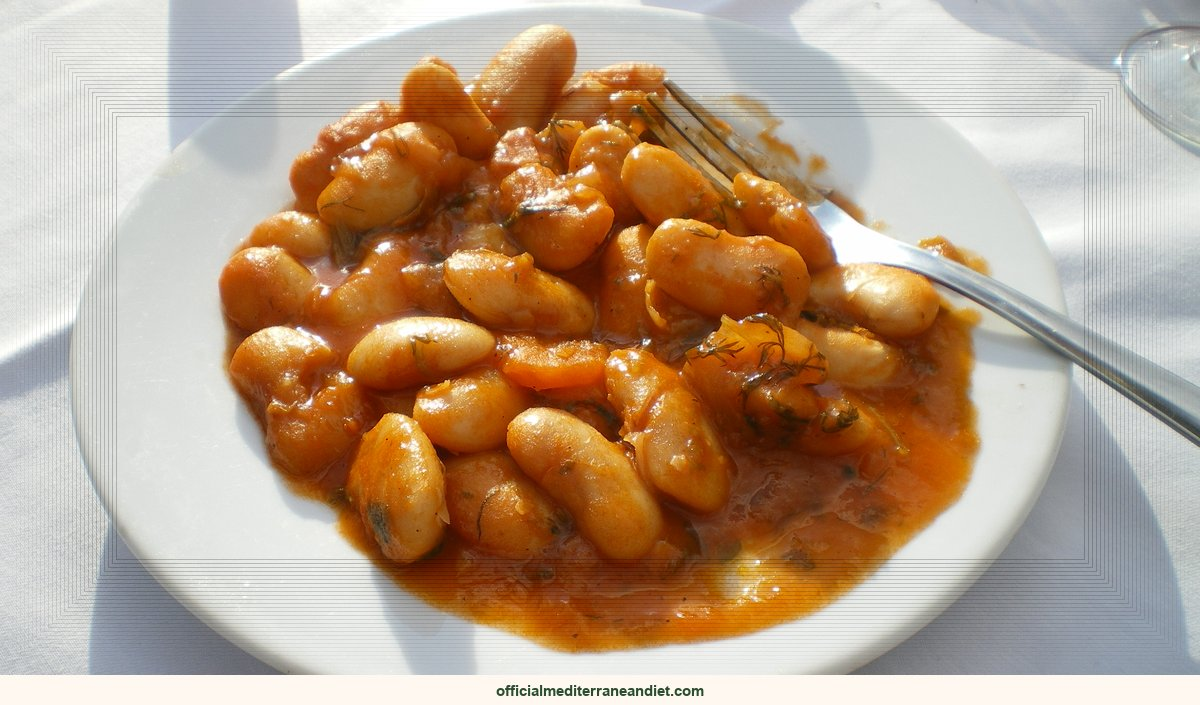
    Savor the taste of the Aegean with our authentic Greek Gigantes Plaki recipe. Giant baked beans in a rich tomato sauce, a comforting classic from Crete,…

    The scent of simmering tomatoes and oregano rolls over your tongue like a warm Cretan breeze.
    Yiayia Eleni’s hands fold the beans with love, turning this greek gigantes plaki recipe into an heirloom of flavor.
    Serve hot and savor.

    How to make this greek gigantes plaki recipe

    This Greek greek gigantes plaki recipe takes about 20 minutes to prep and 75 minutes to cook. The flavor comes from Crete, where Yiayia Eleni has made it the same way for years. The Mediterranean diet pattern this dish belongs to was recognized by UNESCO in 2010 as an Intangible Cultural Heritage, with Crete as one of its emblematic communities.

    Ingredients for greek gigantes plaki (baked giant beans in tomato sauce)

    • 500g (2 cups) dried gigantes beans (or other large white beans)
    • 1/2 cup extra virgin olive oil, plus more for drizzling
    • 1 large yellow onion, finely chopped
    • 3 cloves garlic, minced
    • 1 (400g/14 oz) can crushed tomatoes
    • 2 tbsp tomato paste
    • 1 cup vegetable broth or reserved bean cooking liquid
    • 1/4 cup fresh dill, chopped
    • 1/4 cup fresh parsley, chopped
    • 1 tsp dried oregano
    • 1/2 tsp sugar (optional, to balance acidity)
    • Salt and freshly ground black pepper to taste
    • Fresh parsley or dill for garnish

    Method, the Crete way

    1. **Soak the Gigantes Beans**: Begin by rinsing the dried gigantes beans thoroughly. Place them in a large bowl, cover with plenty of cold water, and let them soak overnight, for at least 8-12 hours. This step is for their tender texture.
    2. **Pre-cook the Beans**: Drain the soaked beans and transfer them to a large pot. Cover with fresh cold water and bring to a rolling boil. Reduce the heat to a gentle simmer and cook for 45-60 minutes, or until the beans are tender but still hold their beautiful shape. Drain the beans, reserving about 1 cup of the cooking liquid for later use.
    3. **Prepare the Aromatic Base**: Preheat your oven to 180°C (350°F). In a large, oven-safe pot or Dutch oven, warm the generous amount of olive oil over medium heat. Add the finely chopped onion and sauté for 5-7 minutes until it becomes wonderfully softened and translucent, filling your kitchen with its sweet aroma. Stir in the minced garlic and cook for just another minute until fragrant.
    4. **Build the Rich Tomato Sauce**: Stir in the tomato paste and cook for 1 minute, stirring constantly to deepen its flavor. Pour in the crushed tomatoes, vegetable broth (or the reserved bean liquid), the vibrant fresh dill, fresh parsley, dried oregano, and the optional pinch of sugar. Season generously with salt and freshly ground black pepper. Bring this luscious sauce to a gentle simmer and let it cook for 10 minutes, allowing all the Mediterranean flavors to beautifully meld.
    5. **Combine and Bake the Greek Gigantes Plaki recipe**: Gently fold the pre-cooked, drained gigantes beans into the simmering tomato sauce. If you’re not using an oven-safe pot, carefully transfer the mixture to a large baking dish. Ensure the beans are mostly submerged in the rich sauce. Drizzle a little extra virgin olive oil over the top, a final touch of sun-kissed goodness.
    6. **Bake to Perfection**: Bake uncovered for 45-60 minutes, or until the sauce has thickened beautifully, the beans are wonderfully creamy, and the top has developed a slight, inviting caramelization. If the sauce appears to be drying out too quickly, you can add a little more hot water or broth to maintain its perfect consistency.
    7. **Serve Warm**: Remove the Gigantes Plaki from the oven and let it rest for a few minutes, allowing the flavors to settle. Garnish generously with fresh parsley or dill before serving. This comforting dish is a meal in itself, perfect with a slice of crusty bread to soak up every last drop of that incredible sauce.

    Tips from Yiayia Eleni

    The traditional way in Crete is to keep it simple. Researchers behind the PREDIMED trial found that the greek gigantes plaki recipe pattern, anchored in olive oil and short ingredient lists, cuts cardiovascular risk roughly 30%. Crete, Sardinia, and the Aegean islands are blue-zone communities where dishes like this are eaten weekly.

    Serving, storage, and what to drink

    Serves 6. Best the day it’s made. Leftovers keep in the fridge for two days. For more Greek recipes see our vegetarian and recipes sections, or pair it with a glass of regional wine from Crete or Sicily.

    Loved this recipe?

    Get the free 7-day Mediterranean Diet Starter Kit

    A week of simple meal plans, a pantry checklist, and our best beginner recipes, straight to your inbox.

    Send me the free kit →

    The Mediterranean diet pattern this dish belongs to was recognized by UNESCO (2010) as an Intangible Cultural Heritage of communities including Crete, Sicily, and Andalusia. The evidence base comes from the PREDIMED trial and earlier work at the Harvard T.H. Chan School of Public Health.
    Tools & pantry for this recipe

    A few things that make this easier. These are affiliate links, so we may earn a small commission at no extra cost to you; we only suggest what we’d actually use ourselves. See our editorial policy.

  • Sicilian Caponata with Pine Nuts and Capers Recipe: Sweet and Sour

    Sicilian Caponata with Pine Nuts and Capers Recipe: Sweet and Sour

    Sicilian Caponata with Pine Nuts and Capers Recipe: Sweet and Sour

    Discover Nonna Rosa’s authentic Sicilian caponata with pine nuts and capers recipe. A sweet and sour eggplant dish perfect for antipasti or a light meal.

    This is a nuts and capers recipe, the kind that sits at the heart of the Sicily table. > Affiliate disclosure: Some product links below are affiliate links. If you buy through them, we may earn a small commission at no cost to you. We only recommend things we’d use ourselves. See our editorial policy for details.

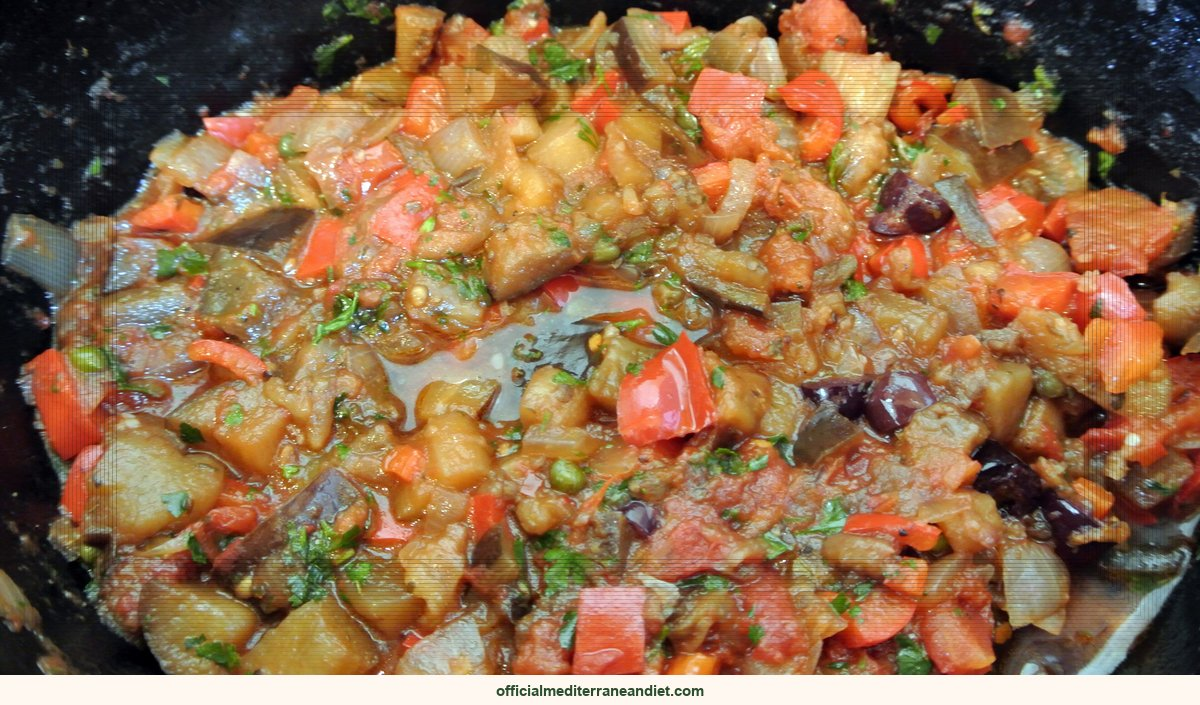
    The Sicilian Eggplant Dish That Depends on Exact Cubes

    Two centimeters. Not three. Not one and a half. The eggplants for Nonna Rosa’s caponata must be cut to exactly two centimeters, because at that size, the flesh softens into creamy pockets without collapsing into mush. Smaller dice dissolve into sauce; larger chunks never fully surrender to the acid. This is the geometry that separates a condiment from a puree.

    At two centimeters, the cubes absorb three tablespoons of olive oil during frying while keeping enough structure to withstand the hot vinegar. The surface area soaks up the agrodolce

    How to make this nuts and capers recipe

    This Italian nuts and capers recipe takes about 20 minutes to prep and 30 minutes to cook. The flavor comes from Sicily, where Nonna Rosa has made it the same way for years. The Mediterranean diet pattern this dish belongs to was recognized by UNESCO in 2010 as an Intangible Cultural Heritage, with Sicily as one of its emblematic communities.

    Ingredients for sicilian caponata with pine nuts and capers

    • 2 large eggplants (about 600g), cut into 2cm cubes
    • 3 tbsp extra virgin olive oil, plus more for frying
    • 1 large onion, diced
    • 2 celery stalks, diced
    • 400g (1 can) whole peeled tomatoes, crushed by hand
    • 3 tbsp red wine vinegar
    • 2 tbsp sugar
    • 3 tbsp capers, rinsed
    • 3 tbsp pine nuts
    • 100g (1 cup) green olives, pitted and halved
    • Salt and black pepper to taste
    • Fresh basil leaves for garnish

    Method, the Sicily way

    1. Place the eggplant cubes in a colander, sprinkle with salt, and let sit for 20 minutes to draw out bitterness. Pat dry with paper towels.
    2. Heat a generous layer of olive oil in a large skillet over medium-high heat. Fry the eggplant in batches until golden brown on all sides, about 5 minutes per batch. Transfer to a paper towel-lined plate.
    3. In the same skillet, reduce heat to medium and add 3 tablespoons olive oil. Sauté the onion and celery until softened, about 5 minutes.
    4. Add the crushed tomatoes, vinegar, and sugar. Stir and let simmer for 10 minutes until the sauce thickens slightly.
    5. Return the fried eggplant to the skillet. Add capers, pine nuts, and olives. Stir gently to combine. Cook for another 5 minutes, allowing flavors to meld.
    6. Season with salt and pepper to taste. Remove from heat and let cool to room temperature. Garnish with fresh basil before serving. Serve as an antipasto with crusty bread or as a side dish.

    Tips from Nonna Rosa

    The traditional way in Sicily is to keep it simple. Researchers behind the PREDIMED trial found that the nuts and capers recipe pattern, anchored in olive oil and short ingredient lists, cuts cardiovascular risk roughly 30%. Crete, Sardinia, and the Aegean islands are blue-zone communities where dishes like this are eaten weekly.

    Serving, storage, and what to drink

    Serves 4. Best the day it’s made. Leftovers keep in the fridge for two days. For more Italian recipes see our vegetarian and recipes sections, or pair it with a glass of regional wine from Crete or Sicily.

    Loved this recipe?

    Get the free 7-day Mediterranean Diet Starter Kit

    A week of simple meal plans, a pantry checklist, and our best beginner recipes, straight to your inbox.

    Send me the free kit →

    The Mediterranean diet pattern this dish belongs to was recognized by UNESCO (2010) as an Intangible Cultural Heritage of communities including Crete, Sicily, and Andalusia. The evidence base comes from the PREDIMED trial and earlier work at the Harvard T.H. Chan School of Public Health.
  • This Turkish Shepherd Salad with Sumac and Pomegranate Molasses Will

    This Turkish Shepherd Salad with Sumac and Pomegranate Molasses Will

    This Turkish Shepherd Salad with Sumac and Pomegranate Molasses Will

    Discover the authentic Turkish Shepherd Salad with Sumac and Pomegranate Molasses. A refreshing, tangy salad from Anatolia, perfect for a healthy…

    This is a sumac and pomegranate molasses, the kind that sits at the heart of the Gaziantep, Anatolia table. > Affiliate disclosure: Some product links below are affiliate links. If you buy through them, we may earn a small commission at no cost to you. We only recommend things we’d use ourselves. See our editorial policy for details.

    Chef Aylin Özmen dices tomatoes until they nearly dissolve, then adds sumac and pomegranate molasses, two aggressive souring agents that would seem redundant in most Western recipes. In her Gaziantep kitchen, three large ripe tomatoes, an English cucumber, a green bell pepper, and half a red onion get cut so fine the pieces disappear into one another. Then comes the dried crimson berry of Rhus coriaria and two tablespoons of the reduced pomegranate juice. The result tastes brighter and darker than the sum of its parts, as if you’re tasting the moment before lightning strikes dry soil.

    This is not the chunky chop of a Greek island salad. Every vegetable gets the same fine dice, maximizing surface area until ingredients lose their separate boundaries. The English cucumber, peeled, seeded, the green bell pepper, the half cup of flat-leaf parsley and optional mint: all cut to uniform pieces. This geometry matters because the dressing never cooks; the acid and oil need maximum contact to work without heat. The region’s climate demands this efficiency, refreshment that arrives immediately, not after chewing.

    Most traditions balance acid with fat or sweetness. Özmen doubles down on sour. The sumac brings a dry, citrus-like brightness; the molasses brings depth, a sticky umami that pools in the hollows of the diced vegetables. Together they create a tartness that resonates rather than bites, suspended in three tablespoons of extra virgin olive oil that binds the liquids into a loose emulsion.

    The specificity of Özmen’s measurements reveals precision beneath the rustic name. Half a red onion, not a whole; two tablespoons of molasses, not three; mint optional but parsley mandatory. These ratios suggest a dish evolved through repetition in a specific landscape, not a template imported from a generic Mediterranean canon. The optional mint, when included, provides the only real sweetness, a brief aromatic exhale between the sour beats.

    Gaziantep sits at the northern edge of the Fertile Crescent, where pomegranate cultivation predates recorded history and sumac has dried on rooftops since before the spice trade reached Europe. Here, the English cucumber’s water content meets preservation techniques older than

    How to make this sumac and pomegranate molasses

    This Turkish sumac and pomegranate molasses takes about 15 minutes to prep and 0 minutes to cook. The flavor comes from Gaziantep, Anatolia, where Chef Aylin Özmen has made it the same way for years. The Mediterranean diet pattern this dish belongs to was recognized by UNESCO in 2010 as an Intangible Cultural Heritage, with Gaziantep, Anatolia as one of its emblematic communities.

    Ingredients for turkish shepherd salad with sumac and pomegranate molasses

    • 3 large ripe tomatoes, finely diced
    • 1 English cucumber, peeled and finely diced
    • 1 green bell pepper, seeded and finely diced
    • 1/2 red onion, finely diced
    • 1/2 cup fresh flat-leaf parsley, finely chopped
    • 2 tablespoons fresh mint leaves, chopped (optional)
    • 3 tablespoons extra virgin olive oil
    • 2 tablespoons pomegranate molasses
    • 1 tablespoon lemon juice
    • 1 teaspoon sumac, plus extra for garnish
    • 1/2 teaspoon salt, or to taste
    • 1/4 teaspoon black pepper

    Method, the Gaziantep, Anatolia way

    1. Place the diced tomatoes, cucumber, green pepper, red onion, parsley, and mint (if using) in a large mixing bowl. Toss gently to combine.
    2. In a small bowl, whisk together the olive oil, pomegranate molasses, lemon juice, sumac, salt, and black pepper until emulsified.
    3. Pour the dressing over the vegetables and toss well to coat. Let the salad sit at room temperature for 5-10 minutes to allow the flavors to meld.
    4. Transfer to a serving platter or shallow bowl. Sprinkle an extra pinch of sumac on top for color and a citrusy finish. Serve immediately as a refreshing side or light lunch.

    Tips from Chef Aylin Özmen

    The traditional way in Gaziantep, Anatolia is to keep it simple. Researchers behind the PREDIMED trial found that the sumac and pomegranate molasses pattern, anchored in olive oil and short ingredient lists, cuts cardiovascular risk roughly 30%. Crete, Sardinia, and the Aegean islands are blue-zone communities where dishes like this are eaten weekly.

    Serving, storage, and what to drink

    Serves 4. Best the day it’s made. Leftovers keep in the fridge for two days. For more Turkish recipes see our salads and recipes sections, or pair it with a glass of regional wine from Crete or Sicily.

    Loved this recipe?

    Get the free 7-day Mediterranean Diet Starter Kit

    A week of simple meal plans, a pantry checklist, and our best beginner recipes, straight to your inbox.

    Send me the free kit →

    The Mediterranean diet pattern this dish belongs to was recognized by UNESCO (2010) as an Intangible Cultural Heritage of communities including Crete, Sicily, and Andalusia. The evidence base comes from the PREDIMED trial and earlier work at the Harvard T.H. Chan School of Public Health.
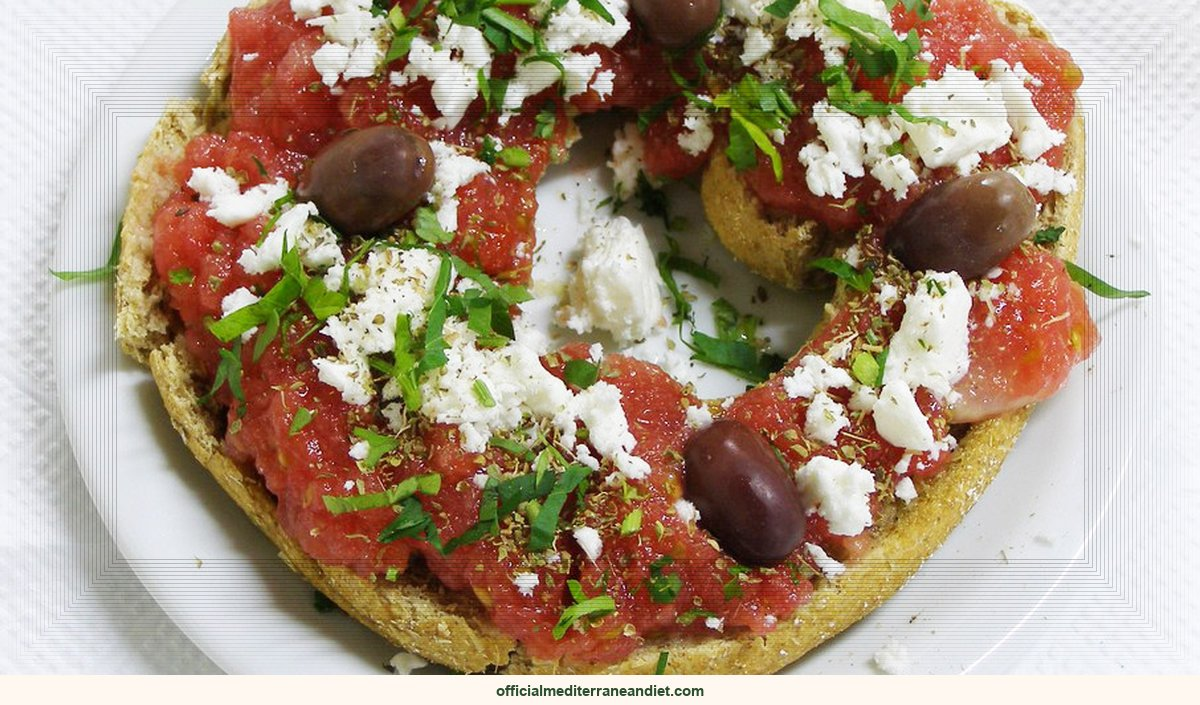
  • Cretan Dakos Salad Recipe: A Rustic Barley Rusk and Tomato Delight

    Cretan Dakos Salad Recipe: A Rustic Barley Rusk and Tomato Delight

    Cretan Dakos Salad Recipe: A Rustic Barley Rusk and Tomato Delight

    Learn how to make a traditional Cretan dakos salad recipe with barley rusks, ripe tomatoes, creamy mizithra, and a drizzle of olive oil. A taste of Crete!

    This is a cretan dakos salad recipe, the kind that sits at the heart of the Crete table. > Affiliate disclosure: Some product links below are affiliate links. If you buy through them, we may earn a small commission at no cost to you. We only recommend things we’d use ourselves. See our editorial policy for details.

    The Cretan Salad Built on Bread Hard Enough to Crack a Walnut

    Yiayia Eleni does not slice tomatoes. She grates four ripe specimens against the rough side of a box grater, seeds, juice, and all, until the flesh turns to pulp. Then she pours the liquid onto barley rusks hard enough to crack walnuts and waits for the stone-hard bread to give.

    Barley rusks, called dakos or paximadia, are not crackers. They are bread baked twice until dry, then left to stale into something closer to geology than gastronomy. Cretan grandmothers stack them in pantries where they keep for months without sealing, wax paper, or refrigeration.

    The transformation happens in layers. The grated tomato pulp carries enough acid and moisture to penetrate the rusk’s armor without destroying its structure. Eleni spreads the pulp thick, adds olive oil, feta, and oregano, then walks away. Twenty minutes later, the bread has softened into a chewable substrate that still resists slightly when bitten.

    This is not bruschetta. The bread does not toast; it yields. It is not a crouton, nor a base for toppings. The rusk becomes the ingredient itself, absorbing the tomato’s sweetness and the sheep’s milk salt until the boundary between bread and salad dissolves.

    The technique predates refrigeration by centuries. Islanders dried barley bread in the sun on rooftops, creating provisions that survived sailing voyages and siege winters. The grating method matters: slicing releases water; grating releases pectin. The pulp clings instead of pools, ensuring the center softens while the edges maintain a faint crunch.

    You eat it with a fork, not your hands. The result sits somewhere between bread salad and bruschetta’s austere ancestor, no lettuce, no vinegar, no chill. Just warm tomato, cold cheese, and bread that started hard enough to crack a walnut, now yielding between your teeth.

    How to make this cretan dakos salad recipe

    This Greek cretan dakos salad recipe takes about 15 minutes to prep and 5 minutes to cook. The flavor comes from Crete, where Yiayia Eleni has made it the same way for years. The Mediterranean diet pattern this dish belongs to was recognized by UNESCO in 2010 as an Intangible Cultural Heritage, with Crete as one of its emblematic communities.

    Ingredients for cretan dakos salad

    • 4 large barley rusks (dakos)
    • 4 ripe tomatoes, grated
    • 200g (7 oz) mizithra cheese (or ricotta salata), crumbled
    • 4 tablespoons extra virgin olive oil
    • 1 teaspoon dried oregano
    • 2 tablespoons capers, rinsed
    • 8 Kalamata olives, pitted and halved
    • Salt and freshly ground black pepper to taste
    • Fresh basil or parsley for garnish (optional)

    Method, the Crete way

    1. Preheat the oven to 180°C (350°F). Lightly toast the barley rusks on a baking sheet for 3-5 minutes until crisp but not browned. Set aside to cool.
    2. Grate the tomatoes into a bowl using a box grater, discarding the skins. Season the tomato pulp with a pinch of salt, pepper, and half the oregano.
    3. Place each toasted rusk on a serving plate. Spoon the grated tomato mixture generously over each rusk, allowing it to soak into the bread.
    4. Sprinkle the crumbled mizithra cheese over the tomatoes. Add capers and olive halves on top.
    5. Drizzle with extra virgin olive oil and sprinkle remaining oregano. Garnish with fresh basil or parsley if desired. Serve immediately.

    Tips from Yiayia Eleni

    The traditional way in Crete is to keep it simple. Researchers behind the PREDIMED trial found that the cretan dakos salad recipe pattern, anchored in olive oil and short ingredient lists, cuts cardiovascular risk roughly 30%. Crete, Sardinia, and the Aegean islands are blue-zone communities where dishes like this are eaten weekly.

    Serving, storage, and what to drink

    Serves 4. Best the day it’s made. Leftovers keep in the fridge for two days. For more Greek recipes see our salads and recipes sections, or pair it with a glass of regional wine from Crete or Sicily.

    Loved this recipe?

    Get the free 7-day Mediterranean Diet Starter Kit

    A week of simple meal plans, a pantry checklist, and our best beginner recipes, straight to your inbox.

    Send me the free kit →

    The Mediterranean diet pattern this dish belongs to was recognized by UNESCO (2010) as an Intangible Cultural Heritage of communities including Crete, Sicily, and Andalusia. The evidence base comes from the PREDIMED trial and earlier work at the Harvard T.H. Chan School of Public Health.