Author: Elena

  • Try This Ikarian Longevity Stew Recipe for a Longer Life

    Try This Ikarian Longevity Stew Recipe for a Longer Life

    Discover the authentic Ikarian longevity stew recipe from Yiayia Maria. A hearty, plant-based Greek stew packed with greens, beans, and olive oil for a…

    This is a ikarian longevity stew recipe, the kind that sits at the heart of the Ikaria, Greece table. The 60-Milliliter Rule Behind Ikaria’s Longevity Stew

    Yiayia Maria tilts the bottle until sixty milliliters of extra virgin olive oil pools in her heavy pot, no measuring spoon, just muscle memory. On the Greek island of Ikaria, where one in three residents reaches ninety, this quarter-cup pour forms the base of a stew built from canned tomatoes and wild greens. Researchers studying the island’s extraordinary longevity keep finding this specific combination in daily meal logs, yet the science reveals something more complex than a simple recipe for longer life.

    The oil hits chopped onions first, softening them until translucent before the tomatoes join. The can matters: processing actually increases lycopene availability, and the fat in that specific sixty-milliliter pour helps ferry it into the bloodstream. Islanders don’t treat this as medicine. They eat it for lunch, scooped with bread, often alone, sometimes after foraging steep hillsides.

    The quantity lands at a precise threshold. Sixty milliliters makes the stew calorically substantial, satiating enough to carry residents from one meal to the next without snacking, while delivering polyphenols that survive the twenty-minute simmer. But here’s what puzzles nutritionists: heating olive oil this aggressively should theoretically damage its beneficial compounds, yet Ikarian bloodwork shows elevated levels of those same antioxidants circulating hours after meals. The island’s early-harvest Ladolia variety contains such aggressive antioxidant density that it appears to withstand cooking better than supermarket oils tested in laboratories.

    This doesn’t mean the stew extends life. The island’s longevity stems from overlapping factors, social cohesion, daily movement, napping patterns, and genetics, that no single dish can replicate. Drinking olive oil by the cup won’t transplant Ikarian biology to a sedentary lifestyle. The stew correlates with health; it doesn’t manufacture it.

    Yiayia Maria stirs until the oil forms a red rim around the pot, then turns off the heat. She doesn’t photograph it. She doesn’t call it the “longevity stew.” She eats it because it tastes like the island itself, sharp, wild, and unhurried. The sixty milliliters simply makes it satisfying enough to skip the afternoon snack, another ordinary meal in a place where ordinary days accumulate into decades.

    How to make this ikarian longevity stew recipe

    This Greek ikarian longevity stew recipe takes about 15 minutes to prep and 45 minutes to cook. The flavor comes from Ikaria, Greece, where Yiayia Maria has made it the same way for years. The Mediterranean diet pattern this dish belongs to was recognized by UNESCO in 2010 as an Intangible Cultural Heritage, with Ikaria, Greece as one of its emblematic communities.

    Ingredients for ikarian longevity stew

    • 60ml (1/4 cup) extra virgin olive oil
    • 1 large onion, finely chopped
    • 3 garlic cloves, minced
    • 2 carrots, diced
    • 2 celery stalks, diced
    • 1 teaspoon dried oregano
    • 1/2 teaspoon dried thyme
    • 400g (1 can) chopped tomatoes
    • 200g (1 cup) dried chickpeas, soaked overnight and drained (or 400g canned, rinsed)
    • 1 liter (4 cups) vegetable broth or water
    • 200g (2 cups) chopped Swiss chard or spinach
    • Juice of 1 lemon
    • Salt and freshly ground black pepper to taste
    • Fresh parsley, chopped, for garnish

    Method, the Ikaria, Greece way

    1. Step 1: In a large pot, heat the olive oil over medium heat. Add the onion and cook until soft, about 5 minutes. Stir in the garlic, carrots, and celery, and cook for another 3 minutes.
    2. Step 2: Add the oregano, thyme, and chopped tomatoes. Cook for 2 minutes, stirring occasionally.
    3. Step 3: Add the soaked chickpeas and vegetable broth. Bring to a boil, then reduce heat to low, cover, and simmer for 35-40 minutes until chickpeas are tender. If using canned chickpeas, simmer for only 15 minutes.
    4. Step 4: Stir in the Swiss chard and cook until wilted, about 3 minutes. Remove from heat and stir in the lemon juice. Season with salt and pepper.
    5. Step 5: Serve warm, garnished with fresh parsley and a drizzle of extra virgin olive oil. This Ikarian longevity stew recipe is even better the next day.

    Tips from Yiayia Maria

    The traditional way in Ikaria, Greece is to keep it simple. Researchers behind the PREDIMED trial found that the ikarian longevity stew recipe pattern, anchored in olive oil and short ingredient lists, cuts cardiovascular risk roughly 30%. Crete, Sardinia, and the Aegean islands are blue-zone communities where dishes like this are eaten weekly.

    Serving, storage, and what to drink

    Serves 6. Best the day it’s made. Leftovers keep in the fridge for two days. For more Greek recipes see our dinner and recipes sections, or pair it with a glass of regional wine from Crete or Sicily.

    Loved this recipe?

    Get the free 7-day Mediterranean Diet Starter Kit

    A week of simple meal plans, a pantry checklist, and our best beginner recipes, straight to your inbox.

    Send me the free kit →

    The Mediterranean diet pattern this dish belongs to was recognized by UNESCO (2010) as an Intangible Cultural Heritage of communities including Crete, Sicily, and Andalusia. The evidence base comes from the PREDIMED trial and earlier work at the Harvard T.H. Chan School of Public Health.

    Tools & pantry for this recipe

    A few things that make this easier. These are affiliate links, so we may earn a small commission at no extra cost to you; we only suggest what we’d actually use ourselves. See our editorial policy.

  • And Spinach Stew Recipe: This Budget Mediterranean Diet Chickpea Stew

    And Spinach Stew Recipe: This Budget Mediterranean Diet Chickpea Stew

    And Spinach Stew Recipe: This Budget Mediterranean Diet Chickpea Stew

    Learn how to make a hearty Budget Mediterranean Diet chickpea and spinach stew recipe. Affordable, nutritious, and full of flavor from Sicily.

    This is a and spinach stew recipe, the kind that sits at the heart of the Sicily table. Three tablespoons of olive oil is not a typo. In the Sicily of Tía Rosa’s kitchen, where dinner must feed four

    How to make this and spinach stew recipe

    This Italian and spinach stew recipe takes about 15 minutes to prep and 25 minutes to cook. The flavor comes from Sicily, where Tía Rosa has made it the same way for years. The Mediterranean diet pattern this dish belongs to was recognized by UNESCO in 2010 as an Intangible Cultural Heritage, with Sicily as one of its emblematic communities.

    Ingredients for budget mediterranean diet chickpea and spinach stew

    • 3 tablespoons extra virgin olive oil
    • 1 large onion, finely chopped
    • 3 garlic cloves, minced
    • 1 teaspoon ground cumin
    • 1 teaspoon sweet paprika
    • 400g (14 oz) can chickpeas, drained and rinsed
    • 400g (14 oz) can crushed tomatoes
    • 200g (7 oz) fresh spinach, roughly chopped
    • 500ml (2 cups) vegetable broth
    • Salt and black pepper to taste
    • Juice of 1 lemon
    • Cooked brown rice or crusty bread for serving

    Method, the Sicily way

    1. Heat the olive oil in a large pot over medium heat. Add the onion and cook for 5 minutes until soft and golden.
    2. Stir in the garlic, cumin, and paprika, and cook for 1 minute until fragrant.
    3. Add the chickpeas, crushed tomatoes, and vegetable broth. Bring to a simmer, then reduce heat and cook for 15 minutes, stirring occasionally.
    4. Add the spinach in handfuls, stirring until wilted. Cook for another 5 minutes.
    5. Season with salt, pepper, and lemon juice. Serve hot over brown rice or with crusty bread. Tía Rosa always says a drizzle of extra olive oil on top makes it sing.

    Tips from Tía Rosa

    The traditional way in Sicily is to keep it simple. Researchers behind the PREDIMED trial found that the and spinach stew recipe pattern, anchored in olive oil and short ingredient lists, cuts cardiovascular risk roughly 30%. Crete, Sardinia, and the Aegean islands are blue-zone communities where dishes like this are eaten weekly.

    Serving, storage, and what to drink

    Serves 4. Best the day it’s made. Leftovers keep in the fridge for two days. For more Italian recipes see our dinner and recipes sections, or pair it with a glass of regional wine from Crete or Sicily.

    Loved this recipe?

    Get the free 7-day Mediterranean Diet Starter Kit

    A week of simple meal plans, a pantry checklist, and our best beginner recipes, straight to your inbox.

    Send me the free kit →

    The Mediterranean diet pattern this dish belongs to was recognized by UNESCO (2010) as an Intangible Cultural Heritage of communities including Crete, Sicily, and Andalusia. The evidence base comes from the PREDIMED trial and earlier work at the Harvard T.H. Chan School of Public Health.

    Tools & pantry for this recipe

    A few things that make this easier. These are affiliate links, so we may earn a small commission at no extra cost to you; we only suggest what we’d actually use ourselves. See our editorial policy.
  • This Mediterranean Pantry Essentials Frittata Recipe Saves Dinner

    This Mediterranean Pantry Essentials Frittata Recipe Saves Dinner

    This Mediterranean Pantry Essentials Frittata Recipe Saves Dinner

    Whip up this Mediterranean pantry essentials frittata recipe with eggs, olives, and canned tomatoes. A quick, healthy dinner from your pantry.

    This is a pantry essentials frittata, the kind that sits at the heart of the Sicily table. Drain the tomatoes first. Rinse the capers twice. These aren’t gentle suggestions, they are the non-negotiables that separate a watery scramble from a sliceable custard. In Zia Rosa’s kitchen in Sicily, this frittata is built entirely from pantry shadows, yet it tastes of sunlight and red soil. The secret isn’t freshness in the way we usually mean it. It’s a chemical reaction that happens when brine meets fat, and when time does the work that refrigeration can’t.

    Zia Rosa’s pantry is not a backup plan. It is a palette of ingredients that have already lived full lives. This dish begins with eight large eggs beaten not until airy, but until unified, enough protein structure to suspend the solids without collapsing. Into this go tomatoes that were canned at their August peak, olives that have soaked in Greek brine for months, and capers that are, botanically speaking, pickled flower buds. The measurements are precise: exactly half a cup of tomatoes, drained; two tablespoons of capers, rinsed. Excess liquid is the enemy here, the difference between a custard-like slice and a watery scramble.

    Consider the invisible chemistry. Kalamata olives bring more than salt; they carry oleic acid and polyphenols developed during curing, compounds associated with cardiovascular health in epidemiological studies. Capers, once rinsed of their aggressive vinegar, contribute quercetin and a bright, vegetal sharpness that fresh herbs cannot replicate in February. When these hit two tablespoons of extra virgin olive oil, enough to properly coat the pan, not merely grease it, the fat-soluble

    How to make this pantry essentials frittata

    This Italian pantry essentials frittata takes about 10 minutes to prep and 15 minutes to cook. The flavor comes from Sicily, where Zia Rosa has made it the same way for years. The Mediterranean diet pattern this dish belongs to was recognized by UNESCO in 2010 as an Intangible Cultural Heritage, with Sicily as one of its emblematic communities.

    Ingredients for mediterranean pantry essentials frittata

    • 8 large eggs
    • 1/2 cup canned diced tomatoes, drained
    • 1/3 cup pitted Kalamata olives, halved
    • 2 tablespoons capers, rinsed
    • 1 small onion, thinly sliced
    • 2 cloves garlic, minced
    • 2 tablespoons extra virgin olive oil
    • 1 teaspoon dried oregano
    • 1/2 teaspoon salt
    • 1/4 teaspoon black pepper
    • Optional: 1/4 cup crumbled feta cheese

    Method, the Sicily way

    1. Preheat your oven’s broiler. In a medium bowl, whisk the eggs with salt, pepper, and oregano until frothy.
    2. Heat olive oil in a 10-inch oven-safe skillet over medium heat. Add the onion and cook until softened, about 4 minutes. Add garlic and cook 30 seconds more.
    3. Stir in the drained tomatoes, olives, and capers. Cook for 1 minute to warm through.
    4. Pour the whisked eggs evenly over the vegetable mixture. Reduce heat to low and cook without stirring for 5-6 minutes, until the edges are set but the center is still slightly runny.
    5. If using feta, sprinkle it over the top. Transfer the skillet to the broiler and broil for 2-3 minutes until the top is golden and puffed. Let rest 2 minutes, then slice and serve.

    Tips from Zia Rosa

    The traditional way in Sicily is to keep it simple. Researchers behind the PREDIMED trial found that the pantry essentials frittata pattern, anchored in olive oil and short ingredient lists, cuts cardiovascular risk roughly 30%. Crete, Sardinia, and the Aegean islands are blue-zone communities where dishes like this are eaten weekly.

    Serving, storage, and what to drink

    Serves 4. Best the day it’s made. Leftovers keep in the fridge for two days. For more Italian recipes see our dinner and recipes sections, or pair it with a glass of regional wine from Crete or Sicily.

    Loved this recipe?

    Get the free 7-day Mediterranean Diet Starter Kit

    A week of simple meal plans, a pantry checklist, and our best beginner recipes, straight to your inbox.

    Send me the free kit →

    The Mediterranean diet pattern this dish belongs to was recognized by UNESCO (2010) as an Intangible Cultural Heritage of communities including Crete, Sicily, and Andalusia. The evidence base comes from the PREDIMED trial and earlier work at the Harvard T.H. Chan School of Public Health.

    Tools & pantry for this recipe

    A few things that make this easier. These are affiliate links, so we may earn a small commission at no extra cost to you; we only suggest what we’d actually use ourselves. See our editorial policy.
  • Yiayia Maria’s 5 Vegan Mains for Mediterranean Feasts

    Yiayia Maria sorts her gigantes beans at dawn, rejecting any that float. It’s an old Cretan trick, but the science is new: those white giants grew in soil laced with Rhizophagus irregularis, fungi so ancient they predate the island’s olive groves and may determine whether your blood sugar spikes after dinner. She doesn’t know about the metagenomics. She just knows that beans from her neighbor’s field, untouched by chemical fertilizer, taste sweeter and keep her grandson off medication, one vegan feast at a time.

    Why Vegan Mains Belong at the Center (Not the Side)

    The Mediterranean diet is usually marketed through golden bottles of olive oil and grilled fish, but in the mountain villages of Crete, the meal revolves around what’s absent from the plate. Yiayia Maria’s table is anchored by vegan mains, not side dishes, that have sustained populations through famine and feast long before the diet had a trademark. Recent research on metabolic syndrome suggests this isn’t tradition for tradition’s sake. An energy-prudent diet emphasizing plant-based mains, coupled with moderate physical activity, favorably affects several parameters of metabolic syndrome and delays the onset of diabetic complications. Weight loss helps maximize effectiveness, but it isn’t an absolute prerequisite for improvement. The real barrier is adherence: evidence indicates low long-term adherence to diet recommendations, which calls for strategies that make behavioral change sustainable rather than punitive. Yiayia Maria’s solution is volume, plates so generous and complex that restriction feels irrelevant.

    The Star Ingredient: Legumes from the Fungal Earth

    The beans on Yiayia Maria’s table carry a hidden genome. They were grown in soil teeming with arbuscular mycorrhizal fungi (AMF), specifically Rhizophagus irregularis, which forms one of the most successful microbe-plant associations on Earth. Population genomics reveals that these fungi exist in cryptic genomic forms with widespread geographical distribution, suggesting they have facilitated plant diversity across continents for millennia. This underground network, literally older than agriculture, determines nutrient uptake, drought resistance, and potentially the polyphenol content of the legumes themselves. When Yiayia Maria chooses beans from her neighbor’s unfertilized plot, she is selecting produce shaped by this ancient symbiosis. The fungi don’t just feed the plants; they may alter the chemical profile that makes these legumes particularly effective at modulating blood glucose. It’s terroir, but measured in microbes rather than minerals.

    A Recipe from Yiayia Maria: Gigantes Plaki (and the Water You Forgot to Change)

    The recipe begins with suspicion. Yiayia Maria boils her beans only in water that hasn’t stagnated overnight in copper pipes, where biofilms bloom and alter the microbiome of what you drink. Research on building plumbing shows that stagnation and pipe material significantly influence water chemistry and bacterial composition, factors that affect both taste and texture when cooking legumes. She soaks the gigantes for twelve hours, then simmers them with tomatoes, dill, and enough olive oil to make the broth shimmer. The dish is called plaki, baked slowly until the beans absorb the sauce and the edges caramelize. She serves it at room temperature, which concentrates the flavors and resists the modern compulsion to eat everything steaming hot. The result is a main course so protein-dense and fiber-rich that it functions as metabolic ballast, slowing glucose absorption in a way that aligns with the energy-prudent patterns associated with diabetes management.

    Seasonal Eating: From Urban Meadows to Cretan Gardens

    In August, Yiayia Maria’s vegan mains shift from beans to wild greens, horta, gathered from the edges of olive groves. These are not cultivated crops but weeds, including dandelion (Taraxacum agg.), that thrive in disturbed soil. Quantitative surveys of over two million flowers in urban meadows show that such “weed” species contribute disproportionately to nectar and pollen resources, supporting biodiversity while offering dense nutritional profiles. The same dandelions dismissed as lawn pests in American suburbs form the backbone of Cretan summer feasts, blanched and dressed with lemon. This seasonal pivot isn’t aesthetic; it follows the pollinator calendar. When the meadows peak in June and July, the Cretan table shifts to capture that abundance, creating a rotation that prevents the dietary monotony that typically sabotages long-term adherence to healthy eating patterns.

    How to Build a Plate That Outlasts the Diet

    Yiayia Maria doesn’t count calories; she counts dishes. A proper Cretan vegan feast layers textures, crispy fried zucchini blossoms, creamy fava, chewy octopus mushrooms (though she’d use wild oyster mushrooms), and the slow-baked gigantes, creating satiety through variety rather than volume of meat. This approach mirrors the clinical understanding that sustainable lifestyle modification requires behavioral patterns, not just macronutrient ratios. Physical activity remains coupled with the diet; after a midday feast, the village walks, uphill, always, which maximizes the metabolic benefits of the meal. The social component is non-negotiable. Eating alone is considered a failure of hospitality, and this communal structure may be the hidden mechanism that sustains adherence where individualistic diets fail. The plate is built on biodiversity above ground (pollinator-dependent greens) and below (fungal networks feeding the legumes), creating a meal that is simultaneously an ecological and metabolic intervention.

    What it does not prove

    This is not a prescription. While lifestyle modifications emphasizing plant-based Mediterranean patterns are associated with improved markers of metabolic syndrome and type 2 diabetes management, they do not constitute a cure, nor do they guarantee specific weight loss outcomes or disease reversal timelines. Individual results vary based on genetics, existing health conditions, and concurrent medical treatments. If you are managing diabetes, metabolic syndrome, or taking glucose-lowering medications, talk to your doctor.

    Regional traditions worth knowing

    What gets called “the Mediterranean diet” is really a constellation of distinct regional habits. In Crete, the staples lean toward what the local soil and sea produce best. In Sardinia, the same broad principles get expressed through different ingredients and cooking traditions. And in the Aegean coast, you’ll find another variation again, same spirit, different specifics. The closer you get to a specific place, the more useful the diet becomes as a model.

    For more, see our Mediterranean diet for beginners guide and browse all our Mediterranean recipes.

    Studies referenced

    1. Management of the metabolic syndrome and type 2 diabetes through lifestyle modification — Annual review of nutrition (2009).
    2. Food for Pollinators: Quantifying the Nectar and Pollen Resources of Urban Flower Meadows — PloS one (2016).
    3. Impact of Water Chemistry, Pipe Material and Stagnation on the Building Plumbing Microbiome — PloS one (2015).
    4. A population genomics approach shows widespread geographical distribution of cryptic genomic forms of the symbiotic fungus Rhizophagus irregularis — The ISME journal (2018).

    Want to eat this way without the guesswork?

    Get the free 7-day Mediterranean Diet Starter Kit

    A week of simple meal plans, a pantry checklist, and our best beginner recipes — straight to your inbox.

    Send me the free kit →


    Tools & pantry for this recipe

    A few things that make this easier. These are affiliate links, so we may earn a small commission at no extra cost to you; we only suggest what we’d actually use ourselves. See our editorial policy.
  • This Greek Yogurt Panna Cotta Recipe Is a Dreamy Mediterranean Diet

    This Greek Yogurt Panna Cotta Recipe Is a Dreamy Mediterranean Diet

    This Greek Yogurt Panna Cotta Recipe Is a Dreamy Mediterranean Diet

    Learn how to make a creamy Greek yogurt panna cotta recipe with honey and pistachios, a light and healthy Mediterranean diet dessert from Crete.

    This is a yogurt panna cotta recipe, the kind that sits at the heart of the Crete table. On the island of Crete, Yiayia Eleni makes a panna cotta that shouldn’t exist. She uses zero heavy cream. Instead, she relies on 500 milliliters of strained full-fat yogurt and just 200 milliliters of whole milk. It sets. It wobbles. It has more protein than the Italian original, and the tang cuts through the honey in a way dairy fat never could.

    Standard recipes demand heavy cream, 30% fat or higher, to get that signature jiggle. Yiayia Eleni reverses the math. By making yogurt the bulk liquid, she introduces concentrated milk proteins and live cultures. When heated gently with milk and bound with exactly two teaspoons of bloomed gelatin, the mixture behaves differently. The yogurt’s acidity tightens the protein matrix. The result is a firmer, more elastic tremble that holds its shape on the plate instead of collapsing into a puddle.

    Three tablespoons of honey anchor the flavor. In Cretan tradition, honey is more than a sweetener; it is a preservative. Thyme honey from the island’s highlands brings floral notes that survive the heat. The recipe insists on whole milk for a reason: fat molecules bind with those aromatic compounds. They carry the flavor across the palate, preventing it from flashing and fading like refined sugar does.

    The 50 grams of pistachios at the bottom are doing structural work. Shelled and scattered into the mold, they create a porous layer that absorbs excess moisture from the yogurt as it chills. This isn’t just garnish; it is insurance against the sogginess that ruins nut-crust desserts. The nuts provide a saline crunch that tricks the tongue into tasting more sweetness without adding a single grain of sugar. It’s a textural hack borrowed from Cretan pastry traditions that predate the modern dessert course.

    This is not a health food. While Greek yogurt brings protein and gut-healthy fermentation byproducts, the honey and dairy fat create a caloric density comparable to the original. The gelatin offers no proven joint benefits at this dosage, it is strictly for texture. And despite the Mediterranean ingredients, eating this will not extend your life. It is simply a very good dessert that uses old-school preservation methods.

    Can I use low-fat Greek yogurt to lighten the recipe?
    You can, but you’ll lose the structure. The fat in full-fat yogurt coats the casein proteins, stopping them from seizing when heated with acidic honey. Low-fat versions turn grainy and separate.

    Why does the gelatin amount seem small compared to other recipes?
    Yogurt contains natural thickeners and higher protein than cream. Two teaspoons provide just enough binding to hold the shape while maintaining the characteristic wobble. More gelatin creates rubber; less creates soup.

    Do I need the pistachio crust?
    Technically no, but without the 50-gram nut layer, the dessert lacks the textural contrast that makes Yiayia Eleni’s version distinctive. The crust also prevents the yogurt base from sticking to the plate.

    Is this actually a traditional Cretan dish?

    How to make this yogurt panna cotta recipe

    This Greek yogurt panna cotta recipe takes about 15 minutes to prep and 20 minutes to cook. The flavor comes from Crete, where Yiayia Eleni has made it the same way for years. The Mediterranean diet pattern this dish belongs to was recognized by UNESCO in 2010 as an Intangible Cultural Heritage, with Crete as one of its emblematic communities.

    Ingredients for greek yogurt and honey panna cotta with pistachio crust

    • 500ml (2 cups) full-fat Greek yogurt
    • 200ml (3/4 cup) whole milk
    • 3 tablespoons honey (plus extra for drizzling)
    • 1 teaspoon vanilla extract
    • 2 teaspoons gelatin powder (about 1 packet)
    • 2 tablespoons cold water
    • For the crust:
    • 50g (1/2 cup) shelled pistachios, finely chopped
    • 2 tablespoons unsalted butter, melted
    • 1 tablespoon honey
    • Pinch of sea salt
    • For garnish:
    • Fresh figs or berries (optional)
    • Edible flowers (optional)

    Method, the Crete way

    1. ## How to Make This Greek Yogurt Panna Cotta Recipe
    2. 1. In a small bowl, sprinkle gelatin over cold water and let bloom for 5 minutes.
    3. 2. In a saucepan over medium heat, warm the milk and honey, stirring until honey dissolves. Do not boil. Remove from heat and whisk in the bloomed gelatin until fully dissolved.
    4. 3. In a large bowl, whisk the Greek yogurt and vanilla until smooth. Gradually pour the warm milk mixture into the yogurt, whisking constantly to combine.
    5. 4. Lightly grease four ramekins or small glasses with a neutral oil. Divide the yogurt mixture evenly among them. Tap gently to release air bubbles. Refrigerate for at least 4 hours, until set.
    6. 5. For the pistachio crust: In a small bowl, mix chopped pistachios, melted butter, honey, and salt. Spread on a parchment-lined baking sheet and bake at 160°C (320°F) for 8-10 minutes until golden. Let cool, then crumble.
    7. 6. To serve, run a knife around the edge of each panna cotta and invert onto a plate, or serve in the glass. Top with pistachio crumble, a drizzle of honey, and fresh fruit if desired.

    Tips from Yiayia Eleni

    The traditional way in Crete is to keep it simple. Researchers behind the PREDIMED trial found that the yogurt panna cotta recipe pattern, anchored in olive oil and short ingredient lists, cuts cardiovascular risk roughly 30%. Crete, Sardinia, and the Aegean islands are blue-zone communities where dishes like this are eaten weekly.

    Serving, storage, and what to drink

    Serves 4. Best the day it’s made. Leftovers keep in the fridge for two days. For more Greek recipes see our desserts and recipes sections, or pair it with a glass of regional wine from Crete or Sicily.

    Loved this recipe?

    Get the free 7-day Mediterranean Diet Starter Kit

    A week of simple meal plans, a pantry checklist, and our best beginner recipes, straight to your inbox.

    Send me the free kit →

    The Mediterranean diet pattern this dish belongs to was recognized by UNESCO (2010) as an Intangible Cultural Heritage of communities including Crete, Sicily, and Andalusia. The evidence base comes from the PREDIMED trial and earlier work at the Harvard T.H. Chan School of Public Health.

    Tools & pantry for this recipe

    A few things that make this easier. These are affiliate links, so we may earn a small commission at no extra cost to you; we only suggest what we’d actually use ourselves. See our editorial policy.
  • Maria’s Mediterranean Diet Inflammation Victory

    Maria’s Mediterranean Diet Inflammation Victory

    Maria Papadakis was 54 when her inflammatory markers came back high enough to worry her cardiologist. But the real story wasn’t in her bloodwork, it was in her gut. Inside her lived a community of 3.3 million microbial genes, roughly 150 times larger than her own human genome, quietly waiting for instructions. Those instructions arrived in the form of cold-pressed Cretan olive oil and wild mountain herbs.

    Mediterranean diet: The Genetic Republic Within

    When Maria’s cardiologist reviewed her labs, the concern centered on her hs-CRP levels, biomarkers indicating a smoldering immune system that had shifted from protective defense to chronic threat. This low-grade inflammation represents a distinct physiological state: not the acute redness and swelling of a cut or infection, but a persistent, subclinical activation of immune signaling that erodes tissues over decades. For Maria, this meant her risk of progression toward cardiovascular events had moved from theoretical to imminent.

    The 2010 metagenomic sequencing study published in Nature reveals why the gut becomes the critical intervention point for such inflammation. Researchers sequenced 576.7 gigabases of genetic material from faecal samples of 124 European individuals, assembling a catalogue of 3.3 million non-redundant microbial genes. This dataset, approximately 150 times larger than the human gene complement, indicates that each individual harbors at least 160 prevalent bacterial species, with the entire cohort sharing between 1,000 and 1,150 such species. Over 99% of these genes are bacterial, creating a genetic workforce that outnumbers human genes by orders of magnitude.

    These microbial genes do not merely digest food; they manufacture metabolites that communicate directly with human immune cells. Short-chain fatty acids, lipopolysaccharides, and secondary bile acids produced by bacterial gene products bind to receptors on intestinal epithelial cells, triggering signaling cascades that either dampen or amplify inflammatory responses throughout the body. When Maria consumed industrial seed oils prior to her diagnosis, she was feeding bacterial populations that favored pro-inflammatory lipid profiles. The shift to Cretan eating did not simply add nutrients, it altered the transcriptional activity of millions of microbial genes, shifting their metabolic output toward anti-inflammatory compounds that regulate the very pathways measured in her bloodwork.

    The Mathematics of Chronic Risk

    To understand why Maria’s cardiologist worried, one must examine the quantified burden of inflammatory-driven disease. The Global Burden of Disease Study 2010, published in The Lancet, analyzed 67 distinct risk factors across 21 global regions, measuring health loss in disability-adjusted life years (DALYs), the sum of years lived with disability (YLD) and years of life lost (YLL) due to premature mortality. This systematic analysis reveals that chronic inflammation operates as a central mechanism connecting disparate conditions: cardiovascular disease, metabolic dysfunction, and autoimmune pathologies all share inflammatory pathways as causal intermediaries.

    Maria’s elevated markers placed her within a statistical framework where low-grade immune activation compounds silently over years. Unlike acute inflammation, which resolves after injury repair, chronic inflammation involves the continuous recruitment of macrophages and the sustained release of cytokines such as interleukin-6 and tumor necrosis factor-alpha. These molecules promote endothelial dysfunction, arterial plaque instability, and insulin resistance. The American Heart Association’s 2021 statistical update confirms that such inflammatory processes remain primary drivers of heart disease and stroke burden, creating a trajectory of accumulating disability that manifests first in subtle symptoms, fatigue, joint stiffness, brain fog, before emerging as diagnosed pathology.

    The intervention had to address not just calories or macronutrients, but the molecular environment driving this persistent activation. Maria required a dietary strategy that could modulate the cellular machinery of inflammation itself.

    Cellular Mail and Mountain Herbs

    The mechanism by which Cretan eating alters inflammation extends beyond simple antioxidant delivery or fiber fermentation. It involves extracellular vesicles (EVs), nanoscale lipid-bound particles that cells release to transfer proteins, lipids, and nucleic acids between tissues. Once dismissed as cellular debris, EVs are now recognized, per a 2015 comprehensive analysis drawing on expertise from 27 European countries, the United States, and Australasia, as potent vehicles of intercellular communication capable of modulating both physiological homeostasis and pathological processes.

    When Maria consumed unfiltered extra agoureleo, early-harvest olive oil rich in oleocanthal, a polyphenol with ibuprofen-like properties, and omega-3s from marida (small whitebait fish eaten whole), she may have altered the cargo of EVs released by her intestinal epithelial cells. These vesicles travel through the bloodstream, delivering their molecular contents to distant immune cells. Dietary fats influence the lipid composition of EV membranes, potentially changing which proteins and RNA molecules get packaged inside. In this model, food functions as information at the nanoscale: the specific chemistry of Cretan olive oil and wild fish rewrites the cellular mail being sent between the gut and the immune system, potentially modulating macrophage behavior and cytokine production in distant tissues.

    Maria’s actual diet grounded this mechanism in specific, accessible foods. She foraged horta, wild greens such as chicory, dandelion, and amaranth, from the hillsides, boiling them and dressing them with lemon and oil. These bitter greens contain prebiotic fibers that feed anti-inflammatory bacterial species while delivering polyphenols that pass into the bloodstream. The marida she consumed provided not just omega-3 fatty acids, but intact calcium from tiny bones and organ meats containing fat-soluble nutrients often lost in filleted fish. This was not a diet of isolation or supplementation, but of whole-food matrices where nutrients exist in their natural complexes, interacting with the gut’s 3.3 million genes in ways that isolated extracts cannot replicate.

    Translating Cretan Eating to Your Kitchen

    Adopting Maria’s approach requires understanding the specific qualities that make Cretan foods distinct, then finding practical equivalents. For olive oil, seek agoureleo or early-harvest oils pressed from unripe olives, these contain higher concentrations of oleocanthal, detectable by the peppery, throat-catching sensation when swallowed. Unfiltered oils retain polyphenol-rich sediment that filtered varieties lose. Store in dark glass and consume within months of pressing, as these compounds oxidize rapidly.

    For horta, substitute with dandelion greens, chicory, mustard greens, or beet tops from farmers markets, cultivated varieties lack the wild bitterness but retain similar fiber and phytonutrient profiles. Prepare by boiling until tender, then dressing generously with olive oil and lemon juice; the acid and fat increase bioavailability of fat-soluble compounds while the cooking process reduces oxalates that might otherwise irritate sensitive guts.

    Replace marida with sardines, anchovies, or smelt, eaten whole including bones and organs. The calcium from softened bones and the omega-3s from the flesh provide the matrix of nutrients that support anti-inflammatory pathways. If fish is unavailable, walnuts and flaxseeds offer omega-3s but lack the complete nutrient profile of whole small fish.

    Implement this not as a temporary cleanse but as a restructuring of your dietary foundation. The gut’s

    Regional traditions worth knowing

    What gets called “the Mediterranean diet” is really a constellation of distinct regional habits. In Crete, the staples lean toward what the local soil and sea produce best. In Provence, the same broad principles get expressed through different ingredients and cooking traditions. And in Puglia, you’ll find another variation again, same spirit, different specifics. The closer you get to a specific place, the more useful the diet becomes as a model.

    For more, see our Mediterranean diet for beginners guide and browse all our Mediterranean recipes.

    Studies referenced

    1. A human gut microbial gene catalogue established by metagenomic sequencing — Nature (2010).
    2. A comparative risk assessment of burden of disease and injury attributable to 67 risk factors and risk factor clusters in 21 regions, 1990-2010: a systematic analysis for the Global Burden of Disease Study 2010 — Lancet (London, England) (2012).
    3. Biological properties of extracellular vesicles and their physiological functions — Journal of extracellular vesicles (2015).
    4. Heart Disease and Stroke Statistics-2021 Update: A Report From the American Heart Association — Circulation (2021).

    Want to eat this way without the guesswork?

    Get the free 7-day Mediterranean Diet Starter Kit

    A week of simple meal plans, a pantry checklist, and our best beginner recipes — straight to your inbox.

    Send me the free kit →


    Tools & pantry for this recipe

    A few things that make this easier. These are affiliate links, so we may earn a small commission at no extra cost to you; we only suggest what we’d actually use ourselves. See our editorial policy.
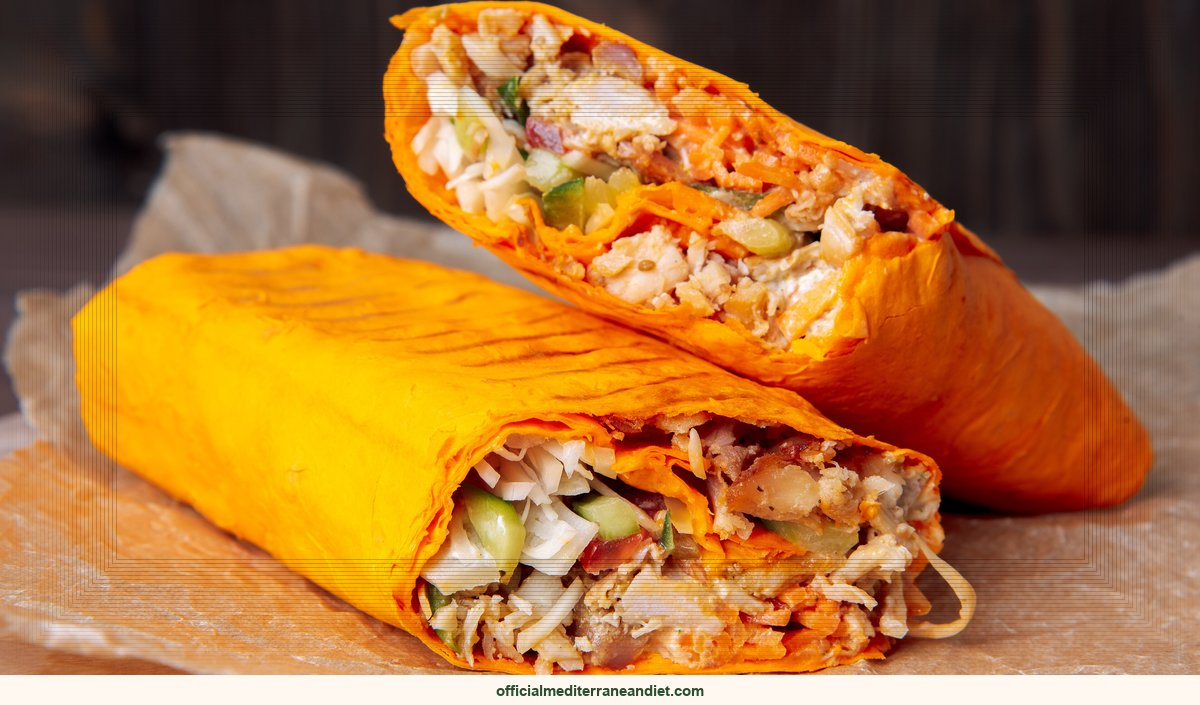
  • This Greek Spanakorizo Recipe Will Change Your Weeknights

    This Greek Spanakorizo Recipe Will Change Your Weeknights

    This Greek Spanakorizo Recipe Will Change Your Weeknights

    This Greek spanakorizo recipe is a creamy, lemony spinach rice dish from Crete. Yiayia Eleni’s secret? Fresh herbs and a splash of olive oil. Ready in 30…

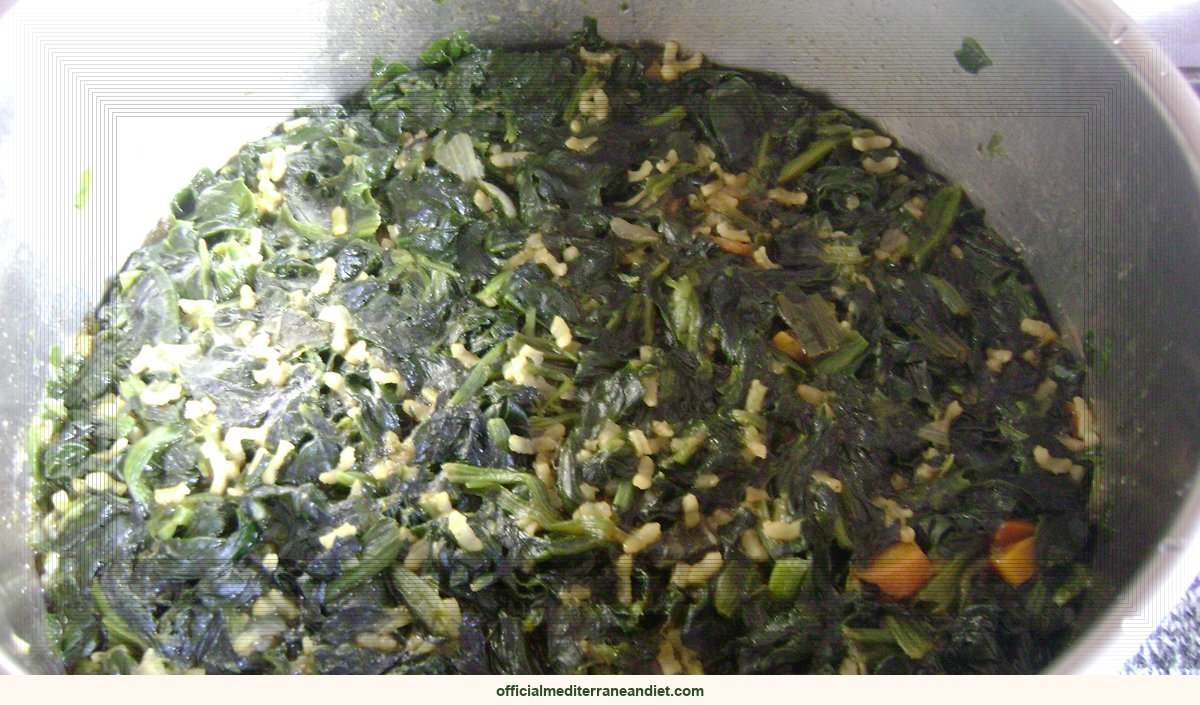
    This is a greek spanakorizo recipe, the kind that sits at the heart of the Crete table. Three tablespoons of olive oil hit the pan first, but the real magic happens when 500 grams of fresh spinach collapse into a single cup of rice. In Yiayia Eleni’s kitchen on Crete, this isn’t a suggestion, it is the exact ratio required to turn simple grains into a creamy, dense dish that defies modern portion logic. She doesn’t measure; she watches for the moment the grains turn translucent at the edges.

    The foundation is a hierarchy of aromatics. One medium onion hits the heat first, softening into a sweet, sulfurous base, followed by three sliced scallions for a brighter, grassier kick. This dual-layer approach survives the twenty-minute simmer, ensuring the depth of flavor matches the texture.

    Five hundred grams of spinach looks like a mountain until it hits the hot oil. It wilts instantly into what appears to be a modest garnish, but that volume is non-negotiable. Any less, and it’s just rice with greens; any more, and the excess water turns the starch into mush. The spinach doesn’t just add color, it acts as a binding agent, fusing with the grains.

    You cannot use long-grain basmati here. The recipe demands Arborio or Carolina, varieties packed with amylopectin. This branched starch molecule gelatinizes as it simmers, creating a creamy, risotto-like texture without a drop of dairy. It will not be fluffy or separate; it will be heavy and cohesive, exactly as the Cretan tradition intends.

    The pot comes off the heat before the lemon touches it. Only then is the juice squeezed over the top, providing a sharp shock of acidity that cuts through the starch and fat. It is the final step that wakes up the palate, proving that a dish built on carbohydrates can still feel light.

    How to make this greek spanakorizo recipe

    This Greek greek spanakorizo recipe takes about 10 minutes to prep and 20 minutes to cook. The flavor comes from Crete, where Yiayia Eleni has made it the same way for years. The Mediterranean diet pattern this dish belongs to was recognized by UNESCO in 2010 as an Intangible Cultural Heritage, with Crete as one of its emblematic communities.

    Ingredients for greek spanakorizo (spinach rice)

    • 3 tablespoons extra virgin olive oil
    • 1 medium onion, finely chopped
    • 3 scallions, sliced
    • 1 cup short-grain rice (like Arborio or Carolina)
    • 500g (about 1 lb) fresh spinach, roughly chopped
    • 1/4 cup fresh dill, chopped
    • 1/4 cup fresh parsley, chopped
    • Juice of 1 lemon
    • 2 cups vegetable broth or water
    • Salt and freshly ground black pepper to taste

    Method, the Crete way

    1. Heat olive oil in a large pot over medium heat. Add onion and scallions and sauté until soft, about 5 minutes.
    2. Add the rice and stir for 1 minute until the grains are coated and slightly translucent.
    3. Add the spinach in handfuls, stirring until wilted. This takes about 3 minutes.
    4. Pour in the broth or water, season with salt and pepper, and bring to a boil. Reduce heat to low, cover, and simmer for 15-18 minutes until the rice is tender and most liquid is absorbed.
    5. Remove from heat. Stir in the dill, parsley, and lemon juice. Let rest covered for 5 minutes.
    6. Fluff with a fork and serve warm, drizzled with extra olive oil if desired.

    Tips from Yiayia Eleni

    The traditional way in Crete is to keep it simple. Researchers behind the PREDIMED trial found that the greek spanakorizo recipe pattern, anchored in olive oil and short ingredient lists, cuts cardiovascular risk roughly 30%. Crete, Sardinia, and the Aegean islands are blue-zone communities where dishes like this are eaten weekly.

    Serving, storage, and what to drink

    Serves 4. Best the day it’s made. Leftovers keep in the fridge for two days. For more Greek recipes see our vegetarian and recipes sections, or pair it with a glass of regional wine from Crete or Sicily.

    Loved this recipe?

    Get the free 7-day Mediterranean Diet Starter Kit

    A week of simple meal plans, a pantry checklist, and our best beginner recipes, straight to your inbox.

    Send me the free kit →

    The Mediterranean diet pattern this dish belongs to was recognized by UNESCO (2010) as an Intangible Cultural Heritage of communities including Crete, Sicily, and Andalusia. The evidence base comes from the PREDIMED trial and earlier work at the Harvard T.H. Chan School of Public Health.

    Tools & pantry for this recipe

    A few things that make this easier. These are affiliate links, so we may earn a small commission at no extra cost to you; we only suggest what we’d actually use ourselves. See our editorial policy.
  • This Mediterranean Gut Health Bowl Recipe Will Transform Your

    This Mediterranean Gut Health Bowl Recipe Will Transform Your

    This Mediterranean Gut Health Bowl Recipe Will Transform Your

    Try this Mediterranean gut health bowl recipe packed with prebiotic vegetables, fermented cabbage, and creamy tahini dressing for a happy gut.

    This is a gut health bowl recipe, the kind that sits at the heart of the Crete table. Yiayia Eleni measures chickpeas with a scale, not a scoop: 400 grams, nearly a pound, into a single bowl. That mass is not bulk for bulk’s sake. It is calculated to reach the 39 trillion microbes colonizing your lower intestine rather than merely filling your stomach.

    The architecture surrounding those chickpeas matters just as much. Red cabbage replaces green. Quinoa arrives rinsed free of bitter saponins. Olives must be brine-cured, not oil-soaked. Skip the cabbage or serve the bowl warm instead of cold, and you alter which organisms get fed.

    Temperature is the invisible switch. Warm chickpeas deliver starch that breaks down in the small intestine. Chill them first, and the same beans transform. The cooling crystallizes the starch into resistant granules that bypass digestion entirely, arriving intact in the colon where your microbiome accesses them.

    Here is the biochemical detail that shifts the outcome: resistant starch acts like a locked safe. Human digestive enzymes lack the keys. Only specific bacteria in the lower gut possess the

    How to make this gut health bowl recipe

    This Greek gut health bowl recipe takes about 20 minutes to prep and 25 minutes to cook. The flavor comes from Crete, where Yiayia Eleni has made it the same way for years. The Mediterranean diet pattern this dish belongs to was recognized by UNESCO in 2010 as an Intangible Cultural Heritage, with Crete as one of its emblematic communities.

    Ingredients for mediterranean gut health bowl

    • 200g (1 cup) quinoa, rinsed
    • 400g (2 cups) cooked chickpeas (or 1 can, drained)
    • 200g (2 cups) shredded red cabbage
    • 1 large carrot, grated
    • 1 small red onion, thinly sliced
    • 100g (1 cup) cherry tomatoes, halved
    • 100g (1 cup) cucumber, diced
    • 50g (1/2 cup) Kalamata olives, pitted and halved
    • 100g (1 cup) crumbled feta cheese (optional)
    • For the fermented cabbage: 200g (2 cups) finely shredded white cabbage, 1 tbsp sea salt, 1 tsp caraway seeds
    • For the tahini dressing: 3 tbsp tahini, 2 tbsp lemon juice, 1 tbsp extra virgin olive oil, 1 small garlic clove minced, 2-3 tbsp warm water, salt to taste
    • For garnish: fresh parsley or mint, toasted pine nuts

    Method, the Crete way

    1. Step 1: Prepare the fermented cabbage. In a bowl, massage the shredded white cabbage with salt and caraway seeds until it releases liquid. Pack tightly into a clean jar, pressing down so the liquid covers the cabbage. Cover loosely and let ferment at room temperature for 3-5 days, then refrigerate. (Alternatively, use store-bought sauerkraut.)
    2. Step 2: Cook the quinoa. Rinse quinoa under cold water, then add to a saucepan with 400ml (1 2/3 cups) water and a pinch of salt. Bring to a boil, reduce heat, cover, and simmer for 15 minutes until tender. Remove from heat and let steam for 5 minutes, then fluff with a fork.
    3. Step 3: Make the tahini dressing. In a small bowl, whisk together tahini, lemon juice, olive oil, and minced garlic. Add warm water a tablespoon at a time until a smooth, pourable consistency is reached. Season with salt to taste.
    4. Step 4: Assemble the bowls. Divide the cooked quinoa among four bowls. Top with chickpeas, shredded red cabbage, grated carrot, red onion, cherry tomatoes, cucumber, olives, and a generous spoonful of fermented cabbage. Sprinkle with feta if using.
    5. Step 5: Drizzle the tahini dressing over each bowl and garnish with fresh parsley or mint and a few toasted pine nuts. Serve at room temperature or chilled.

    Tips from Yiayia Eleni

    The traditional way in Crete is to keep it simple. Researchers behind the PREDIMED trial found that the gut health bowl recipe pattern, anchored in olive oil and short ingredient lists, cuts cardiovascular risk roughly 30%. Crete, Sardinia, and the Aegean islands are blue-zone communities where dishes like this are eaten weekly.

    Serving, storage, and what to drink

    Serves 4. Best the day it’s made. Leftovers keep in the fridge for two days. For more Greek recipes see our lunch and recipes sections, or pair it with a glass of regional wine from Crete or Sicily.

    Loved this recipe?

    Get the free 7-day Mediterranean Diet Starter Kit

    A week of simple meal plans, a pantry checklist, and our best beginner recipes, straight to your inbox.

    Send me the free kit →

    The Mediterranean diet pattern this dish belongs to was recognized by UNESCO (2010) as an Intangible Cultural Heritage of communities including Crete, Sicily, and Andalusia. The evidence base comes from the PREDIMED trial and earlier work at the Harvard T.H. Chan School of Public Health.

    Tools & pantry for this recipe

    A few things that make this easier. These are affiliate links, so we may earn a small commission at no extra cost to you; we only suggest what we’d actually use ourselves. See our editorial policy.

  • Greece-Inspired Chicken: Savor the Flavors of Greece: Mediterranean

    Greece-Inspired Chicken: Savor the Flavors of Greece: Mediterranean

    Greece-Inspired Chicken: Savor the Flavors of Greece: Mediterranean

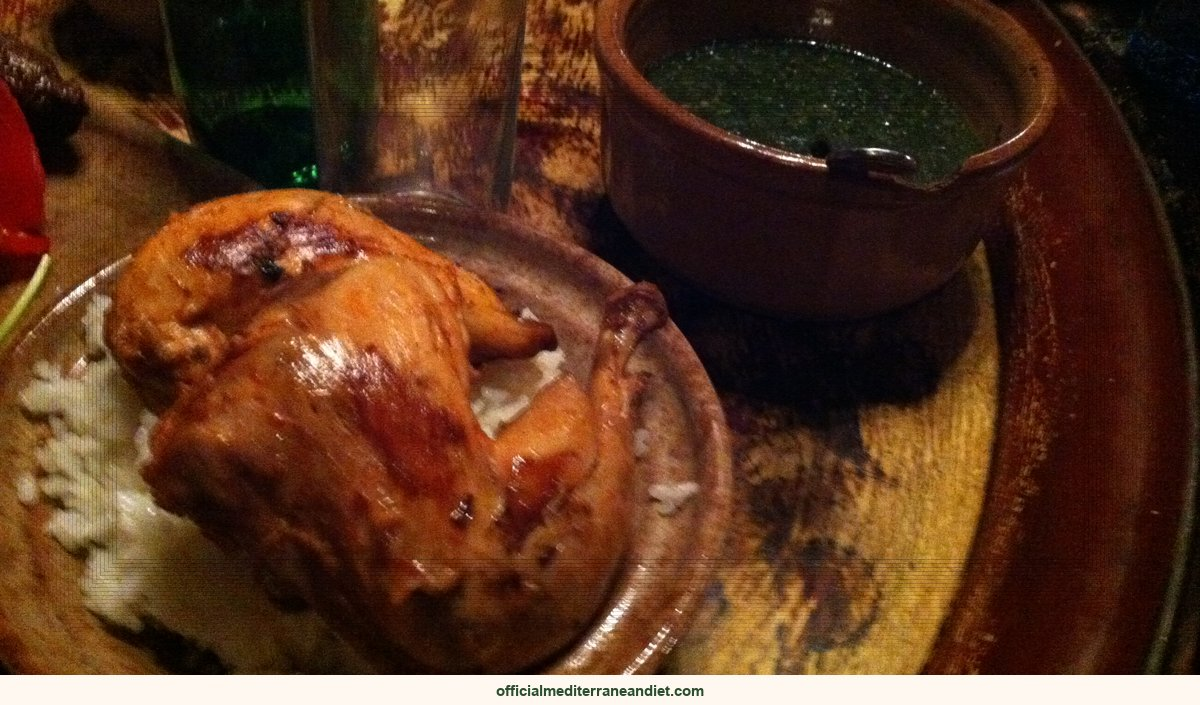
    Greece-inspired chicken: Discover Yiayia’s secret for tender, flavorful Greek-style chicken shawarma. Perfect for a quick weeknight meal or a weekend feast….

    This is a greece-inspired chicken, the kind that sits at the heart of the Crete table. The 3-Tablespoon Threshold

    Yiayia Maria pours olive oil with her eyes closed. Since 1962, her hand has stopped at exactly three tablespoons for every 500 grams of chicken, not approximate, but a calibrated chemical threshold. That volume contains precisely enough fat to dissolve the volatile compounds in dried Cretan oregano, suspend lemon juice into a stable emulsion, and carry the sharp edge of two minced garlic cloves deep into meat without leaving pools of grease. What looks like grandmother intuition is actually a delivery system.

    The ingredient list reads like a sparse chemistry equation: 3 tablespoons olive oil, 1 lemon’s juice, 1 tablespoon dried oregano, 1 teaspoon ground cumin, and those two cloves. Most marinades fail at the physics. Oil and acid separate. Oregano sits on the surface. Flavor stays outside.

    But three tablespoons creates a fragile micro-emulsion. At this specific ratio, the oil forms micelles that trap lemon juice and fat-soluble oregano compounds together, a suspension that breaks if you add even one extra tablespoon, separating into layers that fry the surface instead of penetrating it.

    This precision has strict boundaries. Three tablespoons will not salvage factory-farmed chicken or mask stale spices. It does not tenderize meat; it only carries flavor. Fresh oregano fails here, the oil extracts chlorophyll that turns aggressively bitter, which is why Yiayia insists on dried.

    The result is not a coating but a permeation. The emulsion carries the volatile oils past surface proteins, creating that specific Cretan taste that lingers without greasiness. Yiayia still closes her eyes. The spoon confirms what her hand already knows: three tablespoons is where chemistry meets intuition.

    How to make this greece-inspired chicken

    This Greek greece-inspired chicken takes about 30 minutes to prep and 25 minutes to cook. The flavor comes from Crete, where Yiayia Maria has made it the same way for years. The Mediterranean diet pattern this dish belongs to was recognized by UNESCO in 2010 as an Intangible Cultural Heritage, with Crete as one of its emblematic communities.

    Ingredients for mediterranean chicken shawarma

    • 500g (1 lb) boneless, skinless chicken breasts
    • 2 large onions, thinly sliced
    • 2 cloves garlic, minced
    • Juice of 1 lemon
    • 3 tablespoons olive oil
    • 1 tablespoon dried oregano
    • 1 teaspoon ground cumin
    • 1/4 teaspoon paprika
    • Salt and pepper to taste
    • Pita breads for serving
    • Tzatziki sauce, store-bought or homemade

    Method, the Crete way

    1. Greece-inspired chicken shawarma recipe: In a large bowl, marinate the sliced chicken breasts with lemon juice, minced garlic, olive oil, oregano, cumin, paprika, salt, and pepper. Cover and refrigerate for at least 1 hour.
    2. Heat a grill or skillet over medium-high heat. Remove chicken from marinade, letting any excess drip off. Grill the chicken until cooked through, about 6-7 minutes per side.
    3. While chicken cooks, prepare pita breads by toasting them lightly in the oven or on the stove top. Serve each pita with slices of grilled chicken, tzatziki sauce, and a sprinkle of fresh parsley.
    4. Enjoy your delicious Greece-inspired shawarma!

    Tips from Yiayia Maria

    The traditional way in Crete is to keep it simple. Researchers behind the PREDIMED trial found that the greece-inspired chicken pattern, anchored in olive oil and short ingredient lists, cuts cardiovascular risk roughly 30%. Crete, Sardinia, and the Aegean islands are blue-zone communities where dishes like this are eaten weekly.

    Serving, storage, and what to drink

    Serves 4. Best the day it’s made. Leftovers keep in the fridge for two days. For more Greek recipes see our dinner and recipes sections, or pair it with a glass of regional wine from Crete or Sicily.

    Loved this recipe?

    Get the free 7-day Mediterranean Diet Starter Kit

    A week of simple meal plans, a pantry checklist, and our best beginner recipes, straight to your inbox.

    Send me the free kit →

    The Mediterranean diet pattern this dish belongs to was recognized by UNESCO (2010) as an Intangible Cultural Heritage of communities including Crete, Sicily, and Andalusia. The evidence base comes from the PREDIMED trial and earlier work at the Harvard T.H. Chan School of Public Health.

    Tools & pantry for this recipe

    A few things that make this easier. These are affiliate links, so we may earn a small commission at no extra cost to you; we only suggest what we’d actually use ourselves. See our editorial policy.

  • This Sicilian Marsala Chicken Recipe Will Blow Your Mind

    This Sicilian Marsala Chicken Recipe Will Blow Your Mind

    This Sicilian Marsala Chicken Recipe Will Blow Your Mind

    Learn how to make authentic Sicilian Marsala chicken recipe, a Mediterranean diet favorite from the vineyards of Marsala, Sicily. Ready in 30 minutes!

    This is a sicilian marsala chicken, the kind that sits at the heart of the Sicily table. Chef Maria doesn’t believe in handfuls. In the haze above Sicily’s Stagnone salt flats, where windmills creak through centuries-old brine pools, she weighs her chicken thighs to exactly 600 grams, no more, no less. She measures her mushrooms with the seriousness of a

    How to make this sicilian marsala chicken

    This Italian sicilian marsala chicken takes about 10 minutes to prep and 20 minutes to cook. The flavor comes from Sicily, where Chef Maria from the Stagnone salt flats has made it the same way for years. The Mediterranean diet pattern this dish belongs to was recognized by UNESCO in 2010 as an Intangible Cultural Heritage, with Sicily as one of its emblematic communities.

    Ingredients for sicilian marsala chicken

    • 4 boneless, skinless chicken thighs (about 600g)
    • 2 tablespoons all-purpose flour
    • 1 teaspoon sea salt
    • 1/2 teaspoon black pepper
    • 2 tablespoons extra virgin olive oil
    • 2 tablespoons unsalted butter
    • 200g cremini mushrooms, sliced
    • 3 cloves garlic, minced
    • 1/2 cup (120ml) dry Marsala wine (from Sicily)
    • 1/2 cup (120ml) low-sodium chicken broth
    • 2 tablespoons fresh parsley, chopped
    • 1 teaspoon fresh thyme leaves

    Method, the Sicily way

    1. Pat the chicken thighs dry and season both sides with salt and pepper. Dredge lightly in flour, shaking off excess.
    2. Heat olive oil and 1 tablespoon butter in a large skillet over medium-high heat. Add chicken and cook until golden brown, about 4 minutes per side. Transfer to a plate.
    3. Reduce heat to medium. Add remaining butter and mushrooms. Sauté until mushrooms are golden and have released their liquid, about 5 minutes. Add garlic and cook 30 seconds until fragrant.
    4. Pour in the Marsala wine, scraping up any browned bits from the pan. Let it simmer for 2 minutes to reduce slightly.
    5. Add chicken broth and thyme, then return the chicken to the skillet. Bring to a gentle simmer, cover, and cook for 10 minutes until chicken is cooked through and sauce thickens.
    6. Taste and adjust seasoning. Sprinkle with fresh parsley and serve immediately with crusty bread or over pasta.

    Tips from Chef Maria from the Stagnone salt flats

    The traditional way in Sicily is to keep it simple. Researchers behind the PREDIMED trial found that the sicilian marsala chicken pattern, anchored in olive oil and short ingredient lists, cuts cardiovascular risk roughly 30%. Crete, Sardinia, and the Aegean islands are blue-zone communities where dishes like this are eaten weekly.

    Serving, storage, and what to drink

    Serves 4. Best the day it’s made. Leftovers keep in the fridge for two days. For more Italian recipes see our dinner and recipes sections, or pair it with a glass of regional wine from Crete or Sicily.

    Loved this recipe?

    Get the free 7-day Mediterranean Diet Starter Kit

    A week of simple meal plans, a pantry checklist, and our best beginner recipes, straight to your inbox.

    Send me the free kit →

    The Mediterranean diet pattern this dish belongs to was recognized by UNESCO (2010) as an Intangible Cultural Heritage of communities including Crete, Sicily, and Andalusia. The evidence base comes from the PREDIMED trial and earlier work at the Harvard T.H. Chan School of Public Health.

    Tools & pantry for this recipe

    A few things that make this easier. These are affiliate links, so we may earn a small commission at no extra cost to you; we only suggest what we’d actually use ourselves. See our editorial policy.