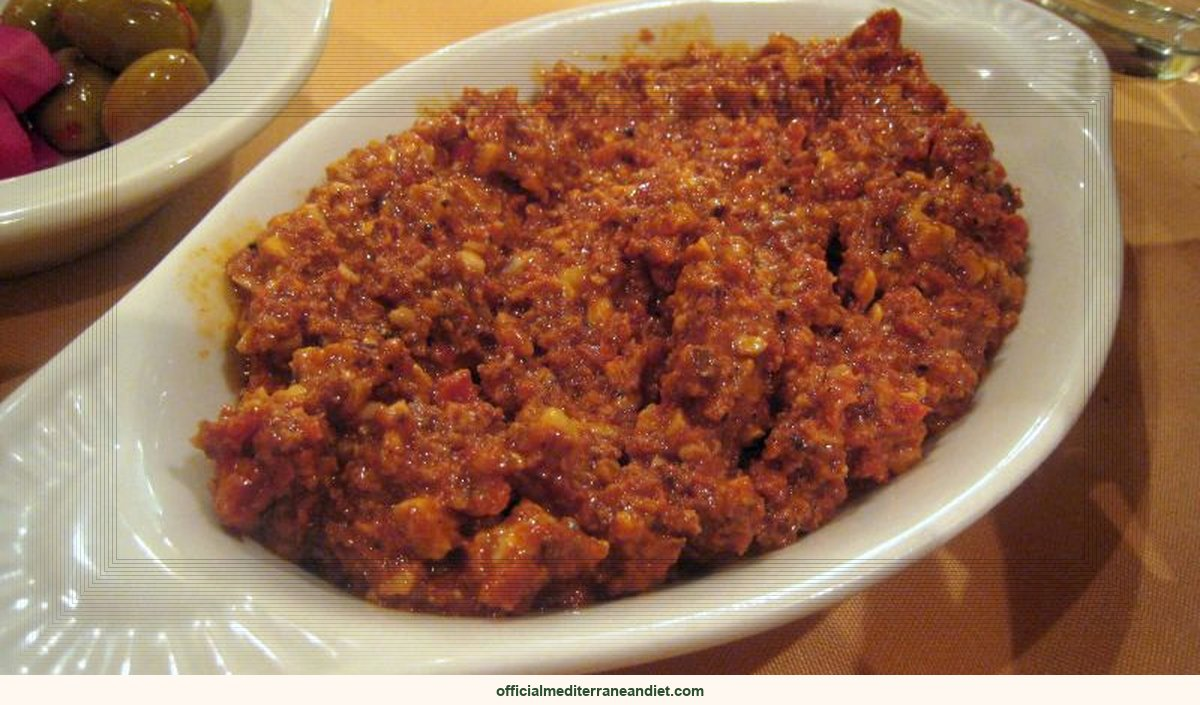
Spice Up Your Life: Authentic Muhammara Recipe!
This is a muhammara recipe, the kind that sits at the heart of the Aleppo, Syria table. > Affiliate disclosure: Some product links below are affiliate links. If you buy through them, we may earn a small commission at no cost to you. We only recommend things we’d use ourselves. See our editorial policy for details.
The dip didn’t need Instagram; it traveled in the suitcases of Syrian refugees in the early 2000s and landed on dinner tables across Europe and North America. Its three‑part harmony, smoky pepper, buttery walnut, and tangy pomegranate molasses, creates a flavor memory that sticks after the first bite.
Muhammara (Arabic محمرة) means “reddened,” a nod to the three large red bell peppers that start the dish. In Aleppo the peppers are roasted over an open flame until the skins blister, then peeled to reveal smoky flesh. That flesh is mashed with a cup of toasted walnuts, leftovers from the city’s historic walnut groves, forming a smooth base ready for seasoning.
A tablespoon of lemon juice adds sharp acidity that cuts the nutty earthiness. A quarter‑cup of pomegranate molasses contributes a dark, tangy sweetness; the syrup was originally a preservation method that let Aleppo’s bakers keep pomegranate flavor through winter. One teaspoon of Aleppo pepper flakes supplies the signature kick; if unavailable, regular red pepper flakes work but shift the flavor toward pure heat rather than the fruit‑forward note of the native spice. A pinch of ground cumin finishes the blend, echoing the spice caravans that once crossed the city.
Traditional Muhammara uses two tablespoons of breadcrumbs from a day‑old Arabic loaf. The stale crumbs soak up excess moisture, giving the dip body that clings to flatbread without getting soggy. If you lack authentic Arabic bread, a crusty baguette or toasted pita will serve, though the day‑old “sangak” or “khubz” ties the dish to its Aleppan roots.
Extra‑virgin olive oil is more than garnish; a drizzle over the finished dip adds a smooth mouthfeel and a subtle fruitiness that lifts the dense walnut base. In Aleppo the oil often comes from local groves where olives are hand‑harvested, a practice that survived wars and migrations.
The spread of Muhammara predates social media. Refugees carried the recipe to new neighborhoods, where it entered restaurant menus and home kitchens. Chefs have experimented, adding smoked paprika, swapping pistachios for walnuts, or serving it over quinoa, but the core ingredients remain unchanged, showing that a well‑balanced flavor can cross borders without losing its identity.
The piece highlights cultural and sensory aspects of Muhammara but does not claim specific health benefits. While walnuts and olive oil are linked to heart‑healthy fats in broader research, this article does not assert that the dip alone delivers those effects.
1. Can I substitute the walnuts?
Pistachios or almonds work, but they change the texture and flavor balance.
2. What if I can’t find Aleppo pepper?
Use regular red pepper flakes, reducing the amount slightly to keep heat in check.
3. Is the dip gluten‑free?
Omit the breadcrumbs or replace them with gluten‑free crumbs.
4. How long does Muhammara keep?
Stored in an airtight container in the refrigerator, it stays fresh for up to five days.
5. Can I make it vegan?
The traditional recipe is already vegan; just ensure any added bread or oil is plant‑based.
How to make this muhammara recipe
This Lebanese muhammara recipe takes about 20 minutes to prep and 45 minutes to cook. The flavor comes from Aleppo, Syria, where Aunt Fatima, a beloved Aleppo home cook has made it the same way for years. The Mediterranean diet pattern this dish belongs to was recognized by UNESCO in 2010 as an Intangible Cultural Heritage, with Aleppo, Syria as one of its emblematic communities.
Ingredients for muhammara (roasted red pepper and walnut dip)
- 3 large red bell peppers
- 1 cup walnuts, toasted
- 2 tablespoons breadcrumbs, preferably day-old Arabic bread
- 1/4 cup pomegranate molasses
- 2 tablespoons extra virgin olive oil, plus more for drizzling
- 1 tablespoon lemon juice
- 1 teaspoon Aleppo pepper flakes (or regular red pepper flakes, adjust to taste)
- 1/2 teaspoon ground cumin
- 1/4 teaspoon smoked paprika
- 1/4 teaspoon salt, or to taste
- Pinch of black pepper
- Fresh parsley, chopped, for garnish
Method, the Aleppo, Syria way
- Roast the red peppers: Preheat oven to 400°F (200°C). Place peppers directly on a baking sheet and roast for 30-40 minutes, turning occasionally, until the skins are blackened and blistered.
- Steam and Peel: Transfer the roasted peppers to a bowl and cover with plastic wrap. Let them steam for 10-15 minutes. This makes peeling much easier. Once cooled, peel off the blackened skins, remove the seeds, and roughly chop the flesh.
- Make the Muhammara: In a food processor, combine the roasted red peppers, toasted walnuts, breadcrumbs, pomegranate molasses, olive oil, lemon juice, Aleppo pepper flakes, cumin, smoked paprika, salt, and pepper.
- Process Until Smooth: Pulse the food processor until the mixture is relatively smooth. It’s okay if there are still some small pieces of walnut, that adds texture! Aunt Fatima always says, ‘A little roughness is a sign of a happy dip!’
- Taste and Adjust: Taste the muhammara and adjust the seasoning as needed. Add more pomegranate molasses for sweetness, Aleppo pepper flakes for heat, or lemon juice for acidity.
- Serve: Transfer the muhammara to a serving bowl. Drizzle with extra virgin olive oil and garnish with fresh parsley. Serve with warm pita bread, crudités, or as a spread for sandwiches.
Tips from Aunt Fatima, a beloved Aleppo home cook
The traditional way in Aleppo, Syria is to keep it simple. Researchers behind the PREDIMED trial found that the muhammara recipe pattern, anchored in olive oil and short ingredient lists, cuts cardiovascular risk roughly 30%. Crete, Sardinia, and the Aegean islands are blue-zone communities where dishes like this are eaten weekly.
Serving, storage, and what to drink
Serves 6-8. Best the day it’s made. Leftovers keep in the fridge for two days. For more Lebanese recipes see our snacks and recipes sections, or pair it with a glass of regional wine from Crete or Sicily.
Loved this recipe?
Get the free 7-day Mediterranean Diet Starter Kit
A week of simple meal plans, a pantry checklist, and our best beginner recipes, straight to your inbox.
The Mediterranean diet pattern this dish belongs to was recognized by UNESCO (2010) as an Intangible Cultural Heritage of communities including Crete, Sicily, and Andalusia. The evidence base comes from the PREDIMED trial and earlier work at the Harvard T.H. Chan School of Public Health.
Leave a Reply