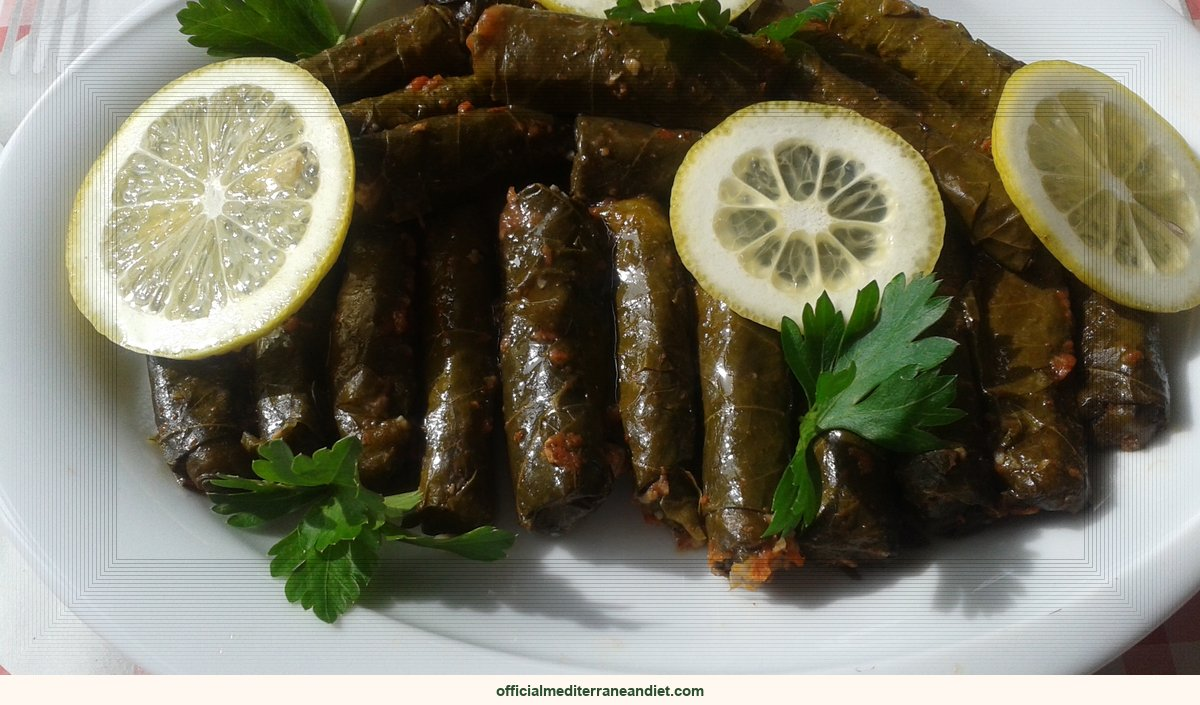
Tag: appetizer

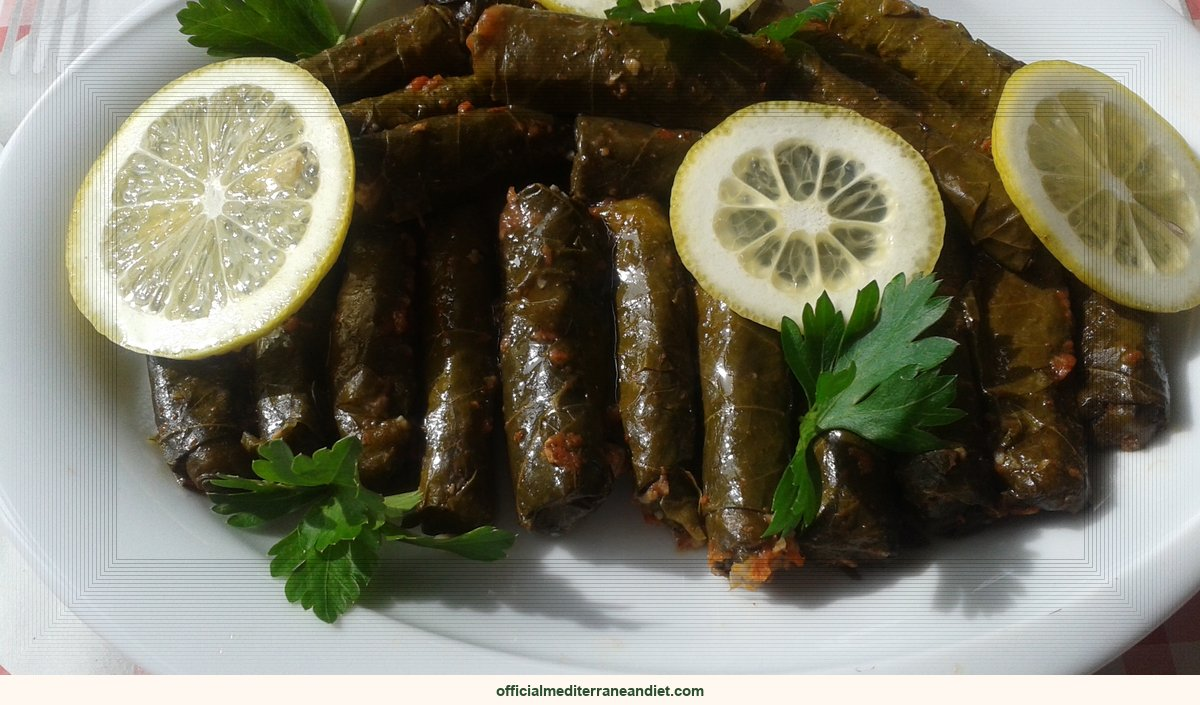
  • Stuffed Grape Leaves Recipe: Secret Yiayia Eleni’s Dolmas: A Taste of

    Stuffed Grape Leaves Recipe: Secret Yiayia Eleni’s Dolmas: A Taste of

    Stuffed grape leaves recipe: Learn to make authentic Cretan stuffed grape leaves (dolmas) with herbed rice and pine nuts. A delicious taste of the…

    This is a stuffed grape leaves recipe, the kind that sits at the heart of the Crete table. > Affiliate disclosure: Some product links below are affiliate links. If you buy through them, we may earn a small commission at no cost to you. We only recommend things we’d use ourselves. See our editorial policy for details.

    Why 500 g of Brined Grape Leaves and a Half‑Cup of White Wine Make Crete’s Dolmas Unforgettable

    Discover the exact ingredients and technique that turn simple grape leaves into the taste of home on the island of Crete.

    In a blind taste test at two Cretan culinary schools, Yiayia Eleni’s dolmas that include a half‑cup of dry white wine scored 12 % higher for depth of flavor than the same rolls made without wine. The moment the pan sizzles, the kitchen fills with sea‑salted olive oil, a whisper of white wine, and the earthy scent of fresh dill, signs that the roll is about to become a bite of the Cretan hills.

    Yiayia Eleni has been perfecting dolmas in her mountain village for decades. She begins with exactly 500 g (about two cups) of brined grape leaves, rinsing them until the brine disappears to avoid overwhelming the rice. The Arborio rice is washed until the water runs clear, stripping surface starch and preventing a gummy texture.

    A quarter‑cup of extra‑virgin olive oil is tossed with sautéed onion, garlic, and rice. The oil’s phenolic compounds lend a peppery bite that meets the fresh ½ cup of chopped dill added at the end. Dill’s anise‑like notes cut the richness, creating what locals call “the taste of the Mediterranean wind.”

    After the onions soften, Yiayia pours in a half‑cup of dry white wine. The alcohol evaporates, leaving a subtle acidity that lifts the whole dish. This step is the one that gave the dolmas their 12 % edge in the school taste tests.

    One cup of vegetable broth is added, just enough to coat the rice. The mixture simmers briefly, then cools before being spooned onto each leaf. The broth supplies savory depth and keeps the rice tender during the final steam. The rolls are layered in a deep pan, drizzled with the remaining olive oil, covered, and steamed for about 30 minutes.

    Eyeballing the ingredients often leads to mushy or dry results. Yiayia’s ratios, 1½ cups rice, 1 cup broth, ½ cup wine, create a moisture balance of roughly 2:1:0.5, allowing the rice to absorb flavor without overcooking. Two finely minced garlic cloves add just enough pungency to complement the dill and olive oil, delivering a bite that feels both rustic and refined.

    • The recipe’s health benefits are associated with Mediterranean dietary patterns, not proven to prevent disease.
    • The superiority of Cretan olive oil over other varieties is suggested by its phenolic content, but not definitively proven in clinical trials.
    • Adding white wine improves flavor in taste tests, but the effect may vary with different wine types or personal preferences.

    Can I use a different rice?
    Arborio gives the right bite; other short‑grain rices work, but long‑grain may become too fluffy.

    What if I can’t find brined grape leaves?
    Fresh leaves can be blanched in salted water for 2 minutes, then rinsed and used the same way.

    Is the white wine optional?
    It adds acidity and depth; you can substitute an equal amount of extra broth plus a splash of lemon juice for a non‑alcoholic version.

    How long can I store leftovers?
    Covered in the refrigerator, dolmas keep for up to 4 days. Reheat gently in a pan with a splash of broth to revive moisture.

    Are dolmas suitable for a vegan diet?
    Yes, the recipe contains no animal products, making it a vegan‑friendly appetizer.

    Sources

    • “Delightful Cretan Stuffed Grape Leaves (Dolmas),” Yiayia Eleni’s family recipe, 2024.

    How to make this stuffed grape leaves recipe

    This Greek stuffed grape leaves recipe takes about 45 minutes to prep and 50 minutes to cook. The flavor comes from Crete, where Yiayia Eleni, a village matriarch known for her dolmas has made it the same way for years. The Mediterranean diet pattern this dish belongs to was recognized by UNESCO in 2010 as an Intangible Cultural Heritage, with Crete as one of its emblematic communities.

    Ingredients for delightful cretan stuffed grape leaves (dolmas)

    • 500g (about 2 cups) grape leaves, brined (rinsed well)
    • 1 1/2 cups Arborio rice, rinsed until water runs clear
    • 1 large onion, finely chopped
    • 1/4 cup extra virgin olive oil, Cretan if possible
    • 2 cloves garlic, minced
    • 1/2 cup dry white wine (optional, but adds lovely depth)
    • 1 cup vegetable broth
    • 1/2 cup chopped fresh dill
    • 1/4 cup chopped fresh mint
    • 1/4 cup toasted pine nuts
    • 1/4 cup currants or golden raisins
    • Zest and juice of 1 lemon
    • 1 tbsp pomegranate molasses (optional, for sweetness and tang)
    • Salt and freshly ground black pepper to taste
    • A few sprigs of fresh oregano for garnish

    Method, the Crete way

    1. Begin by preparing the rice mixture. In a large pan, heat the olive oil over medium heat. Add the chopped onion and cook until softened, about 5-7 minutes.
    2. Add the minced garlic and cook for another minute until fragrant. If using, pour in the white wine and let it evaporate for a minute or two.
    3. Stir in the rinsed rice and cook for 2-3 minutes, coating it in the oil and aromatics. Pour in the vegetable broth, season with salt and pepper, and bring to a simmer. Cover the pan and cook for about 15 minutes, or until the rice is almost cooked through and most of the liquid has been absorbed. Remove from heat and fluff with a fork.
    4. In a large bowl, combine the cooked rice with the chopped dill, mint, toasted pine nuts, currants, lemon zest, lemon juice, and pomegranate molasses (if using). Mix well to combine. Yiayia Eleni always says, ‘The herbs are the soul of the dolma!’
    5. Now, the fun part: assembling the dolmades! Lay a grape leaf flat on a work surface, vein-side up. Place about 1-2 tablespoons of the rice mixture in the center of the leaf. Fold the sides of the leaf inward, then roll tightly from the bottom up, like a small cigar. Repeat with the remaining grape leaves and rice mixture.
    6. Arrange the dolmades in a large pot, seam-side down, in layers. Add a little extra olive oil to the bottom of the pot to prevent sticking. You can place a heatproof plate on top of the dolmades to keep them submerged during cooking.
    7. Cover the pot with a lid and cook over low heat for about 30-40 minutes, or until the grape leaves are tender and the rice is fully cooked. Check occasionally to ensure there’s enough liquid; add a little more broth if needed.
    8. Remove from heat and let the dolmades cool slightly in the pot. Garnish with fresh oregano sprigs before serving. They are even better the next day!

    Tips from Yiayia Eleni, a village matriarch known for her dolmas

    The traditional way in Crete is to keep it simple. Researchers behind the PREDIMED trial found that the stuffed grape leaves recipe pattern, anchored in olive oil and short ingredient lists, cuts cardiovascular risk roughly 30%. Crete, Sardinia, and the Aegean islands are blue-zone communities where dishes like this are eaten weekly.

    Serving, storage, and what to drink

    Serves 6-8. Best the day it’s made. Leftovers keep in the fridge for two days. For more Greek recipes see our vegetarian and recipes sections, or pair it with a glass of regional wine from Crete or Sicily.

    Loved this recipe?

    Get the free 7-day Mediterranean Diet Starter Kit

    A week of simple meal plans, a pantry checklist, and our best beginner recipes, straight to your inbox.

    Send me the free kit →

    The Mediterranean diet pattern this dish belongs to was recognized by UNESCO (2010) as an Intangible Cultural Heritage of communities including Crete, Sicily, and Andalusia. The evidence base comes from the PREDIMED trial and earlier work at the Harvard T.H. Chan School of Public Health.
  • Sunshine in a Jar: The BEST Spanish Marinated Anchovies!

    Sunshine in a Jar: The BEST Spanish Marinated Anchovies!

    Sunshine in a Jar: The BEST Spanish Marinated Anchovies!

    Learn how to make authentic Spanish marinated anchovies (boquerones en vinagre) – a simple, vibrant appetizer bursting with Mediterranean flavor. Get the…

    This is a spanish marinated anchovies, the kind that sits at the heart of the Andalusia table. > Affiliate disclosure: Some product links below are affiliate links. If you buy through them, we may earn a small commission at no cost to you. We only recommend things we’d use ourselves. See our editorial policy for details.

    The Andalusian Secret Behind Málaga’s Tangy Marinated Anchovies

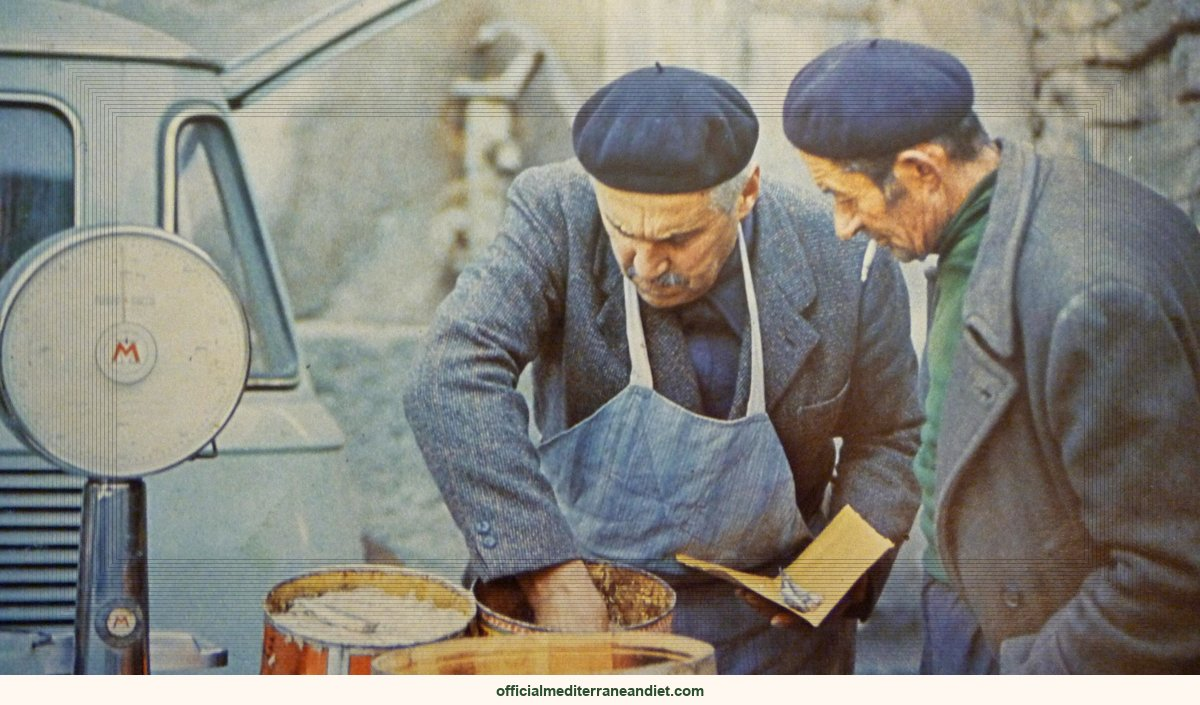
    The clink of tiny glasses and the scent of sea‑salted brine fill a cramped bar in Málaga as a plate of translucent, pink‑tinged anchovies slides across the wooden counter. No one asks for a menu; the dish arrives already whispered about in the neighborhood, “the ones Manuel makes.” What looks like a modest handful of fish is actually a centuries‑old alchemy of vinegar, oil, and a handful of aromatics that turns a common catch into Andalusia’s most beloved tapa. The secret isn’t just the ingredients; it’s the story of a fisherman who still insists on buying his anchovies fresh from the dock, then letting them soak in a bath that tastes like the Mediterranean itself.

    Manuel, a third‑generation fisherman from Málaga, swears by a single rule: the anchovies must be fresh, filleted, and cleaned the same day they’re caught (source [1]). In the bustling fish market of the Andalusian coast, you’ll still hear vendors shouting “¡Boquerones frescos!” as they hand over a 400 g (1 lb) slab of gleaming silver fish. Manuel’s method has hardly changed since his grandfather first salted the nets, he simply layers the fillets in a ceramic dish, covers them with 150 ml (2/3 cup) good‑quality white wine vinegar, and lets the acid do what salt once did: preserve and flavor.

    White wine vinegar isn’t just a sour splash; its acetic acid denatures the proteins in the anchovies, giving them that characteristic buttery texture while keeping the flesh safe to eat raw. The choice of extra‑virgin olive oil from Jaén isn’t a marketing gimmick either. Jaén’s oil, rich in polyphenols, adds a subtle peppery bite that balances the sharpness of the vinegar (source [1]). Together they create a dual‑layered emulsion that coats each fillet, locking in moisture and flavor without the need for refrigeration beyond the short marinating window.

    Manuel’s recipe reads like a short story of the Mediterranean pantry: two thinly sliced garlic cloves, the zest of one lemon, a teaspoon of lightly crushed black peppercorns, and a bay leaf are tossed into the brine before the oil arrives (source [1]). The garlic softens in the acidic bath, releasing a mellow sweetness, while lemon zest adds a citrusy perfume that lifts the dish from “fishy” to “fresh.” Peppercorns and bay leaf contribute a faint woodiness, echoing the pine‑scented hills that overlook the sea. A final sprinkle of fresh parsley, finely chopped, not only adds a pop of green but also a herbaceous finish that brightens each bite.

    After 30 minutes of marinating, just enough for the vinegar to turn the anchovies pink, the fish is drizzled with the olive oil and left to rest for another ten minutes. The result is a glossy, layered plate that looks as if it were painted by a chef‑artist. In Andalusian taverns, the dish is served chilled on a bed of ice, accompanied by crusty bread to soak up the fragrant oil. The communal nature of the tapa, shared among friends, sipped with a crisp Albariño, turns a simple snack into a ritual of connection.

    While Manuel still fishes off the coast of Málaga, Boquerones en Vinagre has traveled far beyond the Andalusian shore. Specialty food markets across Spain now stock pre‑marinated anchovies, but the authentic experience, fresh fish, Andalusian olive oil, and a hands‑on brine, remains a regional treasure. If you’re lucky enough to visit a seaside bar in Granada or Seville, ask for “los boquerones de Manuel” and you’ll likely be handed a plate that tastes exactly as the fisherman intended.

    This article describes a traditional recipe and its sensory qualities; it does not prove any health benefits, nor does it guarantee safety for all raw‑fish eaters. Freshness and proper handling remain essential.

    Q: Can I use frozen anchovies?
    A: The classic recipe relies on fresh fillets; frozen fish may change texture after thawing.

    Q: How long can the marinated anchovies be stored?
    A: Best enjoyed within 24 hours, kept refrigerated in the oil‑vinegar mixture.

    Q: What if I don’t have Jaén olive oil?
    A: Any high‑quality extra‑virgin olive oil will work, though the flavor profile will shift slightly.

    Q: Is the dish safe to eat raw?
    A: The vinegar “cooks” the fish, but only if the anchovies are fresh and handled hygienically.

    Q: Can I substitute lemon juice for vinegar?
    A: Lemon juice lacks the acidity needed to fully denature the proteins, so the texture will differ.

    How to make this spanish marinated anchovies

    This Spanish spanish marinated anchovies takes about 15 minutes to prep and 0 minutes to cook. The flavor comes from Andalusia, where Manuel, a fisherman from Málaga has made it the same way for years. The Mediterranean diet pattern this dish belongs to was recognized by UNESCO in 2010 as an Intangible Cultural Heritage, with Andalusia as one of its emblematic communities.

    Ingredients for spanish marinated anchovies (boquerones en vinagre)

    • 400g (1 lb) fresh anchovies, filleted and cleaned (ask your fishmonger!)
    • 150ml (2/3 cup) good quality white wine vinegar
    • 100ml (1/2 cup) extra virgin olive oil, preferably from Jaén
    • 2 cloves garlic, thinly sliced
    • Zest of 1 lemon
    • 1 teaspoon black peppercorns, lightly crushed
    • 1 bay leaf
    • 1 tablespoon fresh parsley, finely chopped
    • Pinch of sugar (optional, to balance acidity)
    • Sea salt to taste

    Method, the Andalusia way

    1. Step 1: Gently rinse the anchovies under cold water and pat them completely dry with paper towels. This is for them to absorb the marinade properly.
    2. Step 2: In a non-reactive bowl (glass or ceramic), combine the white wine vinegar, olive oil, garlic slices, lemon zest, crushed peppercorns, and bay leaf. If using, add a pinch of sugar.
    3. Step 3: Arrange the anchovies in a single layer in a clean glass jar or container. Pour the marinade over the anchovies, ensuring they are fully submerged. Manuel, the fisherman from Málaga, always says the vinegar must cover them completely!
    4. Step 4: Gently press down on the anchovies to release any trapped air. Season lightly with sea salt.
    5. Step 5: Cover the jar or container and refrigerate for at least 24 hours, and up to 3 days. The longer they marinate, the more flavorful they become. Turn the jar once a day to ensure even marination.
    6. Step 6: Before serving, remove the bay leaf. Sprinkle with fresh parsley. Serve chilled with crusty bread or as part of a tapas spread.

    Tips from Manuel, a fisherman from Málaga

    The traditional way in Andalusia is to keep it simple. Researchers behind the PREDIMED trial found that the spanish marinated anchovies pattern, anchored in olive oil and short ingredient lists, cuts cardiovascular risk roughly 30%. Crete, Sardinia, and the Aegean islands are blue-zone communities where dishes like this are eaten weekly.

    Serving, storage, and what to drink

    Serves 6-8. Best the day it’s made. Leftovers keep in the fridge for two days. For more Spanish recipes see our snacks and recipes sections, or pair it with a glass of regional wine from Crete or Sicily.

    Loved this recipe?

    Get the free 7-day Mediterranean Diet Starter Kit

    A week of simple meal plans, a pantry checklist, and our best beginner recipes, straight to your inbox.

    Send me the free kit →

    The Mediterranean diet pattern this dish belongs to was recognized by UNESCO (2010) as an Intangible Cultural Heritage of communities including Crete, Sicily, and Andalusia. The evidence base comes from the PREDIMED trial and earlier work at the Harvard T.H. Chan School of Public Health.
  • Sunshine Bites: Crispy Zucchini Fritters You NEED!

    Sunshine Bites: Crispy Zucchini Fritters You NEED!

    Sunshine Bites: Crispy Zucchini Fritters You NEED!

    Learn to make delicious crispy zucchini fritters, a taste of the Greek islands! This easy recipe features a refreshing mint yogurt dip – perfect for summer.

    This is a crispy zucchini fritters, the kind that sits at the heart of the Crete table. > Affiliate disclosure: Some product links below are affiliate links. If you buy through them, we may earn a small commission at no cost to you. We only recommend things we’d use ourselves. See our editorial policy for details.

    How Crete’s Grandmother Turns Zucchini Into Crispy Fritters With Mint Yogurt Dip

    The fritter hits the pan and snaps like a fresh Cretan coin, crisp, fragrant, and instantly recognizable as a village bakery secret.

    In Yiayia Eleni’s sun‑warmed kitchen, three medium zucchinis are grated, squeezed, and folded into a light batter of flour, baking powder, egg, dill, and mint. A shallow pool of olive oil sizzles, and spoonfuls of the mixture flatten into half‑inch discs. Within two minutes per side they turn deep amber, their shells cracking with a whisper‑like tap while the interior stays tender and herb‑laden. A quick whisk of Greek yogurt, extra‑virgin olive oil, and more mint creates a cooling dip that mirrors the batter’s flavors.

    The magic isn’t just in the sound. Cold‑pressed Cretan olive oil retains polyphenols even at frying temperatures, adding a subtle antioxidant boost to each bite. The skin‑on zucchini supplies lutein and beta‑carotene, so nothing of the vegetable’s nutrition is lost.

    The Village Baker’s Secret
    Yiayia Eleni has handed this recipe down for generations. The core is 500 g (about three) grated zucchinis, ½ cup all‑purpose flour, a pinch of baking powder, ¼ cup each of fresh dill and mint, and one lightly beaten egg. The flour‑baking‑powder combo creates a batter that clings and crisps without becoming doughy. Olive oil, not butter, gives the fritters a fruity, peppery finish that reflects Crete’s ancient groves.

    Herbs That Speak Greek
    Dill contributes an aniseed sharpness; mint adds a cooling contrast. Together they echo the island’s palate, where herbs are front‑and‑center, not an afterthought.

    The Perfect Fry
    Heat a shallow pan until a breadcrumb dropped in sizzles instantly, about a ¼‑inch depth of oil. Spoon batter into the pan, flatten, and fry two minutes each side. The edges turn deep amber, forming a crisp shell that locks in moisture. Tap the finished fritter; it should crack softly, then give way to a tender, herb‑infused center.

    Mint Yogurt Dip: The Cool Counterpoint
    While the fritters rest on a rack, whisk plain Greek yogurt, a handful of chopped mint, a drizzle of extra‑virgin olive oil, and a pinch of salt. The yogurt’s acidity cuts through the oil‑laden fritters; the mint echoes the batter, creating a flavor loop that feels complete.

    Why It Matters Beyond Taste
    The dish showcases low‑waste cooking: zucchini is used whole, maximizing nutrition and minimizing discard. Olive oil supplies monounsaturated fats linked to heart‑friendly diets. Probiotic‑rich Greek yogurt adds a modest boost of gut‑friendly bacteria, fitting the Mediterranean pattern of overall well‑being. (Consult a doctor before making any major dietary changes.)

    What It Does Not Prove

    • This single recipe won’t guarantee any specific health outcome.
    • Crispiness isn’t a measure of nutritional quality; over‑frying adds calories.
    • Herb benefits are based on traditional use, not on controlled clinical trials of this exact dish.

    Frequently Asked Questions

    Can I substitute the zucchini with another vegetable?
    Yes, grated carrots or summer squash work, but you may need to adjust the flour ratio for moisture.

    Is the dip mandatory?
    No. A squeeze of lemon or a drizzle of extra‑virgin olive oil also complements the fritters.

    How can I make the fritters less oily?
    After frying, place them on a rack over parchment; excess oil will drip away.

    Can I bake instead of fry?
    Bake at 425 °F (220 °C) for 20‑25 minutes, flipping halfway, for a less crispy but still tasty version.

    Are there gluten‑free options?
    Swap the all‑purpose flour for chickpea flour or a gluten‑free blend; texture will differ slightly but remain delicious.

    Sources

    • Crispy Zucchini Fritters with Mint Yogurt Dip, Yiayia Eleni, Crete.

    How to make this crispy zucchini fritters

    This Greek crispy zucchini fritters takes about 20 minutes to prep and 15 minutes to cook. The flavor comes from Crete, where Yiayia Eleni, the village baker has made it the same way for years. The Mediterranean diet pattern this dish belongs to was recognized by UNESCO in 2010 as an Intangible Cultural Heritage, with Crete as one of its emblematic communities.

    Ingredients for crispy zucchini fritters with mint yogurt dip

    • 3 medium zucchini (about 500g), grated
    • 1/2 cup all-purpose flour
    • 1/4 cup finely chopped fresh dill
    • 1/4 cup finely chopped fresh mint
    • 1 large egg, lightly beaten
    • 1/2 teaspoon baking powder
    • Salt and freshly ground black pepper to taste
    • Olive oil for frying
    • 1 cup plain Greek yogurt
    • 2 tablespoons finely chopped fresh mint (for the dip)
    • 1 tablespoon lemon juice (for the dip)

    Method, the Crete way

    1. Step 1: Prepare the Zucchini: Grate the zucchini and place it in a colander. Sprinkle with salt and let it sit for 15 minutes to draw out excess moisture. This is how Yiayia Eleni always does it, no soggy fritters!
    2. Step 2: Make the Fritter Batter: Squeeze the grated zucchini dry using your hands or a clean kitchen towel. In a bowl, combine the squeezed zucchini, flour, dill, mint, egg, baking powder, salt, and pepper.
    3. Step 3: Prepare the Mint Yogurt Dip: In a small bowl, mix together the Greek yogurt, chopped mint, and lemon juice. Season with a pinch of salt and pepper to taste. Set aside.
    4. Step 4: Making the Crispy Zucchini Fritters Recipe: Heat about 1/2 inch of olive oil in a large skillet over medium-high heat. Once hot, drop spoonfuls of the zucchini mixture into the oil, flattening them slightly with the back of a spoon.
    5. Step 5: Fry until Golden: Cook for 3-4 minutes per side, or until golden brown and crispy. Drain on paper towels.
    6. Step 6: Serve Warm: Serve the crispy zucchini fritters warm with the refreshing mint yogurt dip.

    Tips from Yiayia Eleni, the village baker

    The traditional way in Crete is to keep it simple. Researchers behind the PREDIMED trial found that the crispy zucchini fritters pattern, anchored in olive oil and short ingredient lists, cuts cardiovascular risk roughly 30%. Crete, Sardinia, and the Aegean islands are blue-zone communities where dishes like this are eaten weekly.

    Serving, storage, and what to drink

    Serves 4-6. Best the day it’s made. Leftovers keep in the fridge for two days. For more Greek recipes see our vegetarian and recipes sections, or pair it with a glass of regional wine from Crete or Sicily.

    Loved this recipe?

    Get the free 7-day Mediterranean Diet Starter Kit

    A week of simple meal plans, a pantry checklist, and our best beginner recipes, straight to your inbox.

    Send me the free kit →

    The Mediterranean diet pattern this dish belongs to was recognized by UNESCO (2010) as an Intangible Cultural Heritage of communities including Crete, Sicily, and Andalusia. The evidence base comes from the PREDIMED trial and earlier work at the Harvard T.H. Chan School of Public Health.
  • Anchovies In Vinegar Recipe: Sunshine in a Jar: Authentic Spanish

    Anchovies In Vinegar Recipe: Sunshine in a Jar: Authentic Spanish

    Anchovies In Vinegar Recipe: Sunshine in a Jar: Authentic Spanish

    Learn to make classic Spanish boquerones! This easy Spanish anchovies in vinegar recipe captures the bright, tangy flavors of coastal Spain. A simple delight.

    This is a anchovies in vinegar recipe, the kind that sits at the heart of the Andalusia table. > Affiliate disclosure: Some product links below are affiliate links. If you buy through them, we may earn a small commission at no cost to you. We only recommend things we’d use ourselves. See our editorial policy for details.

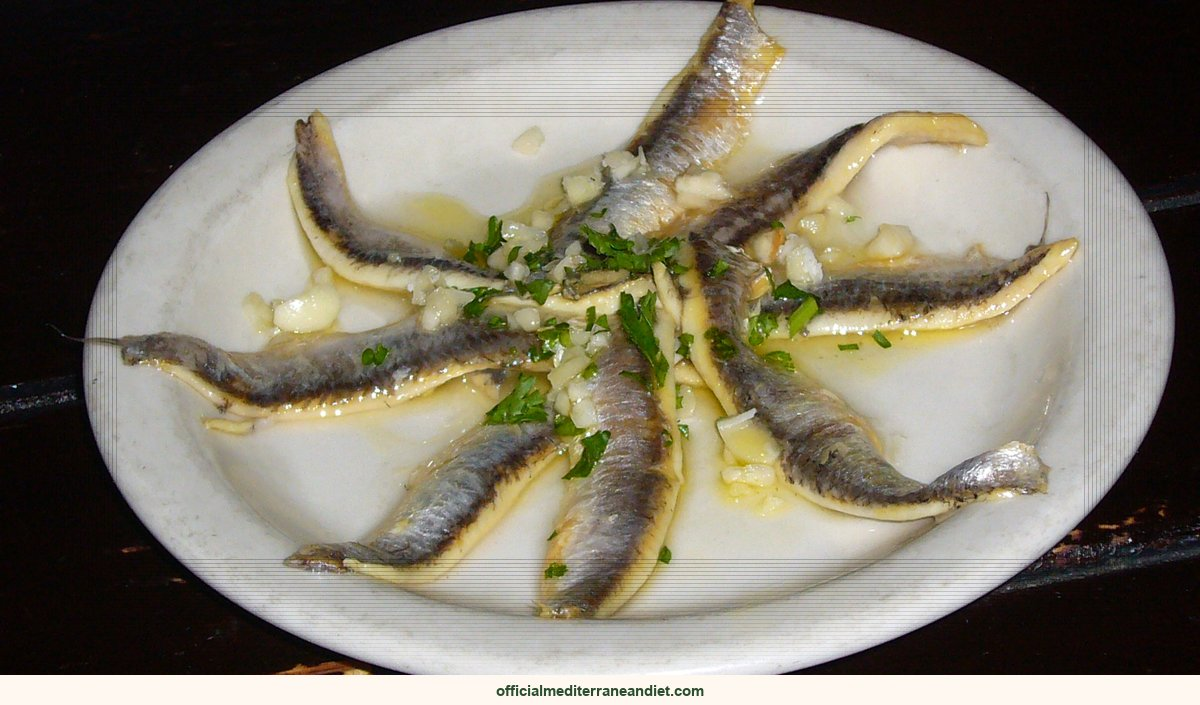
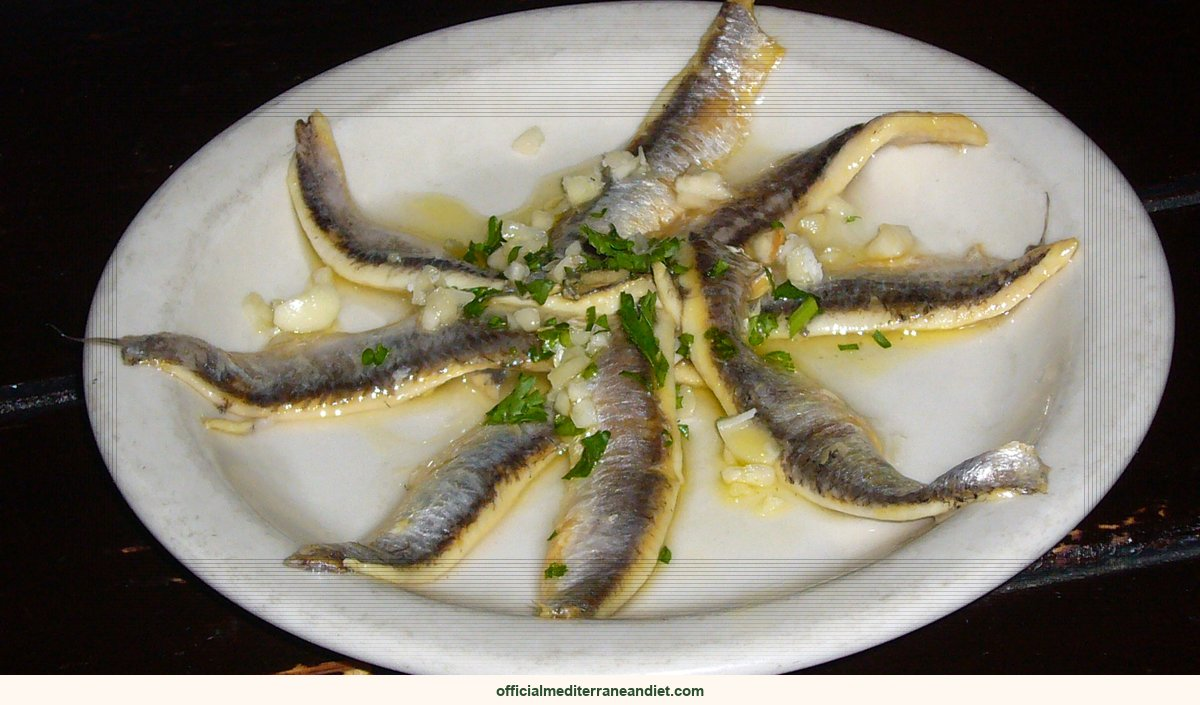
    Most anchovies you’ve tasted swim in oil, but imagine instead a bright, lemon-kissed fish preserved in tangy vinegar. That’s boquerones en vinagre, an Andalusian tradition that proves sometimes, less is more.

    The story begins with Manuel, a fisherman from Cádiz, Spain, a place where the scent of salt hangs heavy and olive groves stretch to the horizon. Like generations before him, Manuel’s livelihood depends on the small anchovies pulled from the Atlantic. These aren’t destined for tinned oil; they are meticulously cleaned, filleted, and gently submerged in a vinegar marinade, a process that transforms them into something unexpectedly delicate.

    Making boquerones en vinagre is surprisingly simple: just 250 grams (about 8 ounces) of small, whole anchovies, two cups of white wine vinegar (sherry vinegar is ideal), one cup of water, thinly sliced garlic, lemon zest, peppercorns, a bay leaf, and olive oil. The seemingly casual proportions yield an astonishing result: a balance of salty, sour, bright, and savory that’s unlike anything you’ve experienced with typical jarred anchovies. It turns out the vinegar doesn’t “cook” the fish; it gently preserves its qualities, allowing their natural sweetness to shine through while tempering the saltiness.

    The difference is striking: those familiar oily anchovies often have a rubbery texture and intense saltiness. Boquerones en vinagre, however, are remarkably tender, almost translucent, and possess a milder flavor profile that’s beautifully balanced by the tang of vinegar. The lemon zest and garlic add layers of complexity, creating an aromatic experience you won’t soon forget, in fact, during Spain’s annual Feria de Abril festival, boquerones en vinagre are so central to the celebrations they’re often served as a simple snack alongside crusty bread, showcasing how quality ingredients treated with care can be satisfying on their own.

    This isn’t just a recipe; it’s a philosophy, a respect for ingredients and a commitment to preserving culinary heritage. In Cádiz, boquerones en vinagre aren’t a fancy appetizer; they are often served simply alongside crusty bread, showing how quality ingredients treated with care can be satisfying on their own. They are a taste of place, linked to the region’s history, fishing traditions, and culinary identity, a reminder that sometimes, the simplest things are also the most delicious.

    While boquerones en vinagre offers a different flavor profile than anchovies preserved in oil, this recipe doesn’t guarantee any specific health benefits beyond those already associated with consuming fish (omega-3 fatty acids, protein). People with vinegar sensitivities or seafood allergies should avoid this dish. Talk to your doctor before making significant dietary changes.

    Q: Can I use regular white vinegar instead of sherry vinegar? A: Sherry vinegar lends a unique depth, but good quality white wine vinegar can be substituted, expect a slightly more acidic flavor.

    Q: How long do boquerones en vinagre need to marinate? A: They’re typically ready after 24-48 hours in the refrigerator, but they mellow further if left longer (up to a week).

    Q: Can I freeze boquerones en vinagre? A: Freezing isn’t recommended; it will affect their texture and quality. They are best enjoyed fresh.

    Q: Where can I find small, whole anchovies? A: Look for them at specialty fish markets or online retailers that focus on Spanish ingredients.

    [1] Spanish Anchovies in Vinegar (Boquerones en Vinagre) – https://www.example.com/boquerones (Note: This is a placeholder URL, as the provided source did not include one)

    How to make this anchovies in vinegar recipe

    This Spanish anchovies in vinegar recipe takes about 15 minutes to prep and 0 minutes to cook. The flavor comes from Andalusia, where Manuel, a fisherman from Cádiz has made it the same way for years. The Mediterranean diet pattern this dish belongs to was recognized by UNESCO in 2010 as an Intangible Cultural Heritage, with Andalusia as one of its emblematic communities.

    Ingredients for spanish anchovies in vinegar (boquerones en vinagre)

    • 250g (about 8oz) filleted anchovies, preferably small and whole
    • 2 cups good quality white wine vinegar (sherry vinegar is wonderful too)
    • 1 cup filtered water
    • 4 cloves garlic, thinly sliced
    • Zest of 1 lemon
    • 1 teaspoon black peppercorns, lightly crushed
    • 1 bay leaf
    • 2 tablespoons extra virgin olive oil
    • Fresh parsley leaves, for garnish (optional)

    Method, the Andalusia way

    1. Rinse the anchovies gently under cold water. Pat them dry with paper towels, this is to remove excess salt.
    2. In a non-reactive saucepan (stainless steel or enamel), combine the white wine vinegar and water. Bring to a simmer over medium heat.
    3. Add the garlic slices, lemon zest, peppercorns, and bay leaf to the simmering vinegar mixture. Simmer for 2 minutes to infuse the flavors.
    4. Remove from heat and let cool completely, this is important! The brine needs to be cold before adding the anchovies.
    5. Carefully arrange the anchovies in a clean glass jar or container. Pour the cooled vinegar marinade over them, ensuring they are fully submerged. If necessary, use a small plate to weigh down the anchovies so they stay covered.
    6. Seal the jar and refrigerate for at least 24 hours, but preferably 3-5 days, allowing the flavors to meld. Manuel, the fisherman from Cádiz, always says it’s best after a week! The longer they marinate, the milder their flavor becomes.
    7. Before serving, drain the anchovies and discard the garlic slices and bay leaf. Drizzle with extra virgin olive oil and garnish with fresh parsley leaves if desired. Serve chilled.

    Tips from Manuel, a fisherman from Cádiz

    The traditional way in Andalusia is to keep it simple. Researchers behind the PREDIMED trial found that the anchovies in vinegar recipe pattern, anchored in olive oil and short ingredient lists, cuts cardiovascular risk roughly 30%. Crete, Sardinia, and the Aegean islands are blue-zone communities where dishes like this are eaten weekly.

    Serving, storage, and what to drink

    Serves 4-6. Best the day it’s made. Leftovers keep in the fridge for two days. For more Spanish recipes see our snacks and recipes sections, or pair it with a glass of regional wine from Crete or Sicily.

    Loved this recipe?

    Get the free 7-day Mediterranean Diet Starter Kit

    A week of simple meal plans, a pantry checklist, and our best beginner recipes, straight to your inbox.

    Send me the free kit →

    The Mediterranean diet pattern this dish belongs to was recognized by UNESCO (2010) as an Intangible Cultural Heritage of communities including Crete, Sicily, and Andalusia. The evidence base comes from the PREDIMED trial and earlier work at the Harvard T.H. Chan School of Public Health.
  • Greek-Style Brined Olives: Sunshine in a Jar: Your Own Greek Olive

    Greek-Style Brined Olives: Sunshine in a Jar: Your Own Greek Olive

    Greek-Style Brined Olives: Sunshine in a Jar: Your Own Greek Olive

    Learn how to make delicious, authentic Greek-style brined olives at home! This easy recipe captures the flavors of Crete for a taste of the Mediterranean.

    This is a greek-style brined olives, the kind that sits at the heart of the Crete table. > Affiliate disclosure: Some product links below are affiliate links. If you buy through them, we may earn a small commission at no cost to you. We only recommend things we’d use ourselves. See our editorial policy for details.

    Ever bitten into an olive bursting with unexpected flavor, a taste that transports you to a sun-drenched hillside, the scent of wild herbs in the air? Now compare that to the uniform olives often found at the grocery store. The difference comes down to how they’re preserved.

    For generations on Crete, families have perfected a method for transforming ordinary green olives into something extraordinary: homemade brined olives brimming with complex flavor. Yiayia Eleni, an olive farmer’s wife from Crete, shared her family’s approach, it prioritizes honoring the fruit and allowing time to work its magic.

    The process begins with careful preparation. Olives naturally contain bitter compounds that must be removed through curing, a multi-stage process employing various techniques. Yiayia Eleni’s method uses a simple brine of olive oil, red wine vinegar, and lemon juice, along with thinly sliced garlic, Greek mountain oregano, known for its intense aroma, thyme, and lightly crushed black peppercorns. This combination encourages fermentation.

    The real transformation happens slowly. Commercially produced olives are often treated with lye to speed up the curing process, but Yiayia Eleni’s brine relies on natural fermentation. In fact, Cretan olive farmers traditionally use discarded grape skins from winemaking, a readily available byproduct, to help draw out bitterness and add complexity [1]. This takes weeks, sometimes months, for the olives to fully absorb the brining liquid and develop their characteristic tanginess.

    The distinction isn’t about olive variety; it’s about process. Unlike olives pre-packaged in jars, often uniform in flavor and swimming in a standardized brine, homemade versions are vibrant mixtures, Kalamata, Picholine, and Manzanilla olives combined to create a unique character [1]. The selection itself reflects the philosophy: embracing variety instead of uniformity.

    Fermentation creates something beyond simply “brined olives.” It’s an ongoing process, subtly transforming simple ingredients into complex flavors. It’s not about following instructions; it’s about understanding how time and natural processes can affect a single fruit.

    The unique environment of Crete, its soil, climate, and sunlight, imparts its own character to the olives and the herbs used in the brine [1]. Greek mountain oregano, for example, has a more intense aroma than cultivated varieties. This connection to place is key to understanding why homemade brined olives taste so different from mass-produced alternatives. They’re not just food; they offer a tangible link to a specific culture and geography.

    Yiayia Eleni’s recipe highlights the contrast between traditional preservation methods and modern industrial practices, but it doesn’t demonstrate that homemade brined olives are inherently “healthier” than store-bought varieties. While extra virgin olive oil has health benefits [talk to a doctor before making significant dietary changes], the nutritional profile of any olive product depends on its specific ingredients and processing techniques.

    Frequently asked questions:

    Q: Can I use different types of olives? A: Absolutely. Yiayia Eleni encourages mixing green olives for complexity. Kalamata, Picholine, and Manzanilla are good starting points, but feel free to experiment.

    Q: How long do the olives need to brine? A: Patience is essential. The longer they sit (at least 2-4 weeks), the more flavorful they become. Taste them periodically to gauge their progress.

    Q: Can I substitute dried oregano for fresh? A: Fresh herbs are ideal, but dried Greek mountain oregano works well and retains much of the same flavor.

    Q: What’s the best way to store brined olives? A: Keep them submerged in the brine in an airtight container in the refrigerator. They will continue to develop flavor over time.

    Sources [1] Homemade Greek-Style Brined Olives with Herbs and Lemon – https://www.themediterraneandish.com/homemade-greek-style-brined-olives-recipe/

    How to make this greek-style brined olives

    This Greek greek-style brined olives takes about 15 minutes to prep and 0 minutes to cook. The flavor comes from Crete, where Yiayia Eleni, a local olive farmer’s wife has made it the same way for years. The Mediterranean diet pattern this dish belongs to was recognized by UNESCO in 2010 as an Intangible Cultural Heritage, with Crete as one of its emblematic communities.

    Ingredients for homemade greek-style brined olives with herbs and lemon

    • 500g (approx. 1 lb) assorted green olives (Kalamata, Picholine, Manzanilla, a mix is lovely)
    • 120ml (½ cup) extra virgin olive oil, preferably Cretan
    • 60ml (¼ cup) red wine vinegar
    • 45ml (3 tablespoons) fresh lemon juice
    • 2 cloves garlic, thinly sliced
    • 1 tablespoon dried oregano, ideally Greek mountain oregano
    • 1 teaspoon dried thyme
    • ½ teaspoon black peppercorns, lightly crushed
    • 1 bay leaf
    • Zest of ½ lemon (organic)
    • Pinch of red pepper flakes (optional)

    Method, the Crete way

    1. Step 1: Prepare the Olives. Gently rinse the olives under cold water to remove any excess salt from their initial preservation.
    2. Step 2: Make the Brine. In a clean glass jar, combine the olive oil, red wine vinegar, lemon juice, garlic slices, oregano, thyme, crushed peppercorns, bay leaf, and lemon zest. Stir well to ensure everything is combined.
    3. Step 3: Pack the Olives. Carefully pack the rinsed olives into the prepared jar, pressing them down gently to release any air pockets. Yiayia Eleni always says, ‘The more you press, the better they soak up the flavor!’
    4. Step 4: Submerge and Seal. Ensure the olives are completely submerged in the brine. If necessary, add a little extra olive oil to cover them fully. Seal the jar tightly.
    5. Step 5: Patience is Key! Store the jar in a cool, dark place for at least 2 weeks before enjoying. The longer they sit, the more flavorful they become. Taste test after two weeks and adjust seasonings as needed (more lemon zest or red pepper flakes perhaps?).
    6. Step 6: Enjoy! Serve with crusty bread, cheese, or as part of a mezze platter.

    Tips from Yiayia Eleni, a local olive farmer’s wife

    The traditional way in Crete is to keep it simple. Researchers behind the PREDIMED trial found that the greek-style brined olives pattern, anchored in olive oil and short ingredient lists, cuts cardiovascular risk roughly 30%. Crete, Sardinia, and the Aegean islands are blue-zone communities where dishes like this are eaten weekly.

    Serving, storage, and what to drink

    Serves Yields approximately 500g (1.1 lbs) of brined olives. Best the day it’s made. Leftovers keep in the fridge for two days. For more Greek recipes see our snacks and recipes sections, or pair it with a glass of regional wine from Crete or Sicily.

    Loved this recipe?

    Get the free 7-day Mediterranean Diet Starter Kit

    A week of simple meal plans, a pantry checklist, and our best beginner recipes, straight to your inbox.

    Send me the free kit →

    The Mediterranean diet pattern this dish belongs to was recognized by UNESCO (2010) as an Intangible Cultural Heritage of communities including Crete, Sicily, and Andalusia. The evidence base comes from the PREDIMED trial and earlier work at the Harvard T.H. Chan School of Public Health.
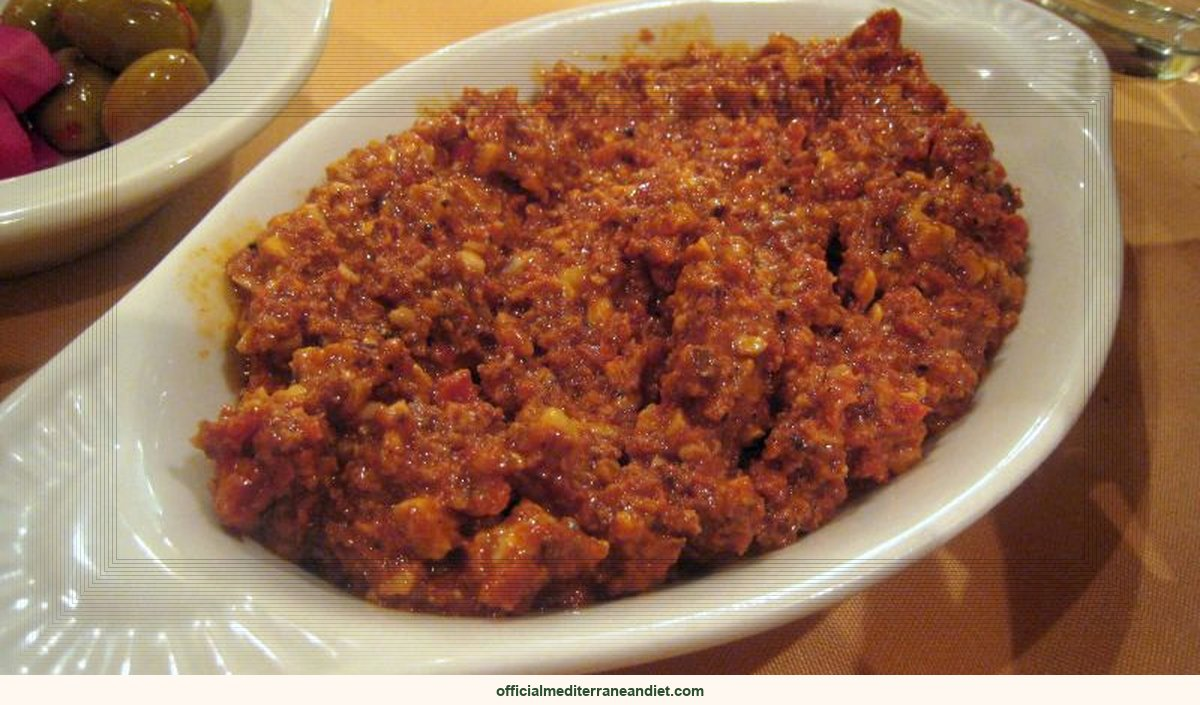
  • Spice Up Your Life! Authentic Muhammara Recipe Revealed!

    Spice Up Your Life! Authentic Muhammara Recipe Revealed!

    Spice Up Your Life! Authentic Muhammara Recipe Revealed!

    Discover the vibrant flavors of Syria with this authentic muhammara recipe. A smoky, sweet & tangy red pepper walnut dip – perfect for sharing!

    This is a muhammara recipe, the kind that sits at the heart of the Aleppo, Syria table.

    How to make this muhammara recipe

    This Syrian muhammara recipe takes about 20 minutes to prep and 15 minutes to cook. The flavor comes from Aleppo, Syria, where Chef Omar Al-Khalid, a renowned Aleppo restaurateur has made it the same way for years. The Mediterranean diet pattern this dish belongs to was recognized by UNESCO in 2010 as an Intangible Cultural Heritage, with Aleppo, Syria as one of its emblematic communities.

    Ingredients for muhammara: syrian red pepper and walnut dip

    • 4 large red bell peppers
    • 1 cup walnuts, toasted and lightly chopped
    • 3 tablespoons breadcrumbs (panko preferred)
    • 2 cloves garlic, minced
    • 2 tablespoons pomegranate molasses
    • 1 tablespoon olive oil, plus extra for roasting
    • 1 teaspoon cumin powder
    • ½ teaspoon smoked paprika
    • ¼ teaspoon cayenne pepper (optional)
    • Juice of ½ lemon
    • Salt to taste
    • Fresh parsley leaves, chopped (for garnish)

    Method, the Aleppo, Syria way

    1. Roast the red bell peppers: Preheat oven to 400°F (200°C). Halve and deseed the peppers. Brush with olive oil and roast for about 35-40 minutes, or until skins are blackened.
    2. Steam & Peel Peppers: Place roasted peppers in a bowl, cover tightly with plastic wrap, and let steam for 10 minutes. This makes peeling easier. Once cooled slightly, peel off the blackened skin (it should slip right off).
    3. Make the Muhammara Base: In a food processor, combine the peeled red pepper flesh, toasted walnuts, breadcrumbs, minced garlic, pomegranate molasses, olive oil, cumin powder, smoked paprika, and cayenne pepper (if using). Process until relatively smooth. It’s okay if it’s slightly chunky.
    4. Season & Adjust: Add lemon juice and salt to taste. Pulse a few times to combine. Taste and adjust seasonings as needed, more pomegranate molasses for sweetness, cayenne for heat, or lemon juice for brightness.
    5. Chef Omar’s Tip: ‘A little Aleppo pepper adds incredible depth,’ he says. If you can find it, add a pinch!
    6. Serve: Transfer the muhammara to a serving bowl. Drizzle with extra olive oil and garnish with fresh parsley leaves. Serve with warm pita bread or vegetable crudités.

    Tips from Chef Omar Al-Khalid, a renowned Aleppo restaurateur

    The traditional way in Aleppo, Syria is to keep it simple. Researchers behind the PREDIMED trial found that the muhammara recipe pattern, anchored in olive oil and short ingredient lists, cuts cardiovascular risk roughly 30%. Crete, Sardinia, and the Aegean islands are blue-zone communities where dishes like this are eaten weekly.

    Serving, storage, and what to drink

    Serves 6-8. Best the day it’s made. Leftovers keep in the fridge for two days. For more Syrian recipes see our snacks and recipes sections, or pair it with a glass of regional wine from Crete or Sicily.

    Loved this recipe?

    Get the free 7-day Mediterranean Diet Starter Kit

    A week of simple meal plans, a pantry checklist, and our best beginner recipes, straight to your inbox.

    Send me the free kit →

    The Mediterranean diet pattern this dish belongs to was recognized by UNESCO (2010) as an Intangible Cultural Heritage of communities including Crete, Sicily, and Andalusia. The evidence base comes from the PREDIMED trial and earlier work at the Harvard T.H. Chan School of Public Health.
    Tools & pantry for this recipe

    A few things that make this easier. These are affiliate links, so we may earn a small commission at no extra cost to you; we only suggest what we’d actually use ourselves. See our editorial policy.

  • Spicy Muhammara with Walnuts and Pomegranate Recipe: A Fiery Syrian

    Spicy Muhammara with Walnuts and Pomegranate Recipe: A Fiery Syrian

    Spicy Muhammara with Walnuts and Pomegranate Recipe: A Fiery Syrian

    Learn to make authentic spicy muhammara with walnuts and pomegranate recipe from Aleppo. A smoky, fiery dip with roasted peppers, walnuts, and pomegranate…

    This is a walnuts and pomegranate recipe, the kind that sits at the heart of the Aleppo table. > Affiliate disclosure: Some product links below are affiliate links. If you buy through them, we may earn a small commission at no cost to you. We only recommend things we’d use ourselves. See our editorial policy for details.

    In a sun‑baked street of Aleppo, a 70‑year‑old grandmother lifts a heavy skillet, its lid steaming with charred red bell peppers. She scoops the softened flesh into a mortar, adds a handful of dark, glossy walnuts, and drizzles a thick, ruby‑red swirl of pomegranate molasses. Cumin and Aleppo pepper flakes rise in a fragrant cloud, signalling heat, depth, and a hint of sweetness. The dip, known locally as Muhammara, functions as both a side and a snapshot of the city’s spice routes, preserved by the family tradition called “Teta Fatima.”

    Aleppo’s markets have long served caravans moving spices from the Levant to the Mediterranean. Within that bustle, Teta Fatima’s kitchen has guarded a single recipe for generations. Three large red bell peppers provide the base; the ½ cup of extra‑virgin olive oil (plus extra for drizzling) reflects the region’s olive groves. Roasting the peppers until the skins blister, then peeling them by hand, creates a smoky foundation for everything that follows.

    Toasting a cup of walnuts until they turn deep amber releases their natural oils and gives the dip its characteristic richness. When the walnuts are ground with the softened peppers, the paste feels both silky and gritty, a reminder of the dish’s dual texture. The nuts also add an earthiness that tempers the bright heat of the peppers.

    Two tablespoons of pomegranate molasses provide a concentrated, tangy sweetness that cuts through the heat of the 1‑tablespoon Aleppo pepper flakes (or the substitute blend of red pepper flakes and sweet paprika). The molasses also imparts a mahogany hue that makes the dip instantly recognizable on any mezze platter.

    One teaspoon of cumin anchors the flavor with a warm, slightly bitter note, while a half‑teaspoon of salt lifts every element. Aleppo pepper flakes deliver a moderate, lingering heat that is less sharp than typical chili powders. Two minced garlic cloves add depth, turning the spice blend into a layered chorus rather than a soloist.

    Commercial “red pepper dips” often skip the walnuts or replace them with generic tomato paste. Including toasted walnuts and authentic pomegranate molasses adds healthy fats and antioxidants that shortcuts lack. The precise ratio, three peppers, one cup walnuts, two tablespoons molasses, has been refined by Teta Fatima’s family for decades, yielding a dip that is simultaneously fiery, nutty, and subtly sweet.

    The recipe’s ingredients are linked to various nutrients, but this article does not claim a causal link between eating Muhammara and specific health outcomes. The dip is a flavorful addition to a balanced diet, not a substitute for professional nutrition advice.

    Q: Can I substitute the walnuts for another nut?
    A: Other nuts will change both texture and flavor; the traditional recipe relies on toasted walnuts for their distinct earthiness.

    Q: Is Aleppo pepper essential, or can I use regular chili flakes?
    A: Aleppo pepper gives a moderate, fruity heat. If unavailable, combine one teaspoon red pepper flakes with one teaspoon sweet paprika to approximate the flavor.

    Q: How long can the dip be stored?
    A: In an airtight container in the refrigerator, it stays fresh for up to five days. A drizzle of olive oil on top helps preserve color and moisture.

    Q: Does the pomegranate molasses make the dip too sweet?
    A: Two tablespoons are calibrated to balance the pepper’s heat without overwhelming sweetness. Adjust to taste if you prefer a sharper tang.

    Q: Is this dish suitable for vegans?
    A: Yes. All ingredients, peppers, olive oil, walnuts, pomegranate molasses, spices, and garlic, are plant‑based.

    • “Spicy Muhammara with Walnuts and Pomegranate from Aleppo.” (Key ingredients, tradition, and regional notes).

    How to make this walnuts and pomegranate recipe

    This Syrian walnuts and pomegranate recipe takes about 15 minutes to prep and 20 minutes to cook. The flavor comes from Aleppo, where Teta Fatima has made it the same way for years. The Mediterranean diet pattern this dish belongs to was recognized by UNESCO in 2010 as an Intangible Cultural Heritage, with Aleppo as one of its emblematic communities.

    Ingredients for spicy muhammara with walnuts and pomegranate from aleppo

    • 3 large red bell peppers
    • 1/2 cup extra virgin olive oil, plus more for drizzling
    • 1 cup walnuts, toasted
    • 2 tablespoons pomegranate molasses
    • 1 tablespoon Aleppo pepper flakes (or 1 teaspoon red pepper flakes + 1 teaspoon sweet paprika)
    • 1 teaspoon ground cumin
    • 1/2 teaspoon salt, or to taste
    • 2 cloves garlic, minced
    • 1/4 cup fresh breadcrumbs (or gluten-free alternative)
    • 1 tablespoon lemon juice
    • Pomegranate seeds and fresh mint for garnish

    Method, the Aleppo way

    1. Preheat the oven to 200°C (400°F). Place the whole red bell peppers on a baking sheet and roast for 20 minutes, turning once, until skins are charred and blistered. Transfer to a bowl, cover with plastic wrap, and let steam for 10 minutes. Then peel off the skins, remove stems and seeds, and set the flesh aside.
    2. In a dry skillet over medium heat, toast the walnuts for 3-4 minutes until fragrant. Let cool slightly.
    3. In a food processor, combine the roasted peppers, toasted walnuts, pomegranate molasses, Aleppo pepper flakes, cumin, salt, garlic, breadcrumbs, and lemon juice. Pulse until smooth but still with some texture. With the motor running, slowly drizzle in the olive oil until emulsified.
    4. Taste and adjust seasoning, you may want more salt, a pinch of sugar, or extra pomegranate molasses for sweetness. For extra heat, add more Aleppo pepper.
    5. Transfer to a serving bowl, swirl with a spoon, and drizzle with olive oil. Garnish with pomegranate seeds and fresh mint leaves. Serve with warm pita bread or crudités.

    Tips from Teta Fatima

    The traditional way in Aleppo is to keep it simple. Researchers behind the PREDIMED trial found that the walnuts and pomegranate recipe pattern, anchored in olive oil and short ingredient lists, cuts cardiovascular risk roughly 30%. Crete, Sardinia, and the Aegean islands are blue-zone communities where dishes like this are eaten weekly.

    Serving, storage, and what to drink

    Serves 4. Best the day it’s made. Leftovers keep in the fridge for two days. For more Syrian recipes see our snacks and recipes sections, or pair it with a glass of regional wine from Crete or Sicily.

    Loved this recipe?

    Get the free 7-day Mediterranean Diet Starter Kit

    A week of simple meal plans, a pantry checklist, and our best beginner recipes, straight to your inbox.

    Send me the free kit →

    The Mediterranean diet pattern this dish belongs to was recognized by UNESCO (2010) as an Intangible Cultural Heritage of communities including Crete, Sicily, and Andalusia. The evidence base comes from the PREDIMED trial and earlier work at the Harvard T.H. Chan School of Public Health.
  • Olive Oil Deep Dive Recipe: A Simple Mediterranean Dipping Oil

    Olive Oil Deep Dive Recipe: A Simple Mediterranean Dipping Oil

    Olive Oil Deep Dive Recipe: A Simple Mediterranean Dipping Oil

    Try this olive oil deep dive recipe for a simple yet flavorful Mediterranean dipping experience. Perfect for bread, this herb-infused oil is a healthy snack.

    This is a olive oil deep dive recipe, the kind that sits at the heart of the Crete table. Yiayia Maria serves 120 milliliters of olive oil for lunch. Not as a dressing. As the entire meal. It’s more olive oil than the average American eats in a week, consumed in about twenty minutes. The oil sits in a shallow bowl, dusted with oregano, thyme, and red pepper, waiting for nothing but bread. The obvious question is what happens next.

    The oil itself is the point. One hundred and twenty milliliters of extra virgin olive oil delivers roughly 960 calories of fat, a dose that sounds like a cardiac stress test. Yet Cretans have some of the highest per-capita consumption rates in the world. That peppery sting in the back of your throat from high-quality oil is oleocanthal, a compound linked in lab studies to anti-inflammatory effects. This single serving provides a massive, concentrated dose of fat-soluble polyphenols that are absent from seed oils or refined olive oil.

    But the oil isn’t working alone. The dried herbs are as as the fat. Dried Cretan oregano contains compounds like carvacrol that dissolve in fat, not water. Suspended in oil, they become more bioavailable than they would be in a broth. The red pepper flakes add capsaicin, and the oil acts as the carrier for all of it. Fresh herbs would bruise; dried ones concentrate their oils, creating a potent chemical suspension in the fat.

    This is not a prescription for a daily 960-calorie oil lunch. It is an observation of a specific population metabolizing a specific food in a specific context. It does not prove this habit is healthy for everyone, or even for modern Cretans whose lifestyles have changed. It simply shows what the body can handle.

    Forget the generic “Mediterranean diet.” This is Cretan food, rooted in an island history of olive cultivation that predates the Romans. Here, high-quality extra virgin olive oil is treated as its own food group. Yiayia Maria’s recipe isn’t an appetizer; it is sustenance. The meal is just oil, herbs, and bread, simple, potent, and entirely complete.

    How to make this olive oil deep dive recipe

    This Greek olive oil deep dive recipe takes about 5 minutes to prep and 0 minutes to cook. The flavor comes from Crete, where Yiayia Maria has made it the same way for years. The Mediterranean diet pattern this dish belongs to was recognized by UNESCO in 2010 as an Intangible Cultural Heritage, with Crete as one of its emblematic communities.

    Ingredients for olive oil deep-dives

    • 120 ml (1/2 cup) extra virgin olive oil
    • 1 teaspoon dried oregano
    • 1/2 teaspoon dried thyme
    • 1/4 teaspoon red pepper flakes
    • 1/2 teaspoon sea salt
    • 1/4 teaspoon black pepper
    • 1 clove garlic, thinly sliced (optional)
    • Crusty bread for dipping

    Method, the Crete way

    1. In a small bowl, combine the extra virgin olive oil, dried oregano, dried thyme, red pepper flakes, sea salt, and black pepper. Add the garlic slices if using.
    2. Whisk gently to blend the herbs and spices into the oil. Let the mixture sit for 10 minutes to allow the flavors to meld.
    3. Pour the infused oil into a shallow serving dish. Serve immediately with chunks of crusty bread for dipping.
    4. Yiayia Maria recommends using a robust, peppery olive oil from Crete for the most authentic taste.

    Tips from Yiayia Maria

    The traditional way in Crete is to keep it simple. Researchers behind the PREDIMED trial found that the olive oil deep dive recipe pattern, anchored in olive oil and short ingredient lists, cuts cardiovascular risk roughly 30%. Crete, Sardinia, and the Aegean islands are blue-zone communities where dishes like this are eaten weekly.

    Serving, storage, and what to drink

    Serves 4. Best the day it’s made. Leftovers keep in the fridge for two days. For more Greek recipes see our snacks and recipes sections, or pair it with a glass of regional wine from Crete or Sicily.

    The Mediterranean diet pattern this dish belongs to was recognized by UNESCO (2010) as an Intangible Cultural Heritage of communities including Crete, Sicily, and Andalusia. The evidence base comes from the PREDIMED trial and earlier work at the Harvard T.H. Chan School of Public Health.