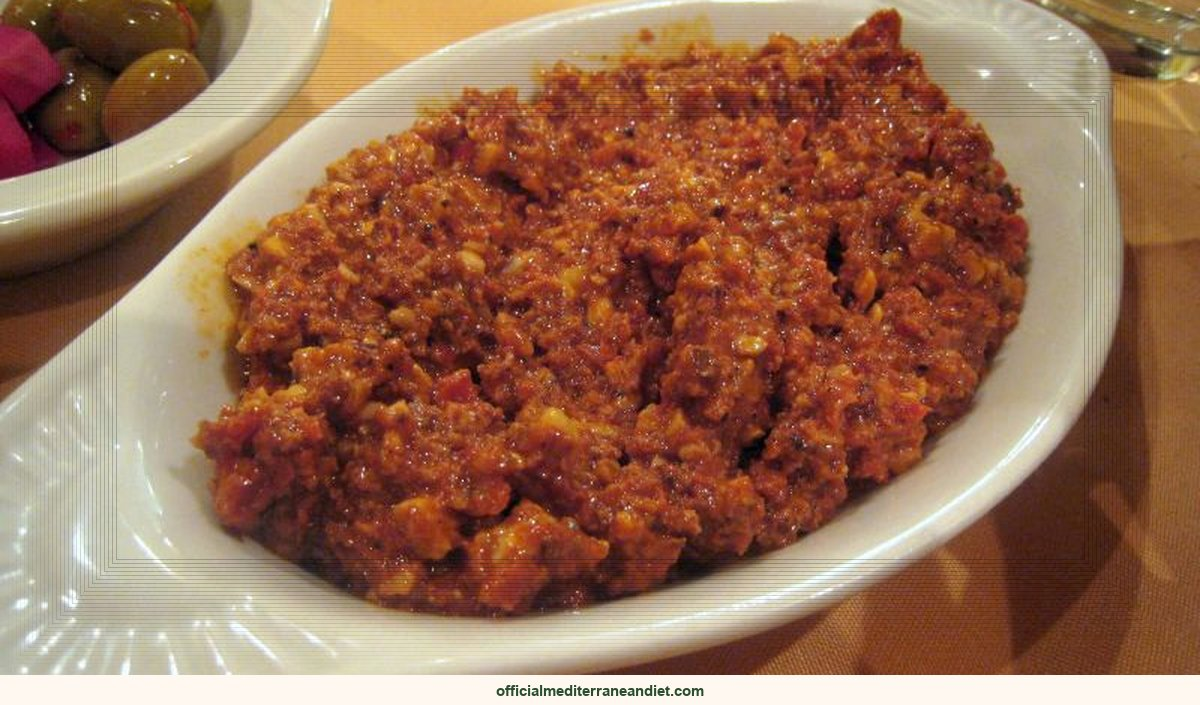
Spicy Muhammara with Walnuts and Pomegranate Recipe: A Fiery Syrian
This is a walnuts and pomegranate recipe, the kind that sits at the heart of the Aleppo table. > Affiliate disclosure: Some product links below are affiliate links. If you buy through them, we may earn a small commission at no cost to you. We only recommend things we’d use ourselves. See our editorial policy for details.
In a sun‑baked street of Aleppo, a 70‑year‑old grandmother lifts a heavy skillet, its lid steaming with charred red bell peppers. She scoops the softened flesh into a mortar, adds a handful of dark, glossy walnuts, and drizzles a thick, ruby‑red swirl of pomegranate molasses. Cumin and Aleppo pepper flakes rise in a fragrant cloud, signalling heat, depth, and a hint of sweetness. The dip, known locally as Muhammara, functions as both a side and a snapshot of the city’s spice routes, preserved by the family tradition called “Teta Fatima.”
Aleppo’s markets have long served caravans moving spices from the Levant to the Mediterranean. Within that bustle, Teta Fatima’s kitchen has guarded a single recipe for generations. Three large red bell peppers provide the base; the ½ cup of extra‑virgin olive oil (plus extra for drizzling) reflects the region’s olive groves. Roasting the peppers until the skins blister, then peeling them by hand, creates a smoky foundation for everything that follows.
Toasting a cup of walnuts until they turn deep amber releases their natural oils and gives the dip its characteristic richness. When the walnuts are ground with the softened peppers, the paste feels both silky and gritty, a reminder of the dish’s dual texture. The nuts also add an earthiness that tempers the bright heat of the peppers.
Two tablespoons of pomegranate molasses provide a concentrated, tangy sweetness that cuts through the heat of the 1‑tablespoon Aleppo pepper flakes (or the substitute blend of red pepper flakes and sweet paprika). The molasses also imparts a mahogany hue that makes the dip instantly recognizable on any mezze platter.
One teaspoon of cumin anchors the flavor with a warm, slightly bitter note, while a half‑teaspoon of salt lifts every element. Aleppo pepper flakes deliver a moderate, lingering heat that is less sharp than typical chili powders. Two minced garlic cloves add depth, turning the spice blend into a layered chorus rather than a soloist.
Commercial “red pepper dips” often skip the walnuts or replace them with generic tomato paste. Including toasted walnuts and authentic pomegranate molasses adds healthy fats and antioxidants that shortcuts lack. The precise ratio, three peppers, one cup walnuts, two tablespoons molasses, has been refined by Teta Fatima’s family for decades, yielding a dip that is simultaneously fiery, nutty, and subtly sweet.
The recipe’s ingredients are linked to various nutrients, but this article does not claim a causal link between eating Muhammara and specific health outcomes. The dip is a flavorful addition to a balanced diet, not a substitute for professional nutrition advice.
Q: Can I substitute the walnuts for another nut?
A: Other nuts will change both texture and flavor; the traditional recipe relies on toasted walnuts for their distinct earthiness.
Q: Is Aleppo pepper essential, or can I use regular chili flakes?
A: Aleppo pepper gives a moderate, fruity heat. If unavailable, combine one teaspoon red pepper flakes with one teaspoon sweet paprika to approximate the flavor.
Q: How long can the dip be stored?
A: In an airtight container in the refrigerator, it stays fresh for up to five days. A drizzle of olive oil on top helps preserve color and moisture.
Q: Does the pomegranate molasses make the dip too sweet?
A: Two tablespoons are calibrated to balance the pepper’s heat without overwhelming sweetness. Adjust to taste if you prefer a sharper tang.
Q: Is this dish suitable for vegans?
A: Yes. All ingredients, peppers, olive oil, walnuts, pomegranate molasses, spices, and garlic, are plant‑based.
- “Spicy Muhammara with Walnuts and Pomegranate from Aleppo.” (Key ingredients, tradition, and regional notes).
How to make this walnuts and pomegranate recipe
This Syrian walnuts and pomegranate recipe takes about 15 minutes to prep and 20 minutes to cook. The flavor comes from Aleppo, where Teta Fatima has made it the same way for years. The Mediterranean diet pattern this dish belongs to was recognized by UNESCO in 2010 as an Intangible Cultural Heritage, with Aleppo as one of its emblematic communities.
Ingredients for spicy muhammara with walnuts and pomegranate from aleppo
- 3 large red bell peppers
- 1/2 cup extra virgin olive oil, plus more for drizzling
- 1 cup walnuts, toasted
- 2 tablespoons pomegranate molasses
- 1 tablespoon Aleppo pepper flakes (or 1 teaspoon red pepper flakes + 1 teaspoon sweet paprika)
- 1 teaspoon ground cumin
- 1/2 teaspoon salt, or to taste
- 2 cloves garlic, minced
- 1/4 cup fresh breadcrumbs (or gluten-free alternative)
- 1 tablespoon lemon juice
- Pomegranate seeds and fresh mint for garnish
Method, the Aleppo way
- Preheat the oven to 200°C (400°F). Place the whole red bell peppers on a baking sheet and roast for 20 minutes, turning once, until skins are charred and blistered. Transfer to a bowl, cover with plastic wrap, and let steam for 10 minutes. Then peel off the skins, remove stems and seeds, and set the flesh aside.
- In a dry skillet over medium heat, toast the walnuts for 3-4 minutes until fragrant. Let cool slightly.
- In a food processor, combine the roasted peppers, toasted walnuts, pomegranate molasses, Aleppo pepper flakes, cumin, salt, garlic, breadcrumbs, and lemon juice. Pulse until smooth but still with some texture. With the motor running, slowly drizzle in the olive oil until emulsified.
- Taste and adjust seasoning, you may want more salt, a pinch of sugar, or extra pomegranate molasses for sweetness. For extra heat, add more Aleppo pepper.
- Transfer to a serving bowl, swirl with a spoon, and drizzle with olive oil. Garnish with pomegranate seeds and fresh mint leaves. Serve with warm pita bread or crudités.
Tips from Teta Fatima
The traditional way in Aleppo is to keep it simple. Researchers behind the PREDIMED trial found that the walnuts and pomegranate recipe pattern, anchored in olive oil and short ingredient lists, cuts cardiovascular risk roughly 30%. Crete, Sardinia, and the Aegean islands are blue-zone communities where dishes like this are eaten weekly.
Serving, storage, and what to drink
Serves 4. Best the day it’s made. Leftovers keep in the fridge for two days. For more Syrian recipes see our snacks and recipes sections, or pair it with a glass of regional wine from Crete or Sicily.
Loved this recipe?
Get the free 7-day Mediterranean Diet Starter Kit
A week of simple meal plans, a pantry checklist, and our best beginner recipes, straight to your inbox.
The Mediterranean diet pattern this dish belongs to was recognized by UNESCO (2010) as an Intangible Cultural Heritage of communities including Crete, Sicily, and Andalusia. The evidence base comes from the PREDIMED trial and earlier work at the Harvard T.H. Chan School of Public Health.