Tag: gluten-free

  • And Za’Atar Bites Recipe: Golden, Crunchy Bites: Your New

    And Za’Atar Bites Recipe: Golden, Crunchy Bites: Your New

    And Za’Atar Bites Recipe: Golden, Crunchy Bites: Your New

    Craving a flavorful snack? These crispy chickpea and za’atar bites recipe are easy, healthy, and bursting with Mediterranean sunshine. Get the recipe now!

    This is a and za’atar bites recipe, the kind that sits at the heart of the Beirut table. > Affiliate disclosure: Some product links below are affiliate links. If you buy through them, we may earn a small commission at no cost to you. We only recommend things we’d use ourselves. See our editorial policy for details.

    The Secret Crunch Behind Beirut’s Za’atar Chickpea Bites

    In Gemmayzeh’s alleys a street vendor cooks chickpea bites in a pan, the scent of paprika and za’atar filling the air. The bites look glossy and crackle when pierced. The texture starts with a 400‑gram can of chickpeas and a few pantry items that many home cooks miss.

    Chef Samir, a baker in Beirut’s Gemmayzeh district, has served these bites for years alongside coffee. He drains and rinses a 400 g (14 oz) can of chickpeas, coats them in a mixture of half‑cup chickpea flour and a splash of water, drizzles olive oil, then bakes them. The snack cracks like fried falafel but without the oil‑laden heaviness.

    Two factors cause the crispness. Chickpea flour absorbs moisture and forms a thin, starchy skin that browns quickly at high heat. The 2 tablespoons of olive oil, added to the batter and as a finishing drizzle, lets the exterior reach the Maillard reaction threshold without steaming the interior. The result is a uniformly crisp shell around a tender, nutty center.

    Za’atar is a blend of dried thyme, oregano, sumac, sesame seeds, and sea salt. In Samir’s bites, 2 tablespoons of the mix add a tangy, slightly citrusy note that lifts the chickpea. Smoked paprika contributes depth; cumin and an optional pinch of cayenne pepper add earthiness and a hint of heat.

    The spice ratio aims for harmony: smoked paprika’s sweetness balances the herbaceous za’atar, cumin grounds the profile, and cayenne provides a modest kick. Increasing cayenne makes the bites fiery; reducing za’atar lets the chickpea’s natural nuttiness dominate. Small adjustments turn a batch into a personal flavor study.

    The bites work as a mezze centerpiece, paired with tahini or a lemon‑yogurt dip. Their size also suits cocktail parties. Because the base ingredients are shelf‑stable, the recipe scales: double the chickpeas and flour for a larger platter, or halve it for a quiet night in.

    The bites contain plant protein and fiber from chickpeas and olive oil, but the recipe alone does not guarantee weight loss, cholesterol reduction, or disease prevention. Their nutritional impact depends on overall diet and portion size.

    Q: Can I use dried chickpeas instead of a canned one?
    A: Yes. Soak ½ cup dried chickpeas overnight, cook until tender, drain, and follow the recipe. Texture is similar; preparation takes longer.

    Q: Is chickpea flour essential?
    A: Chickpea flour creates the crisp crust. Substituting wheat flour changes texture and adds gluten, which some diners avoid.

    Q: How do I store leftovers?
    A: Keep them in an airtight container at room temperature for up to two days; re‑crisp in a hot oven (180 °C/350 °F) for 5 minutes before serving.

    Q: Can I make this vegan and gluten‑free?
    A: The recipe is already vegan and gluten‑free, provided the za’atar blend contains no wheat‑based additives.

    Q: Should I worry about sodium?
    A: Za’atar contains salt, so taste before adding extra seasoning. Choose a low‑salt za’atar if needed.

    Talk to a doctor before making major dietary changes, especially if you have chronic health conditions.

    How to make this and za’atar bites recipe

    This Lebanese and za’atar bites recipe takes about 20 minutes to prep and 25 minutes to cook. The flavor comes from Beirut, where Chef Samir, a beloved baker from the Gemmayzeh district has made it the same way for years. The Mediterranean diet pattern this dish belongs to was recognized by UNESCO in 2010 as an Intangible Cultural Heritage, with Beirut as one of its emblematic communities.

    Ingredients for crispy chickpea and za’atar bites

    • 1 can (400g/14oz) chickpeas, drained and rinsed
    • 1/2 cup chickpea flour (besan)
    • 1/4 cup water
    • 2 tablespoons olive oil, plus extra for drizzling
    • 2 tablespoons za’atar spice blend
    • 1 teaspoon smoked paprika
    • 1/2 teaspoon ground cumin
    • 1/4 teaspoon cayenne pepper (optional)
    • Salt to taste
    • Fresh parsley, chopped, for garnish

    Method, the Beirut way

    1. Preheat oven to 200°C (400°F). Line a baking sheet with parchment paper.
    2. Pat the drained chickpeas very dry with paper towels. This is for crispiness!
    3. In a food processor, combine the chickpeas, chickpea flour, water, olive oil, za’atar, smoked paprika, cumin, and cayenne pepper (if using). Pulse until a thick, slightly grainy batter forms. Don’t over-process; you want some texture.
    4. Season the batter with salt to taste. Chef Samir always says, ‘A little salt brings out the magic!’
    5. Drop spoonfuls of the batter onto the prepared baking sheet, leaving a little space between each bite. Drizzle the tops with a bit more olive oil.
    6. Bake for 20-25 minutes, flipping halfway through, until golden brown and crispy. The edges should be nicely browned.
    7. Remove from the oven and let cool slightly on the baking sheet. They will crisp up further as they cool.
    8. Garnish with fresh parsley and serve warm. These are wonderful with a dollop of creamy labneh or hummus.

    Tips from Chef Samir, a beloved baker from the Gemmayzeh district

    The traditional way in Beirut is to keep it simple. Researchers behind the PREDIMED trial found that the and za’atar bites recipe pattern, anchored in olive oil and short ingredient lists, cuts cardiovascular risk roughly 30%. Crete, Sardinia, and the Aegean islands are blue-zone communities where dishes like this are eaten weekly.

    Serving, storage, and what to drink

    Serves 2-3. Best the day it’s made. Leftovers keep in the fridge for two days. For more Lebanese recipes see our snacks and recipes sections, or pair it with a glass of regional wine from Crete or Sicily.

    Loved this recipe?

    Get the free 7-day Mediterranean Diet Starter Kit

    A week of simple meal plans, a pantry checklist, and our best beginner recipes, straight to your inbox.

    Send me the free kit →

    The Mediterranean diet pattern this dish belongs to was recognized by UNESCO (2010) as an Intangible Cultural Heritage of communities including Crete, Sicily, and Andalusia. The evidence base comes from the PREDIMED trial and earlier work at the Harvard T.H. Chan School of Public Health.
  • This Turkish Shepherd Salad with Sumac and Pomegranate Molasses Will

    This Turkish Shepherd Salad with Sumac and Pomegranate Molasses Will

    This Turkish Shepherd Salad with Sumac and Pomegranate Molasses Will

    Discover the authentic Turkish Shepherd Salad with Sumac and Pomegranate Molasses. A refreshing, tangy salad from Anatolia, perfect for a healthy…

    This is a sumac and pomegranate molasses, the kind that sits at the heart of the Gaziantep, Anatolia table. > Affiliate disclosure: Some product links below are affiliate links. If you buy through them, we may earn a small commission at no cost to you. We only recommend things we’d use ourselves. See our editorial policy for details.

    Chef Aylin Özmen dices tomatoes until they nearly dissolve, then adds sumac and pomegranate molasses, two aggressive souring agents that would seem redundant in most Western recipes. In her Gaziantep kitchen, three large ripe tomatoes, an English cucumber, a green bell pepper, and half a red onion get cut so fine the pieces disappear into one another. Then comes the dried crimson berry of Rhus coriaria and two tablespoons of the reduced pomegranate juice. The result tastes brighter and darker than the sum of its parts, as if you’re tasting the moment before lightning strikes dry soil.

    This is not the chunky chop of a Greek island salad. Every vegetable gets the same fine dice, maximizing surface area until ingredients lose their separate boundaries. The English cucumber, peeled, seeded, the green bell pepper, the half cup of flat-leaf parsley and optional mint: all cut to uniform pieces. This geometry matters because the dressing never cooks; the acid and oil need maximum contact to work without heat. The region’s climate demands this efficiency, refreshment that arrives immediately, not after chewing.

    Most traditions balance acid with fat or sweetness. Özmen doubles down on sour. The sumac brings a dry, citrus-like brightness; the molasses brings depth, a sticky umami that pools in the hollows of the diced vegetables. Together they create a tartness that resonates rather than bites, suspended in three tablespoons of extra virgin olive oil that binds the liquids into a loose emulsion.

    The specificity of Özmen’s measurements reveals precision beneath the rustic name. Half a red onion, not a whole; two tablespoons of molasses, not three; mint optional but parsley mandatory. These ratios suggest a dish evolved through repetition in a specific landscape, not a template imported from a generic Mediterranean canon. The optional mint, when included, provides the only real sweetness, a brief aromatic exhale between the sour beats.

    Gaziantep sits at the northern edge of the Fertile Crescent, where pomegranate cultivation predates recorded history and sumac has dried on rooftops since before the spice trade reached Europe. Here, the English cucumber’s water content meets preservation techniques older than

    How to make this sumac and pomegranate molasses

    This Turkish sumac and pomegranate molasses takes about 15 minutes to prep and 0 minutes to cook. The flavor comes from Gaziantep, Anatolia, where Chef Aylin Özmen has made it the same way for years. The Mediterranean diet pattern this dish belongs to was recognized by UNESCO in 2010 as an Intangible Cultural Heritage, with Gaziantep, Anatolia as one of its emblematic communities.

    Ingredients for turkish shepherd salad with sumac and pomegranate molasses

    • 3 large ripe tomatoes, finely diced
    • 1 English cucumber, peeled and finely diced
    • 1 green bell pepper, seeded and finely diced
    • 1/2 red onion, finely diced
    • 1/2 cup fresh flat-leaf parsley, finely chopped
    • 2 tablespoons fresh mint leaves, chopped (optional)
    • 3 tablespoons extra virgin olive oil
    • 2 tablespoons pomegranate molasses
    • 1 tablespoon lemon juice
    • 1 teaspoon sumac, plus extra for garnish
    • 1/2 teaspoon salt, or to taste
    • 1/4 teaspoon black pepper

    Method, the Gaziantep, Anatolia way

    1. Place the diced tomatoes, cucumber, green pepper, red onion, parsley, and mint (if using) in a large mixing bowl. Toss gently to combine.
    2. In a small bowl, whisk together the olive oil, pomegranate molasses, lemon juice, sumac, salt, and black pepper until emulsified.
    3. Pour the dressing over the vegetables and toss well to coat. Let the salad sit at room temperature for 5-10 minutes to allow the flavors to meld.
    4. Transfer to a serving platter or shallow bowl. Sprinkle an extra pinch of sumac on top for color and a citrusy finish. Serve immediately as a refreshing side or light lunch.

    Tips from Chef Aylin Özmen

    The traditional way in Gaziantep, Anatolia is to keep it simple. Researchers behind the PREDIMED trial found that the sumac and pomegranate molasses pattern, anchored in olive oil and short ingredient lists, cuts cardiovascular risk roughly 30%. Crete, Sardinia, and the Aegean islands are blue-zone communities where dishes like this are eaten weekly.

    Serving, storage, and what to drink

    Serves 4. Best the day it’s made. Leftovers keep in the fridge for two days. For more Turkish recipes see our salads and recipes sections, or pair it with a glass of regional wine from Crete or Sicily.

    Loved this recipe?

    Get the free 7-day Mediterranean Diet Starter Kit

    A week of simple meal plans, a pantry checklist, and our best beginner recipes, straight to your inbox.

    Send me the free kit →

    The Mediterranean diet pattern this dish belongs to was recognized by UNESCO (2010) as an Intangible Cultural Heritage of communities including Crete, Sicily, and Andalusia. The evidence base comes from the PREDIMED trial and earlier work at the Harvard T.H. Chan School of Public Health.

  • Creamy Tzatziki Sauce Recipe That Will Transform Your Meals

    Creamy Tzatziki Sauce Recipe That Will Transform Your Meals

    Creamy Tzatziki Sauce Recipe That Will Transform Your Meals

    Learn this easy Tzatziki sauce recipe from Yiayia Eleni in Crete. Cool cucumber, garlic, and yogurt make the perfect Mediterranean dip.

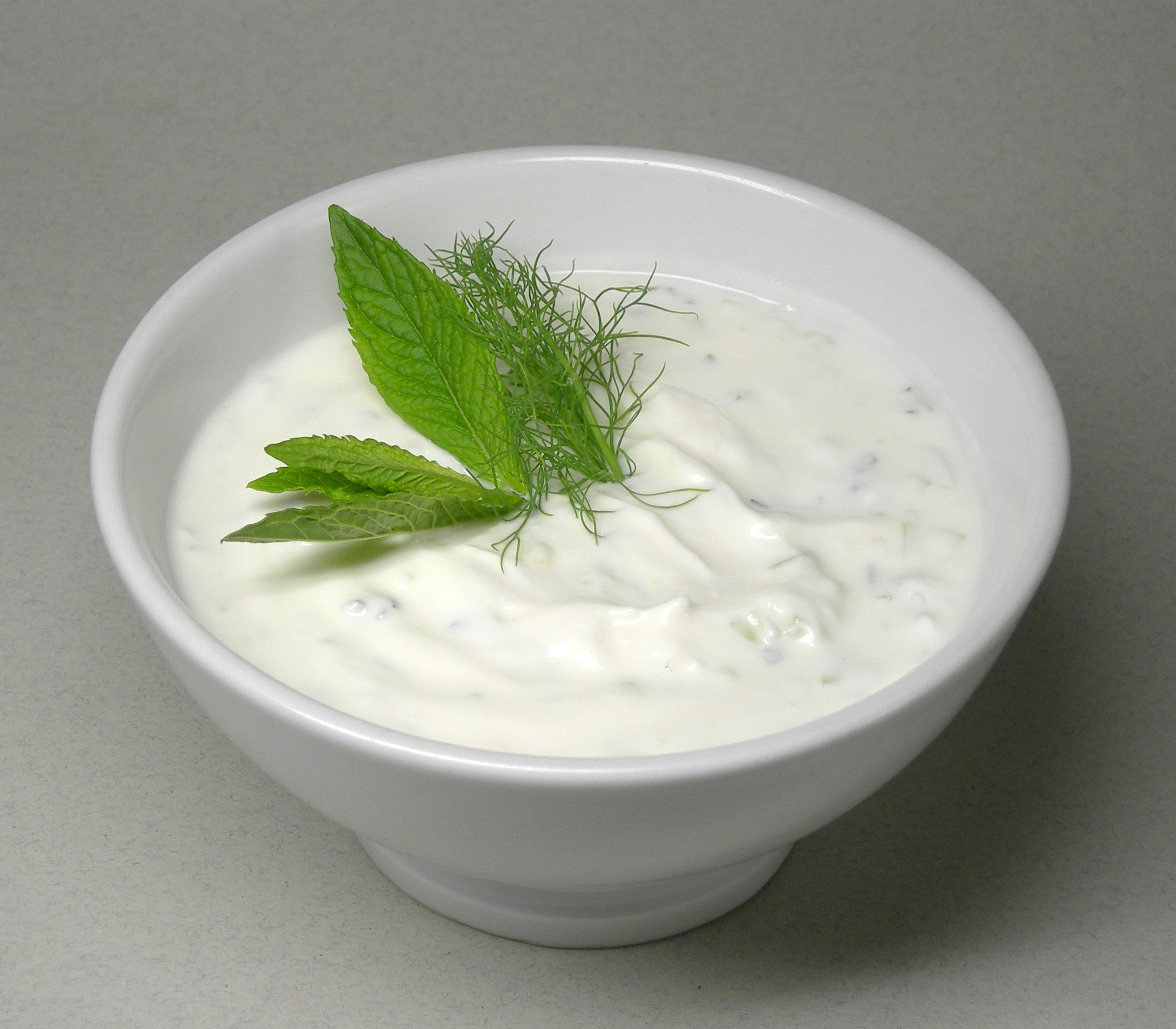
    A cool dollop of creamy tzatziki, speckled with fresh cucumber and fragrant dill, instantly conjures the sun‑kissed terraces of Crete.

    Yiayia Eleni’s tzatziki sauce recipe blends thick Greek yogurt, grated cucumber, garlic, and a drizzle of olive oil, echoing the island’s breezy evenings.

    Taste it, and the coast comes alive.

    How to make this tzatziki sauce recipe

    This Greek tzatziki sauce recipe takes about 15 minutes to prep and 0 minutes to cook. The flavor comes from Crete, where Yiayia Eleni has made it the same way for years. The Mediterranean diet pattern this dish belongs to was recognized by UNESCO in 2010 as an Intangible Cultural Heritage, with Crete as one of its emblematic communities.

    Ingredients for tzatziki sauce recipe

    • 2 cups (480 ml) full-fat Greek yogurt
    • 1 medium cucumber, grated
    • 2 cloves garlic, minced
    • 2 tablespoons extra virgin olive oil
    • 1 tablespoon fresh lemon juice
    • 1 tablespoon chopped fresh dill (or mint)
    • Salt to taste
    • Optional: a pinch of black pepper

    Method, the Crete way

    1. Grate the cucumber and place it in a clean kitchen towel. Squeeze out as much liquid as possible. This step is for a thick tzatziki.
    2. In a medium bowl, combine the strained cucumber with the Greek yogurt, minced garlic, olive oil, lemon juice, and dill. Stir well until smooth and creamy.
    3. Season with salt and optional pepper. Taste and adjust garlic or lemon as needed.
    4. Cover and refrigerate for at least 30 minutes before serving to let the flavors meld. Serve chilled with pita, veggies, or alongside grilled meats.

    Tips from Yiayia Eleni

    The traditional way in Crete is to keep it simple. Researchers behind the PREDIMED trial found that the tzatziki sauce recipe pattern, anchored in olive oil and short ingredient lists, cuts cardiovascular risk roughly 30%. Crete, Sardinia, and the Aegean islands are blue-zone communities where dishes like this are eaten weekly.

    Serving, storage, and what to drink

    Serves 4. Best the day it’s made. Leftovers keep in the fridge for two days. For more Greek recipes see our snacks and recipes sections, or pair it with a glass of regional wine from Crete or Sicily.

    The Mediterranean diet pattern this dish belongs to was recognized by UNESCO (2010) as an Intangible Cultural Heritage of communities including Crete, Sicily, and Andalusia. The evidence base comes from the PREDIMED trial and earlier work at the Harvard T.H. Chan School of Public Health.

    Tools & pantry for this recipe

    A few things that make this easier. These are affiliate links, so we may earn a small commission at no extra cost to you; we only suggest what we’d actually use ourselves. See our editorial policy.

  • Olive Oil Deep Dive Recipe: A Simple Mediterranean Dipping Oil

    Olive Oil Deep Dive Recipe: A Simple Mediterranean Dipping Oil

    Olive Oil Deep Dive Recipe: A Simple Mediterranean Dipping Oil

    Try this olive oil deep dive recipe for a simple yet flavorful Mediterranean dipping experience. Perfect for bread, this herb-infused oil is a healthy snack.

    This is a olive oil deep dive recipe, the kind that sits at the heart of the Crete table. Yiayia Maria serves 120 milliliters of olive oil for lunch. Not as a dressing. As the entire meal. It’s more olive oil than the average American eats in a week, consumed in about twenty minutes. The oil sits in a shallow bowl, dusted with oregano, thyme, and red pepper, waiting for nothing but bread. The obvious question is what happens next.

    The oil itself is the point. One hundred and twenty milliliters of extra virgin olive oil delivers roughly 960 calories of fat, a dose that sounds like a cardiac stress test. Yet Cretans have some of the highest per-capita consumption rates in the world. That peppery sting in the back of your throat from high-quality oil is oleocanthal, a compound linked in lab studies to anti-inflammatory effects. This single serving provides a massive, concentrated dose of fat-soluble polyphenols that are absent from seed oils or refined olive oil.

    But the oil isn’t working alone. The dried herbs are as as the fat. Dried Cretan oregano contains compounds like carvacrol that dissolve in fat, not water. Suspended in oil, they become more bioavailable than they would be in a broth. The red pepper flakes add capsaicin, and the oil acts as the carrier for all of it. Fresh herbs would bruise; dried ones concentrate their oils, creating a potent chemical suspension in the fat.

    This is not a prescription for a daily 960-calorie oil lunch. It is an observation of a specific population metabolizing a specific food in a specific context. It does not prove this habit is healthy for everyone, or even for modern Cretans whose lifestyles have changed. It simply shows what the body can handle.

    Forget the generic “Mediterranean diet.” This is Cretan food, rooted in an island history of olive cultivation that predates the Romans. Here, high-quality extra virgin olive oil is treated as its own food group. Yiayia Maria’s recipe isn’t an appetizer; it is sustenance. The meal is just oil, herbs, and bread, simple, potent, and entirely complete.

    How to make this olive oil deep dive recipe

    This Greek olive oil deep dive recipe takes about 5 minutes to prep and 0 minutes to cook. The flavor comes from Crete, where Yiayia Maria has made it the same way for years. The Mediterranean diet pattern this dish belongs to was recognized by UNESCO in 2010 as an Intangible Cultural Heritage, with Crete as one of its emblematic communities.

    Ingredients for olive oil deep-dives

    • 120 ml (1/2 cup) extra virgin olive oil
    • 1 teaspoon dried oregano
    • 1/2 teaspoon dried thyme
    • 1/4 teaspoon red pepper flakes
    • 1/2 teaspoon sea salt
    • 1/4 teaspoon black pepper
    • 1 clove garlic, thinly sliced (optional)
    • Crusty bread for dipping

    Method, the Crete way

    1. In a small bowl, combine the extra virgin olive oil, dried oregano, dried thyme, red pepper flakes, sea salt, and black pepper. Add the garlic slices if using.
    2. Whisk gently to blend the herbs and spices into the oil. Let the mixture sit for 10 minutes to allow the flavors to meld.
    3. Pour the infused oil into a shallow serving dish. Serve immediately with chunks of crusty bread for dipping.
    4. Yiayia Maria recommends using a robust, peppery olive oil from Crete for the most authentic taste.

    Tips from Yiayia Maria

    The traditional way in Crete is to keep it simple. Researchers behind the PREDIMED trial found that the olive oil deep dive recipe pattern, anchored in olive oil and short ingredient lists, cuts cardiovascular risk roughly 30%. Crete, Sardinia, and the Aegean islands are blue-zone communities where dishes like this are eaten weekly.

    Serving, storage, and what to drink

    Serves 4. Best the day it’s made. Leftovers keep in the fridge for two days. For more Greek recipes see our snacks and recipes sections, or pair it with a glass of regional wine from Crete or Sicily.

    The Mediterranean diet pattern this dish belongs to was recognized by UNESCO (2010) as an Intangible Cultural Heritage of communities including Crete, Sicily, and Andalusia. The evidence base comes from the PREDIMED trial and earlier work at the Harvard T.H. Chan School of Public Health.

  • Try This Cauliflower Rice Tabbouleh Recipe for a Fresh Mediterranean

    Try This Cauliflower Rice Tabbouleh Recipe for a Fresh Mediterranean

    Try This Cauliflower Rice Tabbouleh Recipe for a Fresh Mediterranean

    This cauliflower rice tabbouleh recipe swaps bulgur for low-carb cauliflower. A fresh Mediterranean diet salad from Crete, perfect for healthy eating.

    This is a cauliflower rice tabbouleh, the kind that sits at the heart of the Crete table. Yiayia Maria uses a coffee cup to measure parsley and consistently gets one cup. In her Crete kitchen she replaces the bulgur in a traditional Levantine salad with four cups of cauliflower rice. The flavor stays close to the original, while the nutrient profile is markedly different.

    The recipe lists four cups of riced cauliflower, one cup of parsley, and half a cup of mint. Maria’s technique depends on the density of a typical Cretan parsley bunch, leafy, not stem‑heavy, and on a medium cauliflower head that yields that volume when pulsed raw. She dices two tomatoes and a peeled cucumber into cubes roughly the size of the cauliflower granules, so no single ingredient dominates the bite. It’s a textural balance as much as a flavor balance.

    Tabbouleh originates in the Levant, Lebanon, Syria, where bulgur wheat provides the grain base. Maria’s version keeps the herb‑to‑base ratio (about one and a half cups of fresh herbs to the vegetable base) but substitutes cauliflower for the wheat. The shift shows how Mediterranean dishes can cross regional lines: the ratios remain, even though the ingredient changes.

    Three tablespoons of extra‑virgin olive oil are whisked with three tablespoons of fresh lemon juice, forming an emulsion that coats the cauliflower granules. Because cauliflower lacks the starch bulgur releases, the mixture stays fluid. A half‑teaspoon of sea salt draws water from the vegetables, creating a mild brine that lightly pickles the parsley during the first hour. The polyphenols in extra‑virgin oil add a peppery note that would otherwise come from the wheat.

    Raw cauliflower stays firm, offering resistance that softened, soaked bulgur cannot. This turns the dish from a scoopable salad into something that requires deliberate chewing. The parsley and mint retain their structure; they are not wilted by steam because the cauliflower does not release moisture during preparation. The result is a mouthfeel that persists longer.

    No clinical trials have examined this specific combination for metabolic disease or weight loss. While olive oil, cruciferous vegetables, and fresh herbs have each been studied separately, this particular Cretan adaptation lacks peer‑reviewed evaluation. It is not a medical treatment. Anyone managing blood sugar, thyroid function, or sodium‑sensitive hypertension should consult a physician before adopting it as a staple; the raw cruciferous load and salt may interact with medication or condition.

    **Is this authentic tabbouleh?** No. Traditional tabbouleh uses bulgur wheat and comes from the Levant. This is a Cretan adaptation that keeps the herb‑heavy approach but swaps the grain for cauliflower.

    **Why raw cauliflower instead of cooked?** Cooking releases water and creates a mushy texture. Raw cauliflower rice maintains firmness, allowing the herbs and diced vegetables to stay distinct under the lemon juice.

    **Can I meal prep this?** Not well. Salt and acid will soften the vegetables within 24 hours, turning the crisp texture into a pickle‑like softness. It’s best eaten the day it’s made.

    **Is this considered low‑carb?** Compared with bulgur‑based tabbouleh, yes. One cup of bulgur contains about 33 g of carbohydrates; the same volume of cauliflower rice contains roughly 5 g. Individual metabolic responses vary.

    **Do I need Cretan olive oil specifically?** Any high‑quality extra‑virgin olive oil provides the needed fat and polyphenols. Maria uses local Cretan oil, but the chemical profile, monounsaturated fat with intact polyphenols, is what matters.

    [1] Mediterranean Cauliflower Rice Tabbouleh (Region: Crete; Tradition: Yiayia Maria; Ingredients: 1 medium head cauliflower, riced (about 4 cups), 1 cup finely chopped fresh parsley, 1/2 cup finely chopped fresh mint, 2 medium tomatoes, diced, 1 cucumber, peeled and diced, 3 tablespoons extra virgin olive oil, 3 tablespoons fresh lemon juice, 1/2 teaspoon sea salt)

    How to make this cauliflower rice tabbouleh

    This Greek cauliflower rice tabbouleh takes about 15 minutes to prep and 0 minutes to cook. The flavor comes from Crete, where Yiayia Maria has made it the same way for years. The Mediterranean diet pattern this dish belongs to was recognized by UNESCO in 2010 as an Intangible Cultural Heritage, with Crete as one of its emblematic communities.

    Ingredients for mediterranean cauliflower rice tabbouleh

    • 1 medium head cauliflower, riced (about 4 cups)
    • 1 cup finely chopped fresh parsley
    • 1/2 cup finely chopped fresh mint
    • 2 medium tomatoes, diced
    • 1 cucumber, peeled and diced
    • 3 tablespoons extra virgin olive oil
    • 3 tablespoons fresh lemon juice
    • 1/2 teaspoon sea salt
    • 1/4 teaspoon black pepper
    • Optional: 1/4 cup chopped green onions

    Method, the Crete way

    1. Step 1: Prepare the cauliflower rice. Grate the cauliflower using a box grater or pulse in a food processor until it resembles rice grains. Place in a large bowl.
    2. Step 2: Add the chopped parsley, mint, tomatoes, cucumber, and green onions (if using) to the bowl with the cauliflower rice. Toss gently to combine.
    3. Step 3: In a small bowl, whisk together the olive oil, lemon juice, salt, and pepper. Pour the dressing over the salad and toss well.
    4. Step 4: Let the tabbouleh sit for 10 minutes to allow flavors to meld. Serve at room temperature or chilled. This cauliflower rice tabbouleh recipe is a perfect light lunch or side dish.

    Tips from Yiayia Maria

    The traditional way in Crete is to keep it simple. Researchers behind the PREDIMED trial found that the cauliflower rice tabbouleh pattern, anchored in olive oil and short ingredient lists, cuts cardiovascular risk roughly 30%. Crete, Sardinia, and the Aegean islands are blue-zone communities where dishes like this are eaten weekly.

    Serving, storage, and what to drink

    Serves 4. Best the day it’s made. Leftovers keep in the fridge for two days. For more Greek recipes see our salads and recipes sections, or pair it with a glass of regional wine from Crete or Sicily.

    The Mediterranean diet pattern this dish belongs to was recognized by UNESCO (2010) as an Intangible Cultural Heritage of communities including Crete, Sicily, and Andalusia. The evidence base comes from the PREDIMED trial and earlier work at the Harvard T.H. Chan School of Public Health.