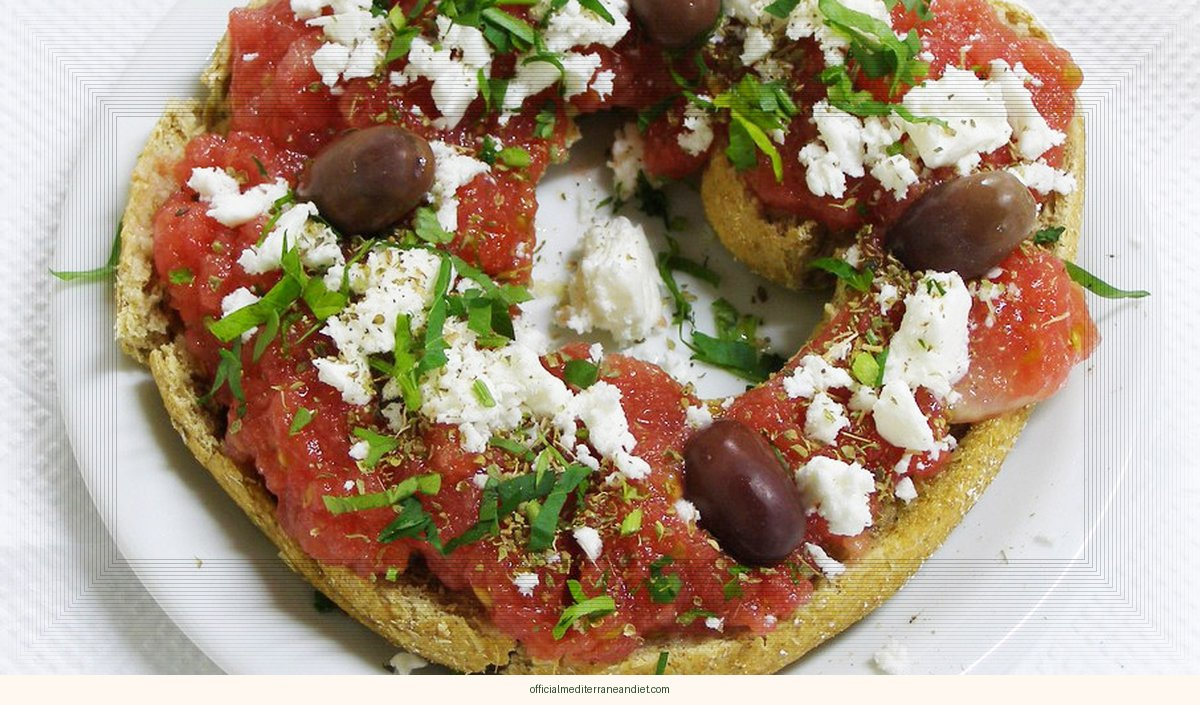
Cretan Dakos Recipe: A Wine Lover’s Dream from Crete
This is a cretan dakos recipe, the kind that sits at the heart of the Crete table. The Four-Rusk Physics of Crete’s Impossible Salad
Yiayia Maria builds each dakos on four barley rusks the size of dinner plates. They are baked twice until they reach the density of hardtack. Then she floods them with grated tomatoes, olive oil, and vinegar, the kind of moisture that destroys ordinary bread. The rusks do not collapse. They soften slowly, layer by layer, into a chewable base that carries feta, olives, and capers without ever turning to mush.
Barley rusks, called dakos, undergo a second bake that drives out almost all moisture. The result is a dry, biscuit-like firmness that resists sogginess when juicy tomatoes hit the surface. Yiayia Maria uses four large rusks per portion, a serving size that historically supplied portable complex carbs for schoolchildren and chewable energy for elders. Unlike fresh bread, which turns to paste when wet, these twice-baked slabs absorb liquid gradually, maintaining structural integrity through the last bite.
The ritual starts with a halved garlic clove brushed across the rusk, an aromatic first coat. Next, two large ripe tomatoes are grated directly over the surface, creating a bright red pulp. Over this, 200 g (about 7 oz) of crumbled feta scatters, followed by a handful of Kalamata olives (≈60 g, half a cup) and two tablespoons of rinsed capers. Finally, four tablespoons of extra-virgin olive oil and a splash of red-wine vinegar drizzle across the top. The oil coats every bite while the vinegar cuts the richness.
Tomatoes supply natural glutamates, the compounds behind umami’s depth. Feta brings casein-derived peptides that chemically amplify the perception of salt without adding extra sodium. This hidden alchemy means the cheese makes the dish taste saltier than it is. Olives and capers layer in phenolic compounds that introduce bitter-sweet notes, balancing the tomato’s acidity. Olive oil, rich in oleic acid, acts as a lipid carrier, delivering fat-soluble flavor molecules from the feta and olives to the palate, while acetic acid brightens the overall taste. The result is a clear contrast of textures: crisp rusk, juicy tomato, creamy cheese, and the occasional olive pop.
Four tablespoons of extra-virgin olive oil are enough to coat the rusk without overwhelming it. The oil’s polyphenols contribute a subtle peppery bite, and its smooth mouthfeel ties the separate components together. Studies of traditional Cretan meals repeatedly find olive-oil-rich dishes among the dietary patterns linked to Mediterranean health outcomes, though the oil itself is not a cure-all.
Chefs abroad sometimes replace barley rusks with quinoa crackers or add avocado on top, but the core formula, rusk + tomato + feta + olive + oil + vinegar, remains unchanged in Archanes. The dish works as a snack, a light lunch, or a communal mezze. Its simplicity invites anyone to follow Yiayia Maria’s steps, preserving a slice of Cretan heritage.
How to make this cretan dakos recipe
This Greek cretan dakos recipe takes about 15 minutes to prep and 0 minutes to cook. The flavor comes from Crete, where Yiayia Maria from the village of Archanes has made it the same way for years. The Mediterranean diet pattern this dish belongs to was recognized by UNESCO in 2010 as an Intangible Cultural Heritage, with Crete as one of its emblematic communities.
Ingredients for cretan dakos with tomato and feta
- 4 large barley rusks (dakos)
- 2 large ripe tomatoes, grated
- 200g (7 oz) feta cheese, crumbled
- 60g (1/2 cup) Kalamata olives, pitted and halved
- 2 tbsp capers, rinsed
- 1 clove garlic, halved
- 4 tbsp extra virgin olive oil
- 1 tbsp red wine vinegar
- 1 tsp dried oregano
- Sea salt and black pepper to taste
Method, the Crete way
- Lightly wet each barley rusk under cold running water for a few seconds, then let them sit for 2 minutes to soften slightly. They should be tender but not soggy.
- Rub the cut side of the garlic clove over the surface of each rusk for a subtle garlic flavor.
- Grate the tomatoes into a bowl, discarding the skins. Season with a pinch of salt and pepper.
- Spoon the grated tomato evenly over each rusk, letting it soak into the bread.
- Top with crumbled feta, olives, and capers. Drizzle with olive oil and red wine vinegar.
- Sprinkle with dried oregano and serve immediately as a refreshing salad or light meal. Pair with a chilled Assyrtiko wine from Santorini for a true Mediterranean experience.
Tips from Yiayia Maria from the village of Archanes
The traditional way in Crete is to keep it simple. Researchers behind the PREDIMED trial found that the cretan dakos recipe pattern, anchored in olive oil and short ingredient lists, cuts cardiovascular risk roughly 30%. Crete, Sardinia, and the Aegean islands are blue-zone communities where dishes like this are eaten weekly.
Serving, storage, and what to drink
Serves 4. Best the day it’s made. Leftovers keep in the fridge for two days. For more Greek recipes see our salads and recipes sections, or pair it with a glass of regional wine from Crete or Sicily.
Loved this recipe?
Get the free 7-day Mediterranean Diet Starter Kit
A week of simple meal plans, a pantry checklist, and our best beginner recipes, straight to your inbox.
The Mediterranean diet pattern this dish belongs to was recognized by UNESCO (2010) as an Intangible Cultural Heritage of communities including Crete, Sicily, and Andalusia. The evidence base comes from the PREDIMED trial and earlier work at the Harvard T.H. Chan School of Public Health.
Tools & pantry for this recipe
A few things that make this easier. These are affiliate links, so we may earn a small commission at no extra cost to you; we only suggest what we’d actually use ourselves. See our editorial policy.