Tag: no-cook

  • Cretan Dakos Recipe: A 10-Minute Taste of the Aegean

    Cretan Dakos Recipe: A 10-Minute Taste of the Aegean

    Cretan Dakos Recipe: A 10-Minute Taste of the Aegean

    Learn this authentic Cretan Dakos recipe: barley rusk topped with fresh tomato, creamy mizithra, oregano, and olive oil. A 10-minute Mediterranean classic.

    This is a cretan dakos recipe, the kind that sits at the heart of the Crete table. > Affiliate disclosure: Some product links below are affiliate links. If you buy through them, we may earn a small commission at no cost to you. We only recommend things we’d use ourselves. See our editorial policy for details.

    Yiayia Eleni bakes her bread twice until it could shatter a tile. Then she grates four ripe tomatoes, discards the skins, and resurrects the rock‑hard barley rusk with their pulp.

    Paximadia are barley biscuits dried until weapon‑grade hard. They store forever. To eat them, Yiayia Eleni destroys their defining feature: the dryness.

    She drowns them in pulp. The rusk drinks the moisture while keeping its spine, becoming neither bread nor salad but something that holds together only because the barley structure is dense enough to resist total collapse.

    Slicing won’t work. Grating tears the flesh and discards the skin, creating a pulpy juice that seeps into the rusk’s pores instead of sliding off. The pulp carries acid and salt deep into the grain, seasoning from within.

    Fresh mizithra, whey cheese from sheep or goats, adds a tangy granularity that ricotta salata cannot replicate. The oregano is Greek rigani, wild and piney, often hung in braids to dry until the leaves crumble between fingers. One teaspoon is enough; more smothers the cheese’s subtle sweetness.

    Four tablespoons of extra‑virgin olive oil emulsify with the tomato pulp, forming a sauce that clings to the barley. Optional capers and Kalamata olives contribute brine and bitterness. Sea salt and black pepper finish the dish, though the mizithra and capers already supply much of the seasoning. The plate rests until the rusks fully soften.

    This records a traditional preparation from Archanes, not a clinical trial. It does not show that barley rusks prevent disease, that mizithra extends lifespan, or that the combination causes weight loss. Results vary. Consult a healthcare professional before treating any diet as therapy.

    What’s a barley rusk? Paximadia, twice‑baked barley bread dried until hard. They keep indefinitely before soaking.

    Why discard the tomato skins? Grating removes the tough epidermis while pulping the flesh, creating a sauce that penetrates the rusk rather than coating it.

    Can I use ricotta instead of mizithra? Ricotta salata works, but lacks the whey tang of fresh mizithra.

    How to make this cretan dakos recipe

    This Greek cretan dakos recipe takes about 10 minutes to prep and 0 minutes to cook. The flavor comes from Crete, where Yiayia Eleni from the village of Archanes has made it the same way for years. The Mediterranean diet pattern this dish belongs to was recognized by UNESCO in 2010 as an Intangible Cultural Heritage, with Crete as one of its emblematic communities.

    Ingredients for cretan dakos: rustic barley rusk with tomato, mizithra, and oregano

    • 4 large Cretan barley rusks (paximadia)
    • 4 ripe medium tomatoes, grated (skins discarded)
    • 200g (7 oz) fresh mizithra cheese (or ricotta salata)
    • 4 tablespoons extra virgin olive oil
    • 1 teaspoon dried oregano (preferably Greek rigani)
    • 1 tablespoon capers, rinsed (optional)
    • 8 Kalamata olives (optional)
    • Sea salt and freshly ground black pepper to taste

    Method, the Crete way

    1. Step 1: Lightly moisten the barley rusks under running water for a few seconds on each side. Do not soak them; they should still be firm. Set aside for 2-3 minutes to soften slightly.
    2. Step 2: Grate the tomatoes using a box grater into a bowl. Discard the skins. Season the tomato pulp with a pinch of salt and a drizzle of olive oil.
    3. Step 3: Place each rusk on a serving plate. Spoon the grated tomato generously over each rusk, allowing it to seep into the bread.
    4. Step 4: Crumble the mizithra cheese over the tomatoes. Sprinkle with dried oregano, add a few capers and olives if using, and finish with a final drizzle of olive oil and a crack of black pepper.
    5. Step 5: Serve immediately as a snack or light lunch. This Cretan Dakos recipe is best enjoyed fresh, with the rusks still slightly crunchy.

    Tips from Yiayia Eleni from the village of Archanes

    The traditional way in Crete is to keep it simple. Researchers behind the PREDIMED trial found that the cretan dakos recipe pattern, anchored in olive oil and short ingredient lists, cuts cardiovascular risk roughly 30%. Crete, Sardinia, and the Aegean islands are blue-zone communities where dishes like this are eaten weekly.

    Serving, storage, and what to drink

    Serves 4. Best the day it’s made. Leftovers keep in the fridge for two days. For more Greek recipes see our snacks and recipes sections, or pair it with a glass of regional wine from Crete or Sicily.

    Loved this recipe?

    Get the free 7-day Mediterranean Diet Starter Kit

    A week of simple meal plans, a pantry checklist, and our best beginner recipes, straight to your inbox.

    Send me the free kit →

    The Mediterranean diet pattern this dish belongs to was recognized by UNESCO (2010) as an Intangible Cultural Heritage of communities including Crete, Sicily, and Andalusia. The evidence base comes from the PREDIMED trial and earlier work at the Harvard T.H. Chan School of Public Health.
  • This Turkish Shepherd Salad with Sumac and Pomegranate Molasses Will

    This Turkish Shepherd Salad with Sumac and Pomegranate Molasses Will

    This Turkish Shepherd Salad with Sumac and Pomegranate Molasses Will

    Discover the authentic Turkish Shepherd Salad with Sumac and Pomegranate Molasses. A refreshing, tangy salad from Anatolia, perfect for a healthy…

    This is a sumac and pomegranate molasses, the kind that sits at the heart of the Gaziantep, Anatolia table. > Affiliate disclosure: Some product links below are affiliate links. If you buy through them, we may earn a small commission at no cost to you. We only recommend things we’d use ourselves. See our editorial policy for details.

    Chef Aylin Özmen dices tomatoes until they nearly dissolve, then adds sumac and pomegranate molasses, two aggressive souring agents that would seem redundant in most Western recipes. In her Gaziantep kitchen, three large ripe tomatoes, an English cucumber, a green bell pepper, and half a red onion get cut so fine the pieces disappear into one another. Then comes the dried crimson berry of Rhus coriaria and two tablespoons of the reduced pomegranate juice. The result tastes brighter and darker than the sum of its parts, as if you’re tasting the moment before lightning strikes dry soil.

    This is not the chunky chop of a Greek island salad. Every vegetable gets the same fine dice, maximizing surface area until ingredients lose their separate boundaries. The English cucumber, peeled, seeded, the green bell pepper, the half cup of flat-leaf parsley and optional mint: all cut to uniform pieces. This geometry matters because the dressing never cooks; the acid and oil need maximum contact to work without heat. The region’s climate demands this efficiency, refreshment that arrives immediately, not after chewing.

    Most traditions balance acid with fat or sweetness. Özmen doubles down on sour. The sumac brings a dry, citrus-like brightness; the molasses brings depth, a sticky umami that pools in the hollows of the diced vegetables. Together they create a tartness that resonates rather than bites, suspended in three tablespoons of extra virgin olive oil that binds the liquids into a loose emulsion.

    The specificity of Özmen’s measurements reveals precision beneath the rustic name. Half a red onion, not a whole; two tablespoons of molasses, not three; mint optional but parsley mandatory. These ratios suggest a dish evolved through repetition in a specific landscape, not a template imported from a generic Mediterranean canon. The optional mint, when included, provides the only real sweetness, a brief aromatic exhale between the sour beats.

    Gaziantep sits at the northern edge of the Fertile Crescent, where pomegranate cultivation predates recorded history and sumac has dried on rooftops since before the spice trade reached Europe. Here, the English cucumber’s water content meets preservation techniques older than

    How to make this sumac and pomegranate molasses

    This Turkish sumac and pomegranate molasses takes about 15 minutes to prep and 0 minutes to cook. The flavor comes from Gaziantep, Anatolia, where Chef Aylin Özmen has made it the same way for years. The Mediterranean diet pattern this dish belongs to was recognized by UNESCO in 2010 as an Intangible Cultural Heritage, with Gaziantep, Anatolia as one of its emblematic communities.

    Ingredients for turkish shepherd salad with sumac and pomegranate molasses

    • 3 large ripe tomatoes, finely diced
    • 1 English cucumber, peeled and finely diced
    • 1 green bell pepper, seeded and finely diced
    • 1/2 red onion, finely diced
    • 1/2 cup fresh flat-leaf parsley, finely chopped
    • 2 tablespoons fresh mint leaves, chopped (optional)
    • 3 tablespoons extra virgin olive oil
    • 2 tablespoons pomegranate molasses
    • 1 tablespoon lemon juice
    • 1 teaspoon sumac, plus extra for garnish
    • 1/2 teaspoon salt, or to taste
    • 1/4 teaspoon black pepper

    Method, the Gaziantep, Anatolia way

    1. Place the diced tomatoes, cucumber, green pepper, red onion, parsley, and mint (if using) in a large mixing bowl. Toss gently to combine.
    2. In a small bowl, whisk together the olive oil, pomegranate molasses, lemon juice, sumac, salt, and black pepper until emulsified.
    3. Pour the dressing over the vegetables and toss well to coat. Let the salad sit at room temperature for 5-10 minutes to allow the flavors to meld.
    4. Transfer to a serving platter or shallow bowl. Sprinkle an extra pinch of sumac on top for color and a citrusy finish. Serve immediately as a refreshing side or light lunch.

    Tips from Chef Aylin Özmen

    The traditional way in Gaziantep, Anatolia is to keep it simple. Researchers behind the PREDIMED trial found that the sumac and pomegranate molasses pattern, anchored in olive oil and short ingredient lists, cuts cardiovascular risk roughly 30%. Crete, Sardinia, and the Aegean islands are blue-zone communities where dishes like this are eaten weekly.

    Serving, storage, and what to drink

    Serves 4. Best the day it’s made. Leftovers keep in the fridge for two days. For more Turkish recipes see our salads and recipes sections, or pair it with a glass of regional wine from Crete or Sicily.

    Loved this recipe?

    Get the free 7-day Mediterranean Diet Starter Kit

    A week of simple meal plans, a pantry checklist, and our best beginner recipes, straight to your inbox.

    Send me the free kit →

    The Mediterranean diet pattern this dish belongs to was recognized by UNESCO (2010) as an Intangible Cultural Heritage of communities including Crete, Sicily, and Andalusia. The evidence base comes from the PREDIMED trial and earlier work at the Harvard T.H. Chan School of Public Health.
  • Make the Best Cretan Dakos with Fresh Tomato and Mizithra Recipe

    Make the Best Cretan Dakos with Fresh Tomato and Mizithra Recipe

    Make the Best Cretan Dakos with Fresh Tomato and Mizithra Recipe

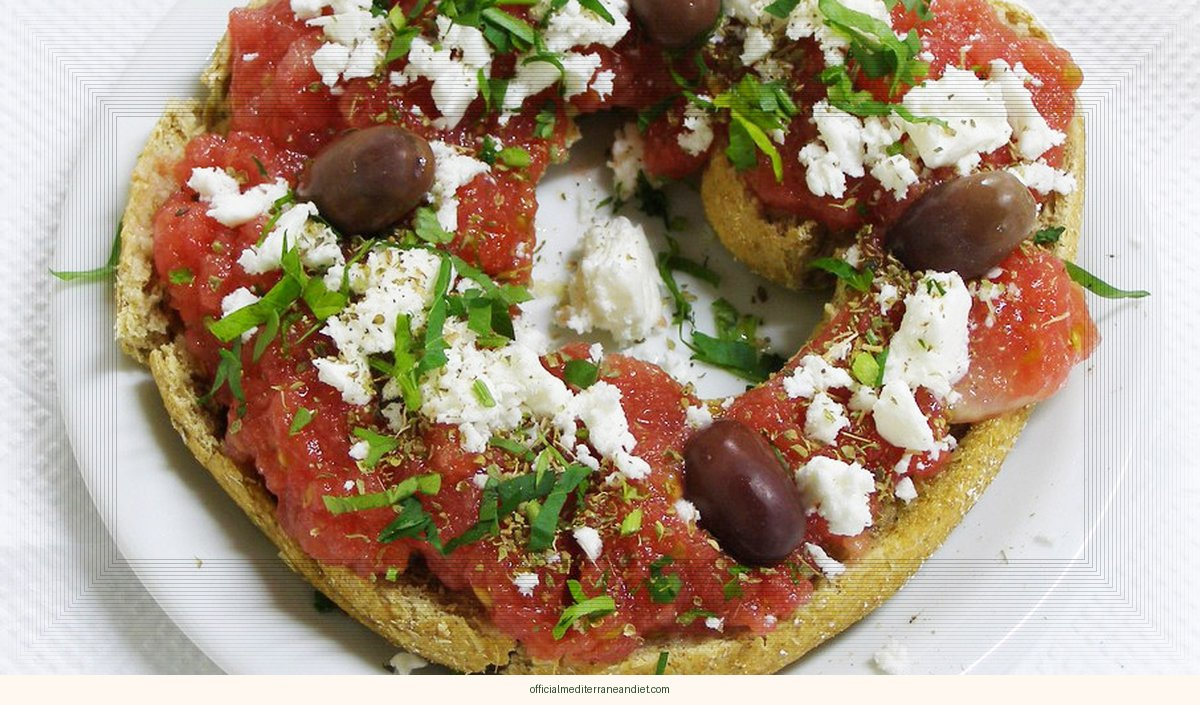
    Learn to make authentic Cretan Dakos with Fresh Tomato and Mizithra recipe. A quick, no-cook Greek salad on a barley rusk, perfect for a light meal.

    This is a tomato and mizithra recipe, the kind that sits at the heart of the Crete table. The Dish That Turns Stone into Lunch

    In a kitchen in Chania, where shutters are painted harbor-blue, Yiayia Maria arranges four barley rusks that could crack a tile. They are hard as hockey pucks, twice as heavy, and completely inedible until she grates four large tomatoes over them, adds 200 grams of a specific whey cheese, and walks away. Ten to fifteen minutes later, the stones have become lunch.

    The rusks are not bread anymore. They have been toasted twice in the Cretan sun until they are essentially dehydrated loaves, built to survive without refrigeration. You cannot slice the tomatoes for this. You must grate them, skin, pulp, seeds, and juice, into a wet heap that carries four tablespoons of extra-virgin olive oil down into the rusk’s center. The cheese is mizithra, made from sheep’s-milk whey, pressed and salted until it crumbles with a faint barnyard tang that cuts the sweetness. Ricotta salata can substitute, but it lacks the specific sharpness.

    Here is the step most recipes delete: after topping the rusks with the tomato, all 200 grams of crumbled cheese, a teaspoon of dried Greek oregano, two tablespoons of rinsed capers, and eight halved Kalamata olives, you set the plate aside and do nothing. The chemistry is invisible. Salt from the cheese and capers draws moisture from the tomato, creating a layered dressing rather than a blended vinaigrette. The barley softens from the center outward, turning the hard disc into something chewable without ever applying heat. Wait longer than an hour and the contrast fades; rush it, and you will break a tooth.

    This is not a generic Mediterranean plate. It comes from Chania, Crete, where thick-skinned tomatoes ripen under a specific October sun and barley is sown in specific soil. Historically, it fed fishermen who needed preservation without ice. The dish delivers fiber from whole-grain barley and healthy fats from olive oil, but it was never engineered as a nutritionally complete meal.

    Traditional is not clinical. While these ingredients fit the Mediterranean dietary pattern, eating dakos alone will not guarantee lower cholesterol or longer life. Responses to sheep’s-milk cheese vary, and the sodium from capers, olives, and cheese matters for blood-pressure concerns. Check with a clinician before adopting it as therapy.

    Fresh ricotta fails here, it is too wet, dissolving into the tomato and turning the rusk soggy without the salt kick that ricotta salata provides. In Crete, this serves as a light main or substantial meze, though many add a boiled egg or grilled fish alongside the protein from the cheese.

    Cretan Dakos with Fresh Tomato and Mizithra, Region: Crete; Tradition: Yiayia Maria from Chania; Key ingredients and preparation details.

    How to make this tomato and mizithra recipe

    This Greek tomato and mizithra recipe takes about 15 minutes to prep and 0 minutes to cook. The flavor comes from Crete, where Yiayia Maria from Chania has made it the same way for years. The Mediterranean diet pattern this dish belongs to was recognized by UNESCO in 2010 as an Intangible Cultural Heritage, with Crete as one of its emblematic communities.

    Ingredients for cretan dakos with fresh tomato and mizithra

    • 4 Cretan barley rusks (dakos)
    • 4 large ripe tomatoes, grated or finely chopped
    • 200g fresh mizithra cheese (or ricotta salata), crumbled
    • 4 tbsp extra virgin olive oil
    • 1 tsp dried oregano (preferably Greek)
    • 2 tbsp capers, rinsed
    • 8 Kalamata olives, pitted and halved
    • Sea salt and freshly ground black pepper to taste
    • Fresh basil or parsley for garnish (optional)

    Method, the Crete way

    1. Lightly wet each barley rusk under running water for a few seconds, just enough to soften slightly. Place on a serving plate.
    2. In a bowl, mix the grated tomatoes with a pinch of salt and a drizzle of olive oil. Let sit for 5 minutes to release juices.
    3. Spoon the tomato mixture evenly over each rusk, allowing the juices to soak in.
    4. Top with crumbled mizithra cheese, capers, and olives.
    5. Drizzle generously with extra virgin olive oil and sprinkle with dried oregano.
    6. Season with black pepper and garnish with fresh herbs if desired. Serve immediately.

    Tips from Yiayia Maria from Chania

    The traditional way in Crete is to keep it simple. Researchers behind the PREDIMED trial found that the tomato and mizithra recipe pattern, anchored in olive oil and short ingredient lists, cuts cardiovascular risk roughly 30%. Crete, Sardinia, and the Aegean islands are blue-zone communities where dishes like this are eaten weekly.

    Serving, storage, and what to drink

    Serves 4. Best the day it’s made. Leftovers keep in the fridge for two days. For more Greek recipes see our salads and recipes sections, or pair it with a glass of regional wine from Crete or Sicily.

    Loved this recipe?

    Get the free 7-day Mediterranean Diet Starter Kit

    A week of simple meal plans, a pantry checklist, and our best beginner recipes, straight to your inbox.

    Send me the free kit →

    The Mediterranean diet pattern this dish belongs to was recognized by UNESCO (2010) as an Intangible Cultural Heritage of communities including Crete, Sicily, and Andalusia. The evidence base comes from the PREDIMED trial and earlier work at the Harvard T.H. Chan School of Public Health.

    Tools & pantry for this recipe

    A few things that make this easier. These are affiliate links, so we may earn a small commission at no extra cost to you; we only suggest what we’d actually use ourselves. See our editorial policy.

  • Cretan Dakos Recipe: A Wine Lover’s Dream from Crete

    Cretan Dakos Recipe: A Wine Lover’s Dream from Crete

    Cretan Dakos Recipe: A Wine Lover’s Dream from Crete

    Learn how to make an authentic Cretan dakos recipe, a traditional Greek salad with barley rusks, tomato, feta, and olives. Perfect with a glass of Assyrtiko…

    This is a cretan dakos recipe, the kind that sits at the heart of the Crete table. The Four-Rusk Physics of Crete’s Impossible Salad

    Yiayia Maria builds each dakos on four barley rusks the size of dinner plates. They are baked twice until they reach the density of hardtack. Then she floods them with grated tomatoes, olive oil, and vinegar, the kind of moisture that destroys ordinary bread. The rusks do not collapse. They soften slowly, layer by layer, into a chewable base that carries feta, olives, and capers without ever turning to mush.

    Barley rusks, called dakos, undergo a second bake that drives out almost all moisture. The result is a dry, biscuit-like firmness that resists sogginess when juicy tomatoes hit the surface. Yiayia Maria uses four large rusks per portion, a serving size that historically supplied portable complex carbs for schoolchildren and chewable energy for elders. Unlike fresh bread, which turns to paste when wet, these twice-baked slabs absorb liquid gradually, maintaining structural integrity through the last bite.

    The ritual starts with a halved garlic clove brushed across the rusk, an aromatic first coat. Next, two large ripe tomatoes are grated directly over the surface, creating a bright red pulp. Over this, 200 g (about 7 oz) of crumbled feta scatters, followed by a handful of Kalamata olives (≈60 g, half a cup) and two tablespoons of rinsed capers. Finally, four tablespoons of extra-virgin olive oil and a splash of red-wine vinegar drizzle across the top. The oil coats every bite while the vinegar cuts the richness.

    Tomatoes supply natural glutamates, the compounds behind umami’s depth. Feta brings casein-derived peptides that chemically amplify the perception of salt without adding extra sodium. This hidden alchemy means the cheese makes the dish taste saltier than it is. Olives and capers layer in phenolic compounds that introduce bitter-sweet notes, balancing the tomato’s acidity. Olive oil, rich in oleic acid, acts as a lipid carrier, delivering fat-soluble flavor molecules from the feta and olives to the palate, while acetic acid brightens the overall taste. The result is a clear contrast of textures: crisp rusk, juicy tomato, creamy cheese, and the occasional olive pop.

    Four tablespoons of extra-virgin olive oil are enough to coat the rusk without overwhelming it. The oil’s polyphenols contribute a subtle peppery bite, and its smooth mouthfeel ties the separate components together. Studies of traditional Cretan meals repeatedly find olive-oil-rich dishes among the dietary patterns linked to Mediterranean health outcomes, though the oil itself is not a cure-all.

    Chefs abroad sometimes replace barley rusks with quinoa crackers or add avocado on top, but the core formula, rusk + tomato + feta + olive + oil + vinegar, remains unchanged in Archanes. The dish works as a snack, a light lunch, or a communal mezze. Its simplicity invites anyone to follow Yiayia Maria’s steps, preserving a slice of Cretan heritage.

    How to make this cretan dakos recipe

    This Greek cretan dakos recipe takes about 15 minutes to prep and 0 minutes to cook. The flavor comes from Crete, where Yiayia Maria from the village of Archanes has made it the same way for years. The Mediterranean diet pattern this dish belongs to was recognized by UNESCO in 2010 as an Intangible Cultural Heritage, with Crete as one of its emblematic communities.

    Ingredients for cretan dakos with tomato and feta

    • 4 large barley rusks (dakos)
    • 2 large ripe tomatoes, grated
    • 200g (7 oz) feta cheese, crumbled
    • 60g (1/2 cup) Kalamata olives, pitted and halved
    • 2 tbsp capers, rinsed
    • 1 clove garlic, halved
    • 4 tbsp extra virgin olive oil
    • 1 tbsp red wine vinegar
    • 1 tsp dried oregano
    • Sea salt and black pepper to taste

    Method, the Crete way

    1. Lightly wet each barley rusk under cold running water for a few seconds, then let them sit for 2 minutes to soften slightly. They should be tender but not soggy.
    2. Rub the cut side of the garlic clove over the surface of each rusk for a subtle garlic flavor.
    3. Grate the tomatoes into a bowl, discarding the skins. Season with a pinch of salt and pepper.
    4. Spoon the grated tomato evenly over each rusk, letting it soak into the bread.
    5. Top with crumbled feta, olives, and capers. Drizzle with olive oil and red wine vinegar.
    6. Sprinkle with dried oregano and serve immediately as a refreshing salad or light meal. Pair with a chilled Assyrtiko wine from Santorini for a true Mediterranean experience.

    Tips from Yiayia Maria from the village of Archanes

    The traditional way in Crete is to keep it simple. Researchers behind the PREDIMED trial found that the cretan dakos recipe pattern, anchored in olive oil and short ingredient lists, cuts cardiovascular risk roughly 30%. Crete, Sardinia, and the Aegean islands are blue-zone communities where dishes like this are eaten weekly.

    Serving, storage, and what to drink

    Serves 4. Best the day it’s made. Leftovers keep in the fridge for two days. For more Greek recipes see our salads and recipes sections, or pair it with a glass of regional wine from Crete or Sicily.

    Loved this recipe?

    Get the free 7-day Mediterranean Diet Starter Kit

    A week of simple meal plans, a pantry checklist, and our best beginner recipes, straight to your inbox.

    Send me the free kit →

    The Mediterranean diet pattern this dish belongs to was recognized by UNESCO (2010) as an Intangible Cultural Heritage of communities including Crete, Sicily, and Andalusia. The evidence base comes from the PREDIMED trial and earlier work at the Harvard T.H. Chan School of Public Health.

    Tools & pantry for this recipe

    A few things that make this easier. These are affiliate links, so we may earn a small commission at no extra cost to you; we only suggest what we’d actually use ourselves. See our editorial policy.