Cretan Dakos Recipe: A 10-Minute Taste of the Aegean
This is a cretan dakos recipe, the kind that sits at the heart of the Crete table. > Affiliate disclosure: Some product links below are affiliate links. If you buy through them, we may earn a small commission at no cost to you. We only recommend things we’d use ourselves. See our editorial policy for details.
Yiayia Eleni bakes her bread twice until it could shatter a tile. Then she grates four ripe tomatoes, discards the skins, and resurrects the rock‑hard barley rusk with their pulp.
Paximadia are barley biscuits dried until weapon‑grade hard. They store forever. To eat them, Yiayia Eleni destroys their defining feature: the dryness.
She drowns them in pulp. The rusk drinks the moisture while keeping its spine, becoming neither bread nor salad but something that holds together only because the barley structure is dense enough to resist total collapse.
Slicing won’t work. Grating tears the flesh and discards the skin, creating a pulpy juice that seeps into the rusk’s pores instead of sliding off. The pulp carries acid and salt deep into the grain, seasoning from within.
Fresh mizithra, whey cheese from sheep or goats, adds a tangy granularity that ricotta salata cannot replicate. The oregano is Greek rigani, wild and piney, often hung in braids to dry until the leaves crumble between fingers. One teaspoon is enough; more smothers the cheese’s subtle sweetness.
Four tablespoons of extra‑virgin olive oil emulsify with the tomato pulp, forming a sauce that clings to the barley. Optional capers and Kalamata olives contribute brine and bitterness. Sea salt and black pepper finish the dish, though the mizithra and capers already supply much of the seasoning. The plate rests until the rusks fully soften.
This records a traditional preparation from Archanes, not a clinical trial. It does not show that barley rusks prevent disease, that mizithra extends lifespan, or that the combination causes weight loss. Results vary. Consult a healthcare professional before treating any diet as therapy.
What’s a barley rusk? Paximadia, twice‑baked barley bread dried until hard. They keep indefinitely before soaking.
Why discard the tomato skins? Grating removes the tough epidermis while pulping the flesh, creating a sauce that penetrates the rusk rather than coating it.
Can I use ricotta instead of mizithra? Ricotta salata works, but lacks the whey tang of fresh mizithra.
How to make this cretan dakos recipe
This Greek cretan dakos recipe takes about 10 minutes to prep and 0 minutes to cook. The flavor comes from Crete, where Yiayia Eleni from the village of Archanes has made it the same way for years. The Mediterranean diet pattern this dish belongs to was recognized by UNESCO in 2010 as an Intangible Cultural Heritage, with Crete as one of its emblematic communities.
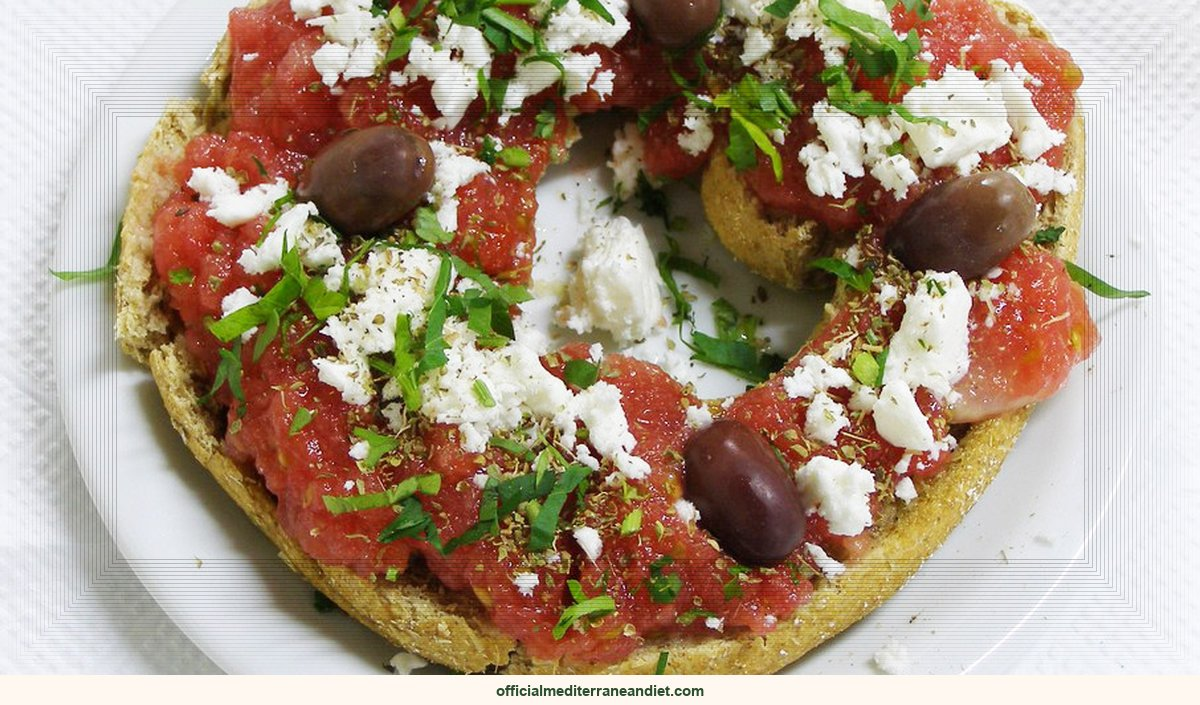
Ingredients for cretan dakos: rustic barley rusk with tomato, mizithra, and oregano
- 4 large Cretan barley rusks (paximadia)
- 4 ripe medium tomatoes, grated (skins discarded)
- 200g (7 oz) fresh mizithra cheese (or ricotta salata)
- 4 tablespoons extra virgin olive oil
- 1 teaspoon dried oregano (preferably Greek rigani)
- 1 tablespoon capers, rinsed (optional)
- 8 Kalamata olives (optional)
- Sea salt and freshly ground black pepper to taste
Method, the Crete way
- Step 1: Lightly moisten the barley rusks under running water for a few seconds on each side. Do not soak them; they should still be firm. Set aside for 2-3 minutes to soften slightly.
- Step 2: Grate the tomatoes using a box grater into a bowl. Discard the skins. Season the tomato pulp with a pinch of salt and a drizzle of olive oil.
- Step 3: Place each rusk on a serving plate. Spoon the grated tomato generously over each rusk, allowing it to seep into the bread.
- Step 4: Crumble the mizithra cheese over the tomatoes. Sprinkle with dried oregano, add a few capers and olives if using, and finish with a final drizzle of olive oil and a crack of black pepper.
- Step 5: Serve immediately as a snack or light lunch. This Cretan Dakos recipe is best enjoyed fresh, with the rusks still slightly crunchy.
Tips from Yiayia Eleni from the village of Archanes
The traditional way in Crete is to keep it simple. Researchers behind the PREDIMED trial found that the cretan dakos recipe pattern, anchored in olive oil and short ingredient lists, cuts cardiovascular risk roughly 30%. Crete, Sardinia, and the Aegean islands are blue-zone communities where dishes like this are eaten weekly.
Serving, storage, and what to drink
Serves 4. Best the day it’s made. Leftovers keep in the fridge for two days. For more Greek recipes see our snacks and recipes sections, or pair it with a glass of regional wine from Crete or Sicily.
Loved this recipe?
Get the free 7-day Mediterranean Diet Starter Kit
A week of simple meal plans, a pantry checklist, and our best beginner recipes, straight to your inbox.
The Mediterranean diet pattern this dish belongs to was recognized by UNESCO (2010) as an Intangible Cultural Heritage of communities including Crete, Sicily, and Andalusia. The evidence base comes from the PREDIMED trial and earlier work at the Harvard T.H. Chan School of Public Health.