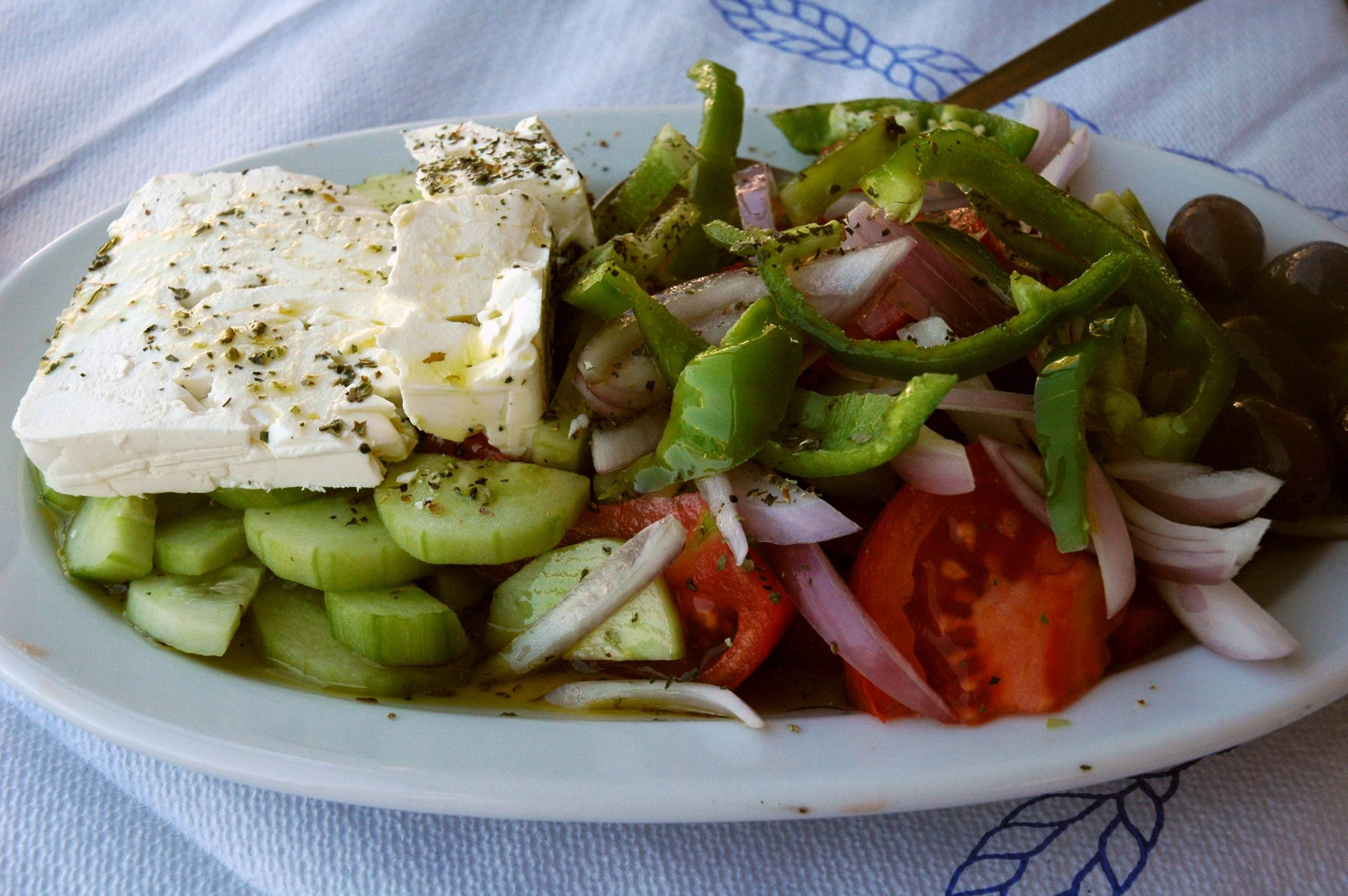
Greek Salad with Tzatziki Dressing
The Mediterranean Table in a Bowl
The Greek salad — or horiatiki, meaning “village salad” — is one of the most recognized dishes in Mediterranean cuisine. It is also one of the most misunderstood outside of Greece. In its authentic form, it contains no lettuce. The horiatiki is built on ripe tomatoes, cucumber, red onion, Kalamata olives, and a thick slab of feta cheese, dressed simply with good olive oil, dried oregano, and red wine vinegar. It is a salad designed for summer produce at peak ripeness, eaten outdoors, with bread to mop up the dressing at the bottom of the bowl.
This version adds a tzatziki dressing — a creamy, garlicky yogurt sauce that transforms the classic into something richer and more substantial. It bridges the horiatiki with the yogurt-based dressings used throughout Northern Greece and pairs particularly well with grilled meats served alongside. The result is a salad that functions as a full meal: protein from the feta and yogurt, healthy fats from the olives and olive oil, fiber from the vegetables, and Mediterranean flavor throughout.
This is exactly the kind of dish the Mediterranean diet was built around — vegetables at the center, with animal products (feta, yogurt) used as seasoning and accent rather than as the main event.
—
Why It Fits the Mediterranean Diet
The core of this salad — tomatoes, cucumber, olives, and olive oil — represents some of the most studied foods in Mediterranean diet research. Tomatoes are rich in lycopene, a carotenoid antioxidant associated with reduced cardiovascular disease risk. The bioavailability of lycopene increases when tomatoes are combined with fat, which means a simple drizzle of olive oil over chopped tomatoes is actually doing meaningful nutritional work.
Kalamata olives provide a significant dose of oleic acid — the monounsaturated fat that is the primary fat in olive oil — along with polyphenols that have demonstrated anti-inflammatory effects. Feta cheese, made from sheep’s milk (and sometimes a blend with goat’s milk), contains conjugated linoleic acid (CLA) and less sodium per gram than most other cheeses used in salads.
The tzatziki dressing contributes Greek yogurt’s protein and probiotics, plus the cardiovascular benefits associated with regular garlic consumption. This is a nutrient-dense meal in a bowl, not a vehicle for croutons and a heavy dressing.
—
Ingredients
**For the salad:**
**For the tzatziki dressing:**
**Quality notes:** The quality of tomatoes matters more here than in almost any other recipe on this site. Use tomatoes at peak ripeness — if they don’t smell like anything in the store, they won’t taste like anything in the salad. In off-season months, cherry tomatoes (halved) are a better choice than out-of-season large tomatoes. Buy block feta packed in brine, not pre-crumbled; it has a completely different texture and flavor.
—
Equipment Needed
—
Instructions
**1. Make the tzatziki dressing.**
Combine Greek yogurt, olive oil, lemon juice, grated garlic, squeezed cucumber, dill, and salt in a small bowl. Whisk to combine. Taste for salt and lemon. Refrigerate while you prepare the salad — at least 10 minutes allows the flavors to develop.
**2. Prepare the vegetables.**
Chop the tomatoes into large, irregular chunks — this is a rustic salad, not a precision salad. The rough cuts mean each bite has varied texture. Slice the cucumber into thick half-moons. Slice the red onion as thin as you can — if you find raw onion overpowering, soak the slices in cold water for 10 minutes to mellow them.
**3. Assemble.**
Add the tomatoes, cucumber, and red onion to the serving bowl. Scatter the Kalamata olives over the top. Place the block of feta in the center or lay it across the salad as a substantial slab rather than crumbling it in — this is the traditional presentation. Drizzle with olive oil, rub the dried oregano between your palms and scatter it over everything, and season with flaky salt and black pepper.
**4. Dress and serve.**
Drizzle the tzatziki dressing over the salad just before serving, or serve it on the side for guests to add themselves. In Greek tradition, the salad is dressed simply with olive oil and the dressing is kept on the side.
—
Pro Tips and Variations
**Let it rest:** The horiatiki actually improves with 10–15 minutes of resting after assembly. The salt draws moisture from the tomatoes and cucumbers, creating a natural dressing that pools at the bottom of the bowl. Mop it up with good bread.
**Temperature matters:** This salad should be served at room temperature, not refrigerator-cold. Cold dulls the flavor of tomatoes dramatically.
**Add capers:** A tablespoon of capers adds a briny, sharp note that works well with the creamy tzatziki dressing. A traditional Cyclades variation.
**Make it more substantial:** Add a can of drained white beans (cannellini) for additional protein and fiber, turning the salad into a more complete meal.
—
Nutritional Info (per serving, serves 4)
Calories: 310 | Protein: 12g | Carbs: 14g | Fat: 24g | Fiber: 3g | Calcium: 28% DV
—
Storage
This salad is best eaten immediately after assembly. The dressed components do not store well — tomatoes and cucumber release water, and the tzatziki thins as it sits. If you need to prepare ahead, keep the components separate and assemble just before serving.
—
What to Serve With It
This salad pairs naturally with Lemon Herb Roasted Chicken Thighs, Grilled Halloumi with Figs and Pomegranate, or Spicy Grilled Chicken with Lemon Garlic. Serve with thick slices of crusty bread — in Greece, the bread is not optional. It is how you eat the dressing that pools at the bottom.
—
FAQs
**Why no lettuce in an authentic Greek salad?**
The traditional horiatiki does not contain lettuce. The salad is built on ripe summer vegetables that hold their own texturally without leafy greens. Adding lettuce is a Western adaptation — it dilutes the concentrated flavors and makes the dressing pool differently.
**Can I substitute feta for another cheese?**
Feta is specific to this salad and protected by European designation of origin — genuine feta must come from specific regions of Greece. Substitutions like Bulgarian feta or domestic white cheese are acceptable but produce a somewhat different result. Avoid fresh mozzarella or goat cheese — the flavor profiles don’t fit.
**How do I keep the onion from being too sharp?**
Soak sliced red onion in cold water for 10 minutes, then drain and pat dry. This removes some of the sulfur compounds responsible for harsh raw onion flavor while preserving the color and crunch.
Tools & pantry for this recipe
A few things that make this easier. These are affiliate links, so we may earn a small commission at no extra cost to you; we only suggest what we’d actually use ourselves. See our editorial policy.