Tag: spicy

  • And Orange Salad Recipe: Sunshine on a Plate: The BEST Moroccan

    And Orange Salad Recipe: Sunshine on a Plate: The BEST Moroccan

    And Orange Salad Recipe: Sunshine on a Plate: The BEST Moroccan

    Brighten your day with this vibrant Moroccan Carrot and Orange Salad Recipe! A sweet, spicy, and utterly delicious taste of Marrakech.

    This is a and orange salad recipe, the kind that sits at the heart of the Marrakech table. > Affiliate disclosure: Some product links below are affiliate links. If you buy through them, we may earn a small commission at no cost to you. We only recommend things we’d use ourselves. See our editorial policy for details.

    The Spice‑Stall Secret That Turns Carrots and Oranges Into a Sunrise‑Bright, Smoked Salad

    At Fatima’s Djemaa el‑Fna stall, a precise 3: 1 carrot‑to‑orange ratio, a splash of orange‑blossom water, and a pinch of cinnamon create a salad that tastes bright at first bite and grows smoky as the crowd thickens. She has served this exact formula, 500 g carrots, two oranges, a dash of harissa, unchanged for more than thirty years.

    Fatima mandolines 500 g carrots, peels two large oranges, zest them, and squeezes the juice. The orange segments are saved for garnish. Warm carrots meet 2 tbsp extra‑virgin olive oil from Tadla, whose buttery finish softens the heat before the spices arrive.

    Carrots supply natural sweetness; orange adds tart brightness. Zest releases volatile citrus oils that lift the bowl, while juice supplies acidity that keeps the ribbons crisp. The 3: 1 ratio preserves mouthfeel and prevents sogginess, even after the oil and juice coat every strand.

    The blend is 1 tsp ground cinnamon, ½ tsp ground ginger, a quarter‑teaspoon cayenne, and 1, 2 tsp harissa paste. Cinnamon’s sweet, woody notes temper harissa’s fire, and ginger bridges the two. A little‑known fact: cinnamon’s cinnamaldehyde binds temporarily to capsaicin molecules, muting the heat just enough to let the orange shine.

    When olive oil, orange juice, orange‑blossom water, and the spice mix emulsify, each carrot strand carries the full profile. The first bite offers crunch, an orange burst, a whisper of cinnamon, then a lingering heat that fades, inviting another forkful. Doubling the harissa shifts the salad from “brightly spiced” to a noticeable after‑glow, exactly how Fatima adjusts the flavor to match market traffic.

    Use a mandoline for uniform carrots, fresh oranges for zest and juice, and high‑quality Tadla (or any extra‑virgin) olive oil. If orange‑blossom water is unavailable, replace it with a teaspoon of rose‑water for a subtle floral hint. Serve at room temperature and let the spices meld for 10, 15 minutes after dressing.

    The recipe showcases a balanced blend of flavors, but it does not demonstrate any specific health benefit beyond the general nutrition of carrots, oranges, and olive oil. Claims of weight loss, disease prevention, or longevity would require controlled scientific studies, which this culinary description does not provide.

    Can I swap carrots for another root vegetable?
    Parsnips or beets work, but they alter the sweetness‑to‑bitterness balance and may need a slight reduction in orange juice.

    What if I can’t handle the heat?
    Reduce the cayenne to a pinch and start with ½ tsp harissa; add more later if needed.

    Is orange‑blossom water essential?
    It adds a distinctive floral note, but a teaspoon of rose‑water or a drop of vanilla extract can serve as a substitute.

    Do I have to use Tadla olive oil?
    Tadla oil’s buttery profile is traditional, yet any high‑quality extra‑virgin olive oil will keep the salad rich and smooth.

    How long does the salad keep?
    Stored in an airtight container, it stays fresh for up to 24 hours; the carrots stay crispest if dressed just before serving.

    Sources
    – Moroccan Carrot and Orange Salad with Cinnamon and Harissa, Fatima’s Djemaa el‑Fna recipe (Region: Marrakech; ingredients and measurements)

    How to make this and orange salad recipe

    This Moroccan and orange salad recipe takes about 20 minutes to prep and 15 minutes to cook. The flavor comes from Marrakech, where Fatima, a spice merchant from the Djemaa el-Fna has made it the same way for years. The Mediterranean diet pattern this dish belongs to was recognized by UNESCO in 2010 as an Intangible Cultural Heritage, with Marrakech as one of its emblematic communities.

    Ingredients for moroccan carrot and orange salad with cinnamon and harissa

    • 500g carrots, peeled and thinly sliced (a mandoline is helpful!)
    • 2 large oranges, zested and juiced (reserve segments for garnish)
    • 2 tbsp extra virgin olive oil, preferably from the Tadla region
    • 1 tbsp fresh orange blossom water
    • 1 tsp ground cinnamon
    • 1/2 tsp ground ginger
    • 1/4 tsp cayenne pepper (or more, to taste)
    • 1-2 tsp harissa paste (adjust to your spice preference)
    • 2 tbsp chopped fresh cilantro
    • 2 tbsp chopped fresh flat-leaf parsley
    • 1 tbsp toasted slivered almonds
    • Sea salt and freshly ground black pepper to taste

    Method, the Marrakech way

    1. Step 1: Roast the Carrots: Preheat your oven to 180°C (350°F). Toss the sliced carrots with 1 tablespoon of olive oil, cinnamon, ginger, and a pinch of salt and pepper. Spread them in a single layer on a baking sheet and roast for 12-15 minutes, or until they are slightly softened but still retain a bit of bite. Fatima, the spice merchant, always says the carrots should be ‘kissed by the heat, not drowned in it’.
    2. Step 2: Prepare the Dressing: While the carrots are roasting, whisk together the orange juice, orange blossom water, remaining olive oil, harissa paste, and cayenne pepper in a small bowl. Taste and adjust the seasoning, you might want more harissa for extra heat or a touch more orange juice for sweetness.
    3. Step 3: Make the Moroccan Carrot and Orange Salad: Once the carrots are roasted, transfer them to a large bowl. Pour the orange dressing over the carrots and gently toss to coat. Add the chopped cilantro and parsley and toss again.
    4. Step 4: Finish and Serve: Season the salad with salt and pepper to taste. Garnish with reserved orange segments and toasted slivered almonds. Serve warm or at room temperature. A drizzle of honey is lovely too, if you desire a touch more sweetness.

    Tips from Fatima, a spice merchant from the Djemaa el-Fna

    The traditional way in Marrakech is to keep it simple. Researchers behind the PREDIMED trial found that the and orange salad recipe pattern, anchored in olive oil and short ingredient lists, cuts cardiovascular risk roughly 30%. Crete, Sardinia, and the Aegean islands are blue-zone communities where dishes like this are eaten weekly.

    Serving, storage, and what to drink

    Serves 4. Best the day it’s made. Leftovers keep in the fridge for two days. For more Moroccan recipes see our salads and recipes sections, or pair it with a glass of regional wine from Crete or Sicily.

    Loved this recipe?

    Get the free 7-day Mediterranean Diet Starter Kit

    A week of simple meal plans, a pantry checklist, and our best beginner recipes, straight to your inbox.

    Send me the free kit →

    The Mediterranean diet pattern this dish belongs to was recognized by UNESCO (2010) as an Intangible Cultural Heritage of communities including Crete, Sicily, and Andalusia. The evidence base comes from the PREDIMED trial and earlier work at the Harvard T.H. Chan School of Public Health.
  • Tunisian Shakshuka Recipe: Fiery Shakshuka: A Taste of Tunisia!

    Tunisian Shakshuka Recipe: Fiery Shakshuka: A Taste of Tunisia!

    Tunisian Shakshuka Recipe: Fiery Shakshuka: A Taste of Tunisia!

    Discover our vibrant Tunisian shakshuka recipe! This flavorful dish, inspired by Chef Sami from Sidi Bou Said, is easy to make & utterly delicious….

    This is a tunisian shakshuka recipe, the kind that sits at the heart of the Sidi Bou Said, Tunisia table. > Affiliate disclosure: Some product links below are affiliate links. If you buy through them, we may earn a small commission at no cost to you. We only recommend things we’d use ourselves. See our editorial policy for details.

    A bite‑size tour of Chef Sami’s spicy Tunisian shakshuka, olive oil, harissa, feta, and a secret spice blend that turns a humble egg dish into a Mediterranean revelation.

    The moment the broth hits the pan, harissa and smoked paprika unleash a smoky heat no other shakshuka has. That first sip of broth already separates the Tunisian version from its Israeli cousins.

    Chef Sami grew up in the coastal town of Sidi Bou Said, watching his mother work with just two tablespoons of Tunisian olive oil. In his shakshuka the oil does more than keep the pan from sticking; it carries the scent of the sea and the garden. The base starts with a large red onion, thinly sliced, and two minced garlic cloves. Sweating them gently draws out a natural sweetness that later balances the heat.

    Most shakshuka recipes stop at plain paprika. Sami adds a teaspoon of smoked paprika, half a teaspoon of cumin, and a quarter teaspoon of cinnamon. The smoked paprika adds a subtle char, cumin supplies earthiness, and cinnamon, an unexpected whisper, leaves a warm, almost floral aftertaste. That pinch of cinnamon is the secret link to the ancient spice routes that once connected North Africa to the Mediterranean.

    Harissa is the primary source of heat. Chefs typically stir a spoonful into the tomato‑spice broth, letting the fermented chilies mingle with the smoked paprika. The heat builds slowly, giving a lingering warmth rather than a sudden burn. The result is a breakfast that wakes you up without overwhelming the palate.

    A 400‑gram (14‑ounce) can of crushed tomatoes provides a thick, velvety sauce that clings to each egg white. Chopped red bell pepper adds a crisp bite and a splash of color reminiscent of Sidi Bou Said’s sunsets. As the mixture simmers, the tomatoes’ acidity offsets the oil’s richness, creating a balanced base for the poached eggs.

    Just before serving, generous crumbles of feta are scattered over the hot pan. The cheese softens slightly from the residual heat, offering a salty, tangy counterpoint to the harissa’s fire. The contrast, silky eggs, chunky peppers, crumbly feta, makes each forkful distinct.

    This shakshuka delivers bold flavor, but it does not prove any specific health outcomes such as weight loss or disease prevention. Its nutritional profile reflects the ingredients, olive oil, vegetables, and eggs, but individual results will vary.

    Q: Can I substitute the canned tomatoes with fresh ones?
    A: Yes. Blend ripe tomatoes and simmer them, adding a splash of water if the sauce is too thick.

    Q: Is harissa essential, or can I use another chili paste?
    A: Harissa provides a smoky, fermented flavor. Another chili paste will work, but the overall taste will shift.

    Q: How spicy is this dish for the average palate?
    A: The heat is moderate; smoked paprika and a modest amount of harissa create a gentle, lingering warmth.

    Q: Can I make this dish vegan?
    A: Omit the feta and poach the “eggs” in a plant‑based broth; the spices and harissa remain fully vegan.

    Q: What side dishes pair well with Tunisian shakshuka?
    A: Crusty sourdough, warm flatbread, or a simple cucumber‑yogurt salad balance the richness and spice.

    How to make this tunisian shakshuka recipe

    This Tunisian tunisian shakshuka recipe takes about 10 minutes to prep and 25 minutes to cook. The flavor comes from Sidi Bou Said, Tunisia, where Chef Sami, a local chef from Sidi Bou Said has made it the same way for years. The Mediterranean diet pattern this dish belongs to was recognized by UNESCO in 2010 as an Intangible Cultural Heritage, with Sidi Bou Said, Tunisia as one of its emblematic communities.

    Ingredients for spicy tunisian shakshuka with feta and harissa

    • 2 tablespoons olive oil, preferably Tunisian
    • 1 large red onion, thinly sliced
    • 2 cloves garlic, minced
    • 1 red bell pepper, seeded and chopped
    • 400g (14oz) canned crushed tomatoes
    • 1 teaspoon smoked paprika
    • 1/2 teaspoon cumin
    • 1/4 teaspoon cinnamon
    • 1-2 teaspoons harissa paste, or to taste, Sami always says ‘more is merrier!’
    • 4 large eggs
    • 150g (5oz) feta cheese, crumbled
    • Fresh cilantro leaves, for garnish
    • Crusty bread, for serving

    Method, the Sidi Bou Said, Tunisia way

    1. Heat the olive oil in a large oven-safe skillet or frying pan over medium heat. Add the red onion and cook until softened, about 5 minutes.
    2. Add the minced garlic and chopped bell pepper to the skillet and cook for another 3 minutes, stirring occasionally.
    3. Stir in the crushed tomatoes, smoked paprika, cumin, cinnamon, and harissa paste. Bring to a simmer and cook for 10-15 minutes, or until the sauce has thickened slightly. Sami insists on tasting and adjusting the seasoning at this point, don’t be afraid to add more harissa!
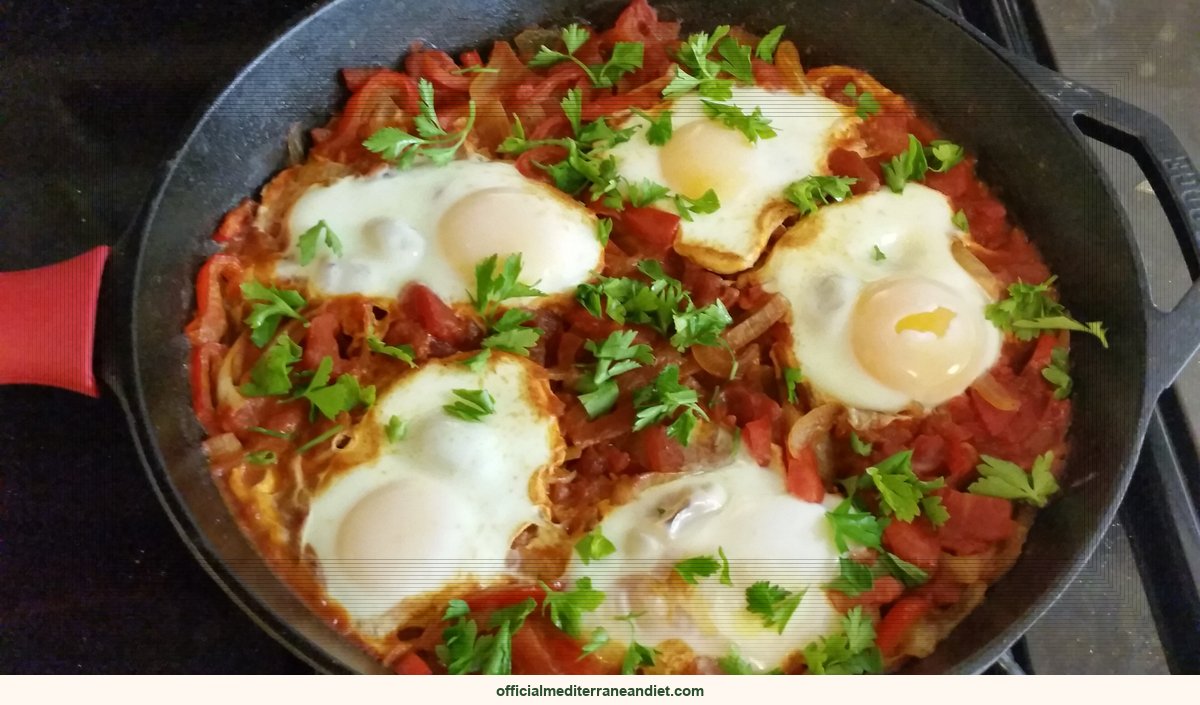
    4. Using a spoon, create four wells in the tomato sauce. Crack an egg into each well.
    5. Transfer the skillet to a preheated oven at 180°C (350°F) and bake for 8-12 minutes, or until the egg whites are set but the yolks are still runny. Alternatively, cover the pan with a lid and cook on low heat on the stovetop for the same amount of time.
    6. Remove from oven (or stove). Sprinkle generously with crumbled feta cheese and fresh cilantro leaves.
    7. Serve immediately with warm crusty bread to soak up all that delicious sauce.

    Tips from Chef Sami, a local chef from Sidi Bou Said

    The traditional way in Sidi Bou Said, Tunisia is to keep it simple. Researchers behind the PREDIMED trial found that the tunisian shakshuka recipe pattern, anchored in olive oil and short ingredient lists, cuts cardiovascular risk roughly 30%. Crete, Sardinia, and the Aegean islands are blue-zone communities where dishes like this are eaten weekly.

    Serving, storage, and what to drink

    Serves 4. Best the day it’s made. Leftovers keep in the fridge for two days. For more Tunisian recipes see our dinner and recipes sections, or pair it with a glass of regional wine from Crete or Sicily.

    Loved this recipe?

    Get the free 7-day Mediterranean Diet Starter Kit

    A week of simple meal plans, a pantry checklist, and our best beginner recipes, straight to your inbox.

    Send me the free kit →

    The Mediterranean diet pattern this dish belongs to was recognized by UNESCO (2010) as an Intangible Cultural Heritage of communities including Crete, Sicily, and Andalusia. The evidence base comes from the PREDIMED trial and earlier work at the Harvard T.H. Chan School of Public Health.