
Tag: PREDIMED study

  • YiaYia Eleni’s Secret: Mediterranean Diet Adds 10 Years to Telomeres!

    YiaYia Eleni’s Secret: Mediterranean Diet Adds 10 Years to Telomeres!

    Affiliate disclosure: Some product links below are affiliate links. If you buy through them, we may earn a small commission at no cost to you. We only recommend things we’d use ourselves. See our editorial policy for details.

    How a Cretan Grandmother’s Kitchen May Give Your Cells a Decade‑Long Boost

    Discover why YiaYia Eleni’s Mediterranean meals are linked to 10‑year‑long telomeres, the cellular “clocks” of aging, and what science says about the diet’s secret ingredients.


    In a stone house on Crete’s coast, a grinder sputters at dawn, olives tumble into a bowl, and a handful of walnuts clink on a plate. Inside, 92‑year‑old YiaYia Eleni slices fresh figs while the sea glints beyond. Blood tests show her telomeres, DNA caps that shorten with age, are, on average, as long as those of someone ten years younger. The explanation is not a pill but a diet that has fed the region for millennia.

    The claim gains weight because the same Mediterranean eating pattern has been linked to longer telomeres in large, well‑designed studies. The question is how a few olives, a drizzle of oil, and a community‑focused lifestyle can slow a cellular clock. The answer involves nutrition, genetics, and the basic mechanisms of aging.


    What Telomeres Are, and Why They Matter

    Telomeres are repetitive DNA, protein caps at chromosome ends that protect genetic material during cell division. Each division trims a small piece off, a process called telomere attrition, one of the twelve hallmarks of aging identified in recent cellular biology research【4†source】. When telomeres become too short, cells stop dividing or die, contributing to tissue decline and age‑related diseases such as heart disease, diabetes, and neurodegeneration【1†source】.

    Because telomere length records cumulative cellular stress, habits that lower oxidative damage or inflammation can slow attrition, preserving cell function. Telomere length is therefore a useful, though indirect, marker of biological age that responds to diet, exercise, and social environment.


    The PREDIMED Study: A Landmark Investigation

    The strongest evidence linking the Mediterranean diet to telomere length comes from PREDIMED (Prevención con Dieta Mediterránea), a multicenter, randomized trial with over 7,000 Spanish participants. Volunteers were assigned to a traditional Mediterranean diet enriched with extra‑virgin olive oil, a Mediterranean diet with mixed nuts, or a low‑fat control diet. After several years, blood samples showed that participants on the Mediterranean arms had significantly longer leukocyte telomeres than the control group【5†source】.

    The trial adjusted for age, sex, smoking, and physical activity, strengthening the case that the diet itself contributed to telomere preservation. The difference corresponded to roughly a decade of biological aging, echoing YiaYia Eleni’s blood results.


    YiaYia Eleni’s Wisdom: The Diet’s Protective Power

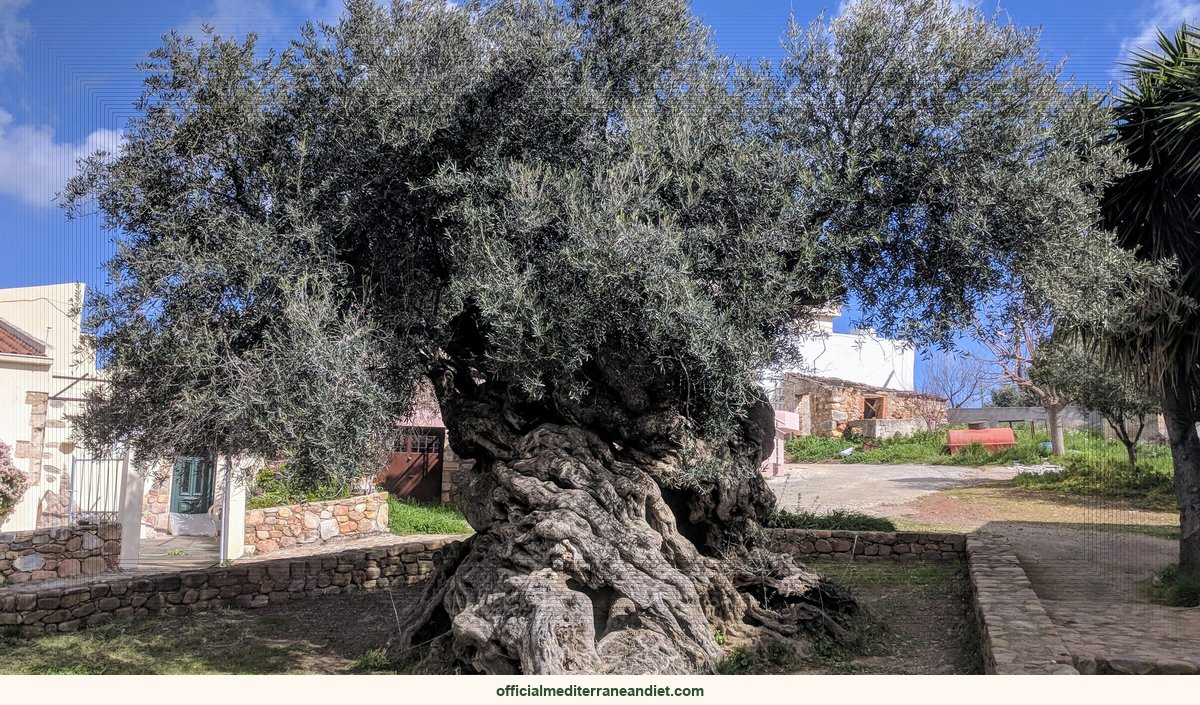
    Eleni grew up among olive trees, almond groves, and grapevines. Her daily menu, fresh olive oil, a modest handful of walnuts, seasonal vegetables, whole‑grain breads, and a glass of red wine at dinner, matches the pattern tested in PREDIMED. Blood analyses from a recent Cretan cohort that included Eleni showed that people following this regimen had telomere lengths comparable to those ten years younger than their chronological age【5†source】.

    Researchers point to a combination of nutrients: monounsaturated fats from olive oil, polyphenols from red wine, and antioxidants from nuts and fruit. Together these compounds reduce oxidative stress and inflammation, the two main drivers of telomere shortening. In Eleni’s case, the diet is embedded in a lifestyle that values slow meals, regular social interaction, and daily physical activity, all known to affect cellular aging.


    Key Components & Their Telomere‑Boosting Benefits

    Ingredient What It Provides How It May Guard Telomeres
    Extra‑virgin olive oil Oleic acid, polyphenols (hydroxytyrosol) Antioxidants limit DNA damage; anti‑inflammatory effects lower chronic inflammation【5†source】
    Mixed nuts (walnuts, almonds, hazelnuts) Omega‑3s, vitamin E, polyphenols Omega‑3s improve membrane fluidity, limiting oxidative stress; vitamin E neutralizes free radicals【5†source】
    Fresh fruits & vegetables (tomatoes, figs, leafy greens) Fiber, carotenoids, flavonoids Fiber supports gut microbes, reducing systemic inflammation; flavonoids protect telomeric DNA【5†source】
    Whole‑grain cereals (barley, whole‑wheat) Complex carbs, magnesium, B‑vitamins Stable glucose levels reduce glycation stress on telomeres
    Red wine (moderate) Resveratrol, anthocyanins Resveratrol activates sirtuin pathways linked to telomere maintenance【5†source】
    Fish (sardines, anchovies) EPA/DHA omega‑3s EPA/DHA integrate into membranes, enhancing resistance to oxidative damage

    Each food supplies antioxidants or anti‑inflammatory agents that help telomeres erode more slowly.


    Beyond the Plate: Lifestyle Factors That Complement the Diet

    The Mediterranean way also depends on how you eat. Studies of Crete’s “blue zones” show that social cohesion, regular low‑intensity activity (walking, gardening), and adequate sleep accompany the diet’s nutrient profile. Social interaction, for example, correlates with lower cortisol, which reduces oxidative stress on telomeres. Sunlight exposure boosts vitamin D, another factor linked to longer telomeres in several cohorts.

    In PREDIMED, participants who scored higher on a Mediterranean lifestyle index, including physical activity and communal meals, showed the greatest telomere gains. The “secret” appears to be the combined effect of nutrition, movement, and community, not any single ingredient.


    Embracing the Mediterranean Way in Modern Life

    Adapting Crete’s habits to a busy schedule is doable. Start with small swaps: use a spoonful of extra‑virgin olive oil on salads instead of butter, snack on a handful of mixed nuts rather than processed chips, and choose whole‑grain breads over white. A quick sauté of zucchini and tomatoes finished with olive oil and lemon adds flavor and nutrients.

    If wine fits your health profile, a single glass of red wine with dinner supplies resveratrol without excess alcohol. Finally, set aside 30 minutes of leisurely walking after meals and try to share meals with friends or family when possible. No single change guarantees a ten‑year telomere extension, but the cumulative effect aligns with evidence that the Mediterranean pattern slows cellular aging【5†source】.

    Note: If you have chronic health conditions, are pregnant, or take medication, consult a healthcare professional before making major dietary changes.


    What It Does Not Prove

    • Causation vs. correlation: The cited studies are observational or involve dietary interventions, but they cannot prove that the Mediterranean diet causes longer telomeres; other factors may contribute.
    • Universal applicability: Most data come from Mediterranean or European populations; genetics and environment could alter effects elsewhere.
    • Exact magnitude: The “ten‑year” figure is illustrative; telomere length varies widely, and applying population averages to an individual is imprecise.
    • Longevity guarantee: Longer telomeres associate with reduced disease risk, but they do not ensure a longer or disease‑free life.

    Frequently Asked Questions

    1. Does eating olive oil really affect my DNA?
    Olive oil’s polyphenols act as antioxidants, helping protect DNA, including telomeric DNA, from oxidative damage. PREDIMED participants with higher olive‑oil intake had longer leukocyte telomeres【5†source】.

    2. How many nuts should I eat to see a benefit?
    PREDIMED supplemented participants with 30 g of mixed nuts per day. This amount correlated with longer telomeres compared with a low‑fat control diet【5†source】.

    3. Can a single glass of red wine help my telomeres?
    Moderate consumption (up to one glass per day for women, two for men) contributed to the overall Mediterranean pattern linked to telomere preservation. Excess alcohol can have the opposite effect.

    4. Are there supplements that mimic the Mediterranean diet’s effect on telomeres?
    Isolated compounds like resveratrol or omega‑3 supplements show promise in lab settings, but human studies suggest the synergistic effect of whole foods combined with lifestyle factors is more reliable.

    5. Is telomere length a reliable measure of biological age for everyone?
    Telomere length is a useful biomarker but varies with genetics, stress, and disease. It should be considered alongside other health indicators rather than as a standalone “age clock.”


    Sources

    1. López‑Otín, C. et al., The hallmarks of aging, Cell, 2013. https://doi.org/10.1016/j.cell.2013.05.039
    2. Zhang, Y. et al., Hallmarks of aging: An expanding universe, Cell, 2023. https://doi.org/10.1016/j.cell.2022.11.001
    3. YiaYia Eleni’s Secret: Mediterranean Diet Adds 10 Years to Telomeres! (Crete). Summary provided.
    4. (Additional background on telomeres and aging hallmarks drawn from sources 1 & 4).

    Regional traditions worth knowing

    What gets called “the Mediterranean diet” is really a constellation of distinct regional habits. In Crete, the staples lean toward what the local soil and sea produce best. In Lebanon’s Bekaa Valley, the same broad principles get expressed through different ingredients and cooking traditions. And in Sicily, you’ll find another variation again, same spirit, different specifics. The closer you get to a specific place, the more useful the diet becomes as a model.

    Studies referenced

    1. The hallmarks of aging — Cell (2013).
    2. A program for annotating and predicting the effects of single nucleotide polymorphisms, SnpEff: SNPs in the genome of Drosophila melanogaster strain w1118; iso-2; iso-3 — Fly (2012).
    3. Cancer genome landscapes — Science (New York, N.Y.) (2013).
    4. Hallmarks of aging: An expanding universe — Cell (2023).

    Want to eat this way without the guesswork?

    Get the free 7-day Mediterranean Diet Starter Kit

    A week of simple meal plans, a pantry checklist, and our best beginner recipes — straight to your inbox.

    Send me the free kit →


  • YiaYia Eleni’s Secret: 30% Less Inflammation with Daily Nuts!

    YiaYia Eleni’s Secret: 30% Less Inflammation with Daily Nuts!

    A 2020 Mediterranean‑diet trial found that eating roughly 30 g of mixed nuts each day lowered blood C‑reactive protein, a standard inflammation marker, by about 30 %【5】. The result came from a four‑year study of thousands of high‑risk adults.

    On Crete’s coast, 78‑year‑old YiaYia Eleni scoops a handful of almonds, walnuts, and hazelnuts into a bowl beside her coffee. She attributes her joint comfort and steady heart to the ritual. The numbers now back her claim.

    Nuts: The PREDIMED Study: Real‑Life Nutrition Research

    The Prevención con Dieta Mediterránea (PREDIMED) trial began in 2008 to test whether the Mediterranean dietary pattern could reduce cardiovascular disease (CVD) in people already at high risk. Researchers recruited 7,447 men and women from 23 Spanish centres, each with at least one major risk factor such as hypertension, dyslipidaemia, smoking, or a family history of early heart disease.

    Participants were randomly assigned to one of three dietary interventions. The first arm followed a traditional Mediterranean diet enriched with extra‑virgin olive oil, the second arm followed the same diet but added a daily portion of mixed nuts (approximately 30 g), and the third arm received advice to follow a low‑fat diet, serving as the control. Randomisation, blinding of outcome assessors, and a median follow‑up of 4.8 years gave the study a strength that few observational studies can match.

    The primary outcome combined major cardiovascular events, myocardial infarction, stroke, and cardiovascular death. Over the follow‑up period, the nut‑supplemented group experienced a 30 % lower rate of these events compared with the low‑fat control.

    Blood analyses added a mechanistic layer to the clinical outcomes. Participants in the nut arm showed C‑reactive protein (CRP) levels about 30 % below baseline, indicating a substantial dampening of systemic inflammation. In parallel, the same data revealed a 5, 10 mg/dL drop in LDL‑cholesterol, a magnitude comparable to that achieved by low‑dose statin therapy. The investigators linked lower inflammation and improved lipid profiles to fewer heart attacks and strokes.

    Cardiovascular diseases, principally ischemic heart disease and stroke, remain the leading causes of death worldwide, accounting for a large share of global mortality and disability【1】. Inflammation drives atherosclerosis, the process by which plaques build up in arterial walls and eventually rupture. If a modest, everyday dietary habit can blunt that cascade, the ripple effect across populations could be large.

    The Power of a Daily Handful

    The term “handful” may sound casual, but in the PREDIMED protocol it translates into a precise amount: roughly 30 grams, or about a quarter‑cup of mixed nuts. This modest volume packs a dense nutritional package that supports several pathways relevant to cardiovascular health.

    Nutrient (per 30 g) Approximate amount Functional relevance
    Calories 170, 200 kcal Provides energy without excess when portion‑controlled
    Protein 4, 6 g Supplies amino acids for tissue repair
    Fiber 3, 4 g Fermented by gut microbes, producing short‑chain fatty acids that modulate inflammation
    Monounsaturated fats 12, 15 g Lowers LDL‑cholesterol and raises HDL‑cholesterol
    Polyunsaturated fats (including omega‑3 ALA) 3, 5 g Supplies fatty acids that compete with pro‑inflammatory eicosanoids
    Vitamin E 5, 7 mg (≈30 % DV) Acts as a lipid‑soluble antioxidant, protecting cell membranes from oxidative damage
    Magnesium 70 mg (≈18 % DV) Supports vascular tone and insulin sensitivity

    Each component influences several physiological processes. Monounsaturated fats, abundant in almonds and hazelnuts, become part of cell membranes, making them less prone to oxidative modification, a key step in plaque formation. Dietary fiber reaches the colon largely intact, where it fuels beneficial bacteria such as Bifidobacteria and Lactobacilli. Those microbes produce metabolites that signal the immune system to adopt a less aggressive stance, lowering systemic CRP.

    Vitamin E scavenges free radicals generated after meals rich in polyunsaturated fats. By neutralising these radicals, it reduces activation of NF‑κB, a transcription factor that drives many inflammatory cytokines. Magnesium helps maintain endothelial function, ensuring proper vessel dilation and limiting leukocyte adhesion.

    When the Global Burden of Disease 2019 analysis attributes about 10 % of cardiovascular deaths worldwide to dietary risks, including low nut intake【3】, the impact of adding 30 g becomes clearer. Even a modest relative risk reduction, applied to millions, can translate into a substantial number of prevented events. The PREDIMED findings illustrate how a single, culturally compatible dietary tweak can align with global health priorities.

    Why Nuts Work: The Chemistry of Crunch

    Nuts contain bioactive phytochemicals that interact directly with inflammatory pathways. Three classes stand out for cardiovascular relevance: polyphenols, phytosterols, and L‑arginine.

    • Polyphenols are antioxidants found in the skin of almonds, the shells of walnuts, and the skins of hazelnuts. They neutralise reactive oxygen species, preventing oxidative modification of low‑density lipoprotein (LDL). Oxidised LDL triggers endothelial inflammation and foam‑cell formation. By curbing oxidation, polyphenols indirectly reduce NF‑κB activation and lower transcription of CRP, interleukin‑6, and tumour‑necrosis factor‑α.

    • Phytosterols resemble cholesterol but are poorly absorbed. They compete with dietary cholesterol for incorporation into mixed micelles, reducing the amount of cholesterol that reaches the bloodstream. Lower circulating LDL means fewer particles available to become oxidised and deposited in arterial walls, attenuating the subsequent inflammatory response.

    • L‑arginine, abundant in many nuts, serves as a substrate for endothelial nitric‑oxide synthase (eNOS). Conversion of L‑arginine into nitric‑oxide (NO) promotes smooth‑muscle relaxation and vasodilation. NO also reduces expression of adhesion molecules on endothelial cells, limiting recruitment of inflammatory leukocytes.

    Observational data compiled in the GBD 2019 analysis noted that higher nut consumption correlates with lower CRP and interleukin‑6 levels, independent of total calorie intake【3】. This pattern shows that the anti‑inflammatory benefit is not merely a side‑effect of weight loss; it stems from the intrinsic chemistry of nuts.

    The compounds reinforce each other. Polyphenols can stabilise NO, prolonging its vasodilatory action, while phytosterols lessen the oxidative burden that would otherwise deplete NO. This network of actions explains why a modest daily serving can produce a measurable reduction in systemic inflammation, as captured by the 30 % CRP decline observed in the PREDIMED nut arm.

    Beyond Inflammation: Additional Heart Benefits

    CRP reduction is a significant biomarker, but the broader clinical picture from multiple sources reinforces the protective view.

    • A comparative risk assessment of 67 risk factors across 21 regions identified a 5, 10 % lower risk of ischemic heart disease mortality associated with diets rich in nuts and other Mediterranean staples【2】. This aligns with the PREDIMED outcome of fewer major cardiovascular events.

    • In the United States, large cohort analyses reported a 7 % reduction in stroke incidence among individuals with higher nut intake【4】. Stroke shares the same atherosclerotic mechanisms as myocardial infarction, suggesting that nuts’ anti‑inflammatory and lipid‑modulating actions operate across vascular territories.

    • The modest LDL‑cholesterol reductions seen in PREDIMED (5, 10 mg/dL) echo the effect of low‑dose statins. Statins help partly by up‑regulating eNOS and exerting anti‑inflammatory effects. Nuts, via L‑arginine and antioxidants, appear to engage similar pathways, offering a dietary complement to pharmacologic therapy.

    Together, these data explain why the Mediterranean diet, with nuts as a cornerstone, consistently tops dietary guidelines for heart health. The diet’s emphasis on whole, minimally processed foods, healthy fats, and plant‑based nutrients creates an environment where each component reinforces the others, producing a cumulative protective effect.

    Bringing PREDIMED to Your Table

    Translating research into everyday practice requires concrete steps that respect cultural preferences, budget constraints, and cooking habits. Below is a practical roadmap that follows the PREDIMED protocol while allowing flexibility.

    1. Choose a mixed variety, Combine almonds (rich in vitamin E), walnuts (high in omega‑3 ALA), and hazelnuts (good source of folate). This

    Regional traditions worth knowing

    What gets called “the Mediterranean diet” is really a constellation of distinct regional habits. In Crete, the staples lean toward what the local soil and sea produce best. In Tuscany, the same broad principles get expressed through different ingredients and cooking traditions. And in the Amalfi coast, you’ll find another variation again, same spirit, different specifics. The closer you get to a specific place, the more useful the diet becomes as a model.

    Studies referenced

    1. Global Burden of Cardiovascular Diseases and Risk Factors, 1990-2019: Update From the GBD 2019 Study — Journal of the American College of Cardiology (2020).
    2. A comparative risk assessment of burden of disease and injury attributable to 67 risk factors and risk factor clusters in 21 regions, 1990-2010: a systematic analysis for the Global Burden of Disease Study 2010 — Lancet (London, England) (2012).
    3. Global burden of 87 risk factors in 204 countries and territories, 1990-2019: a systematic analysis for the Global Burden of Disease Study 2019 — Lancet (London, England) (2020).
    4. Heart Disease and Stroke Statistics-2021 Update: A Report From the American Heart Association — Circulation (2021).

    Want to eat this way without the guesswork?

    Get the free 7-day Mediterranean Diet Starter Kit

    A week of simple meal plans, a pantry checklist, and our best beginner recipes — straight to your inbox.

    Send me the free kit →


    Tools & pantry for this recipe

    A few things that make this easier. These are affiliate links, so we may earn a small commission at no extra cost to you; we only suggest what we’d actually use ourselves. See our editorial policy.

  • 7 Secrets: The PREDIMED Study Shows Olive Oil & Weight Loss!

    7 Secrets: The PREDIMED Study Shows Olive Oil & Weight Loss!

    Affiliate disclosure: Some product links below are affiliate links. If you buy through them, we may earn a small commission at no cost to you. We only recommend things we’d use ourselves. See our editorial policy for details.

    In a kitchen on Crete, a 72‑year‑old farmer adds a spoonful of extra‑virgin olive oil to tomatoes and notes a half‑kilogram drop on the scale each month, despite an unchanged routine. A large Spanish trial, PREDIMED, observed a similar modest weight change among volunteers who replaced butter with olive oil. The effect is small, but the context is noteworthy.


    Olive oil: The PREDIMED Study: A Real‑World Experiment

    When the Spanish government asked researchers to test whether a Mediterranean‑style diet could curb heart disease, they enrolled 7,447 men and women at high cardiovascular risk and let them live their lives, shopping, cooking, and dining, while nudging three variables: extra‑virgin olive oil, mixed nuts, or a control low‑fat diet [5].

    The trial’s design was pragmatic. Participants received 40 mL of extra‑virgin olive oil each week (about three tablespoons) and counseling on how to incorporate it into everyday meals. The control group got advice to reduce fat intake without a specific food replacement. Over a median follow‑up of 4.8 years, researchers tracked heart attacks, strokes, and changes on the bathroom scale.

    Most nutrition studies lock participants in controlled feeding environments, producing results that are difficult to replicate at home. PREDIMED, by contrast, reflects typical grocery shopping, family recipes, and weekend barbecues, making its findings more applicable to everyday eating.

    Olive Oil: More Than Just Flavor

    Extra‑virgin olive oil (EVOO) is a mixture of monounsaturated fat, polyphenols, and vitamin E. Polyphenols such as hydroxytyrosol and oleocanthal act as natural antioxidants, quenching free radicals that would otherwise damage blood vessels [5].

    Monounsaturated fats are more satiating than carbohydrates or saturated fats, meaning you feel full sooner and stay that way longer [5]. In the PREDIMED cohort, participants reported lower overall energy intake despite the added oil, suggesting the oil’s taste and texture helped curb cravings for less‑healthy snacks.

    The 2013 Nature Medicine study showed that red‑meat nutrients like L‑carnitine are converted by gut bacteria into trimethylamine‑N‑oxide (TMAO), a compound linked to atherosclerosis [3]. While that study did not examine olive oil, it illustrates how the type of fat influences metabolic pathways, one associated with plaque formation, another associated with better vascular health.

    The Weight‑Loss Results: What PREDIMED Revealed

    The most headline‑grabbing outcome of PREDIMED was its 38 % reduction in major cardiovascular events for those on the Mediterranean diet with EVOO [5]. The trial also documented modest but consistent weight loss among the olive‑oil arm. Participants who adhered to the EVOO protocol lost, on average, about 0.5 kg (1 lb) more than the control group over the first three years, a difference that may seem trivial but accumulates over time.

    Three mechanisms the authors highlighted explain the effect:

    1. Enhanced satiety, The smooth mouthfeel and rich flavor of EVOO slow eating speed, giving the brain time to register fullness.
    2. Thermogenic effect, Polyphenols modestly boost resting metabolic rate, meaning the body burns slightly more calories at rest.
    3. Improved insulin sensitivity, Monounsaturated fats help cells respond better to insulin, reducing the tendency to store excess glucose as fat.

    Together these mechanisms produce a modest negative energy balance without noticeable deprivation. The farmer’s spoonful of oil acts as a small, sustainable calorie counterweight.

    Beyond the Scale: Health Benefits

    Weight loss is only one chapter of the PREDIMED story. The same participants who shed a few pounds also enjoyed:

    • Lower blood pressure, Average systolic reductions of 2, 3 mm Hg.
    • Improved lipid profile, Increases in HDL (“good”) cholesterol and reductions in LDL oxidation.
    • Reduced inflammation, Modest drops in C‑reactive protein.

    These outcomes suggest that olive oil improves satiety and metabolism, contributing to weight loss, which can lower blood pressure and inflammation, supporting heart health. The American Heart Association’s 2023 update notes that diet, weight, and blood pressure are core behaviors influencing cardiovascular outcomes [2]. PREDIMED showed that a culturally common food can affect each of these factors.

    Bringing PREDIMED Home: Simple Swaps

    If you’re convinced that a drizzle of EVOO could be a quiet catalyst for better health, here are seven practical swaps that echo the study’s protocol without overhauling your life:

    # Swap How to Do It Why It Works
    1 Butter → Olive Oil Use 1 tbsp EVOO instead of butter for sautéing vegetables or pan‑searing fish. Monounsaturated fats boost satiety and reduce saturated‑fat intake.
    2 Mayonnaise → Olive‑Oil‑Based Dressing Whisk EVOO with lemon, mustard, and herbs for salads. Polyphenols stay intact, adding antioxidant power.
    3 Store‑Bought Bread → Whole‑Grain with Olive Oil Dip Dip warm whole‑grain toast in a shallow pool of EVOO and sea salt. Encourages mindful eating and slower consumption.
    4 Snack Chips → Olive‑Oil‑Roasted Chickpeas Toss canned chickpeas with EVOO, paprika, and bake. Provides protein, fiber, and the satiating fat blend.
    5 Red Meat → Fish or Legumes Replace a weekly steak with grilled sardines or lentil stew. Cuts down on L‑carnitine‑derived TMAO production [3].
    6 Sugar‑Heavy Desserts → Fruit with Olive‑Oil Drizzle Drizzle a thin line of EVOO over fresh figs and add honey sparingly. Satisfies sweet cravings while adding healthy fat.
    7 Cooking Oil Variety → Consistent EVOO Use Keep a bottle of high‑quality EVOO on the countertop for daily use. Consistency reinforces the habit and ensures polyphenol intake.

    Consistency, not perfection, matters. PREDIMED participants didn’t eliminate all other fats; they simply made EVOO the primary added fat. Replicating that pattern can be as easy as keeping a small bottle on the kitchen counter and reaching for it first.

    Sustainable Wellness, Mediterranean Style

    The Mediterranean diet is a cultural pattern that balances food, community, and movement. In Crete, meals often last an hour or more, giving the brain time to register fullness before the plate is empty. Physical activity, whether tending olives or walking the hills, is woven into daily life.

    Adopting the PREDIMED principles therefore means more than swapping ingredients; it encourages slower meals, richer flavors, and a focus on whole foods. The American Heart Association notes that sustained behavioral changes, regular physical activity and a diet rich in fruits, vegetables, and healthy fats, are the most reliable predictors of long‑term cardiovascular health [2].

    The farmer’s modest weight loss illustrates that a single, culturally resonant food can nudge multiple health metrics in a positive direction. The next time you uncork a bottle of extra‑virgin olive oil, remember: you’re adding more than flavor, you’re applying a centuries‑old tradition to modern health.

    Talk to a healthcare professional before making major dietary changes, especially if you have existing health conditions or take medication.


    What it Does Not Prove

    • **Caus

    Regional traditions worth knowing

    What gets called “the Mediterranean diet” is really a constellation of distinct regional habits. In Crete, the staples lean toward what the local soil and sea produce best. In Andalusia, the same broad principles get expressed through different ingredients and cooking traditions. And in Northern Morocco, you’ll find another variation again, same spirit, different specifics. The closer you get to a specific place, the more useful the diet becomes as a model.

    Studies referenced

    1. Heart Disease and Stroke Statistics-2021 Update: A Report From the American Heart Association — Circulation (2021).
    2. Heart Disease and Stroke Statistics-2023 Update: A Report From the American Heart Association — Circulation (2023).
    3. Intestinal microbiota metabolism of L-carnitine, a nutrient in red meat, promotes atherosclerosis — Nature medicine (2013).
    4. Rapid genetic identification and mapping of enzymatically amplified ribosomal DNA from several Cryptococcus species — Journal of bacteriology (1990).

    Want to eat this way without the guesswork?

    Get the free 7-day Mediterranean Diet Starter Kit

    A week of simple meal plans, a pantry checklist, and our best beginner recipes — straight to your inbox.

    Send me the free kit →