Cretan Dakos Salad Recipe: A Rustic Barley Rusk and Tomato Delight
This is a cretan dakos salad recipe, the kind that sits at the heart of the Crete table. > Affiliate disclosure: Some product links below are affiliate links. If you buy through them, we may earn a small commission at no cost to you. We only recommend things we’d use ourselves. See our editorial policy for details.
The Cretan Salad Built on Bread Hard Enough to Crack a Walnut
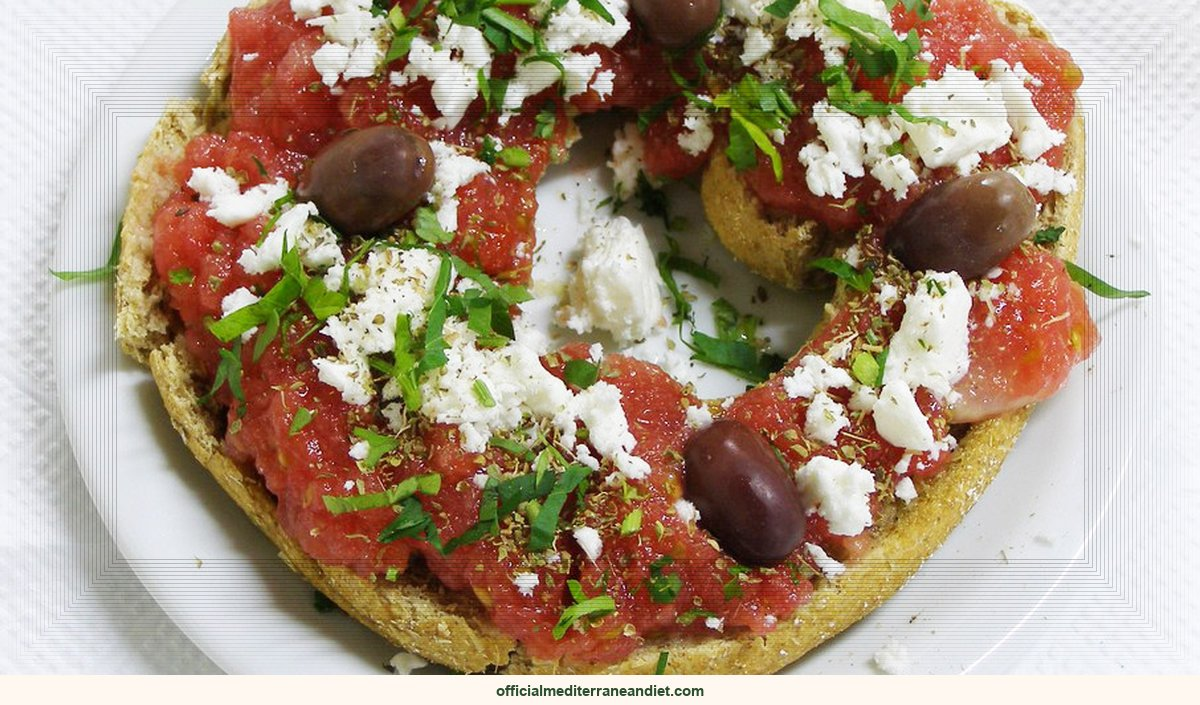
Yiayia Eleni does not slice tomatoes. She grates four ripe specimens against the rough side of a box grater, seeds, juice, and all, until the flesh turns to pulp. Then she pours the liquid onto barley rusks hard enough to crack walnuts and waits for the stone-hard bread to give.
Barley rusks, called dakos or paximadia, are not crackers. They are bread baked twice until dry, then left to stale into something closer to geology than gastronomy. Cretan grandmothers stack them in pantries where they keep for months without sealing, wax paper, or refrigeration.
The transformation happens in layers. The grated tomato pulp carries enough acid and moisture to penetrate the rusk’s armor without destroying its structure. Eleni spreads the pulp thick, adds olive oil, feta, and oregano, then walks away. Twenty minutes later, the bread has softened into a chewable substrate that still resists slightly when bitten.
This is not bruschetta. The bread does not toast; it yields. It is not a crouton, nor a base for toppings. The rusk becomes the ingredient itself, absorbing the tomato’s sweetness and the sheep’s milk salt until the boundary between bread and salad dissolves.
The technique predates refrigeration by centuries. Islanders dried barley bread in the sun on rooftops, creating provisions that survived sailing voyages and siege winters. The grating method matters: slicing releases water; grating releases pectin. The pulp clings instead of pools, ensuring the center softens while the edges maintain a faint crunch.
You eat it with a fork, not your hands. The result sits somewhere between bread salad and bruschetta’s austere ancestor, no lettuce, no vinegar, no chill. Just warm tomato, cold cheese, and bread that started hard enough to crack a walnut, now yielding between your teeth.
How to make this cretan dakos salad recipe
This Greek cretan dakos salad recipe takes about 15 minutes to prep and 5 minutes to cook. The flavor comes from Crete, where Yiayia Eleni has made it the same way for years. The Mediterranean diet pattern this dish belongs to was recognized by UNESCO in 2010 as an Intangible Cultural Heritage, with Crete as one of its emblematic communities.
Ingredients for cretan dakos salad
- 4 large barley rusks (dakos)
- 4 ripe tomatoes, grated
- 200g (7 oz) mizithra cheese (or ricotta salata), crumbled
- 4 tablespoons extra virgin olive oil
- 1 teaspoon dried oregano
- 2 tablespoons capers, rinsed
- 8 Kalamata olives, pitted and halved
- Salt and freshly ground black pepper to taste
- Fresh basil or parsley for garnish (optional)
Method, the Crete way
- Preheat the oven to 180°C (350°F). Lightly toast the barley rusks on a baking sheet for 3-5 minutes until crisp but not browned. Set aside to cool.
- Grate the tomatoes into a bowl using a box grater, discarding the skins. Season the tomato pulp with a pinch of salt, pepper, and half the oregano.
- Place each toasted rusk on a serving plate. Spoon the grated tomato mixture generously over each rusk, allowing it to soak into the bread.
- Sprinkle the crumbled mizithra cheese over the tomatoes. Add capers and olive halves on top.
- Drizzle with extra virgin olive oil and sprinkle remaining oregano. Garnish with fresh basil or parsley if desired. Serve immediately.
Tips from Yiayia Eleni
The traditional way in Crete is to keep it simple. Researchers behind the PREDIMED trial found that the cretan dakos salad recipe pattern, anchored in olive oil and short ingredient lists, cuts cardiovascular risk roughly 30%. Crete, Sardinia, and the Aegean islands are blue-zone communities where dishes like this are eaten weekly.
Serving, storage, and what to drink
Serves 4. Best the day it’s made. Leftovers keep in the fridge for two days. For more Greek recipes see our salads and recipes sections, or pair it with a glass of regional wine from Crete or Sicily.
Loved this recipe?
Get the free 7-day Mediterranean Diet Starter Kit
A week of simple meal plans, a pantry checklist, and our best beginner recipes, straight to your inbox.
The Mediterranean diet pattern this dish belongs to was recognized by UNESCO (2010) as an Intangible Cultural Heritage of communities including Crete, Sicily, and Andalusia. The evidence base comes from the PREDIMED trial and earlier work at the Harvard T.H. Chan School of Public Health.