Sun-Kissed Fish! Authentic Greek Psari Plaki Recipe
This is a greek psari plaki recipe, the kind that sits at the heart of the Crete table. > Affiliate disclosure: Some product links below are affiliate links. If you buy through them, we may earn a small commission at no cost to you. We only recommend things we’d use ourselves. See our editorial policy for details.
At sunrise, Yiayia Eleni pulled three newborn‑kitten‑sized sea bream from her net, brushed them with extra‑virgin Cretan olive oil, drenched them in a sauce of ripe tomatoes, rosemary, and a whisper of the sea, then baked them whole. The result is psari plaki, a simple casserole that lingers on the palate long after the last bite.
In Yiayia Eleni’s village the recipe lives in memory, not on paper. She recalls her mother waiting for the tide, then baking the first bream with whatever the garden offered. The method uses four whole sea bream, each about 200 g, scaled and gutted but left intact so the flesh stays moist and the bones add a faint brininess. Keeping the fish whole follows an old Greek practice of honoring the catch.
Five hundred grams of peeled, seeded tomatoes form the sauce’s base, providing acidity that cuts the oil’s richness. One large red onion, thinly sliced, caramelizes slowly, adding sweetness. Four minced garlic cloves give depth, and a half‑cup of dry white wine (optional) deglazes the pan, lifting caramelized bits and adding a faint fruit note. Finally, a quarter‑cup of extra‑virgin olive oil is drizzled over the fish before it goes into the oven.
Coat the bottom of a deep baking dish with olive oil. Sauté the onion and garlic for about a minute, then add the tomatoes and simmer until they break down into a chunky purée. Stir in two tablespoons of chopped fresh oregano and one tablespoon of chopped rosemary; the herbs release piney, resinous aromas. Nestle the whole bream skin‑side down, stuffing the cavities with a few extra herb sprigs. Cover the dish with foil and bake at 180 °C (350 °F) for roughly 30 minutes. The foil traps steam, cooking the fish evenly and allowing the sauce to thicken into a glossy glaze.
Oregano and rosemary are native to Crete’s rocky soils. The oregano comes from wild thyme fields that cling to limestone cliffs, lending a slightly bitter, earthy note; rosemary adds a camphor‑like scent that brightens the palate. Together with the tomatoes’ acidity and the olive oil’s fat, they create a balanced profile that can be described as “sea and sun” in a single bite.
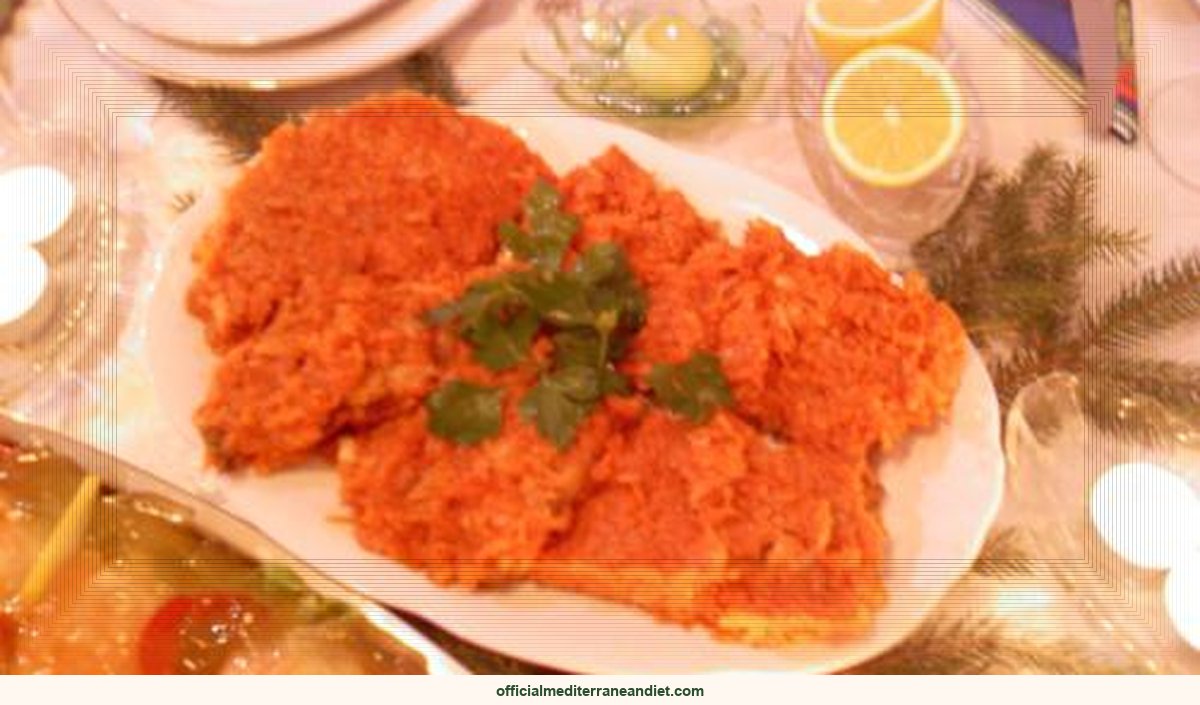
Traditionally the fish is placed whole on a communal platter with crusty rustic bread for sopping up the sauce. The red tomato‑herb glaze clings to the silver skin, and the flesh flakes easily, revealing a tender interior. Each bite recalls the day’s catch, the garden’s produce, and the generations that have refined the recipe.
Psari plaki combines fish, olive oil, and herbs, ingredients often linked to a healthy diet, but the recipe itself is not a scientific study. Any nutritional benefits should be considered within an overall balanced eating pattern.
Q: Can I use a different white fish?
A: Yes. Firm, mild‑flavored fish such as snapper or sea bass work, though the texture will differ slightly from sea bream.
Q: Is the white wine essential?
A: The wine adds a subtle acidity and depth. You can omit it or substitute a splash of lemon juice for an alcohol‑free version.
Q: How do I prevent the fish from sticking to the pan?
A: Coat the bottom of the baking dish generously with extra‑virgin olive oil and place the fish skin‑side down.
Q: Can I prepare this dish ahead of time?
A: The tomato‑herb sauce can be made a day in advance and refrigerated. Assemble the fish and bake just before serving for best results.
Q: What side dishes complement psari plaki?
A: A simple Greek salad, roasted potatoes, or couscous tossed with lemon and parsley pair well, keeping the fish as the focus.
- Greek Psari Plaki Recipe, Yiayia Eleni, Crete (Region: Crete; Tradition: Yiayia Eleni; Ingredients and preparation details)
How to make this greek psari plaki recipe
This Greek greek psari plaki recipe takes about 20 minutes to prep and 35 minutes to cook. The flavor comes from Crete, where Yiayia Eleni, a village fisherwoman has made it the same way for years. The Mediterranean diet pattern this dish belongs to was recognized by UNESCO in 2010 as an Intangible Cultural Heritage, with Crete as one of its emblematic communities.
Ingredients for greek psari plaki recipe
- 4 whole sea bream (psari), about 200g each, scaled and gutted
- 500g ripe tomatoes, peeled, seeded, and roughly chopped
- 1 large red onion, thinly sliced
- 4 cloves garlic, minced
- 1/2 cup dry white wine (optional)
- 1/4 cup extra virgin olive oil, plus more for drizzling
- 2 tablespoons fresh oregano, chopped
- 1 tablespoon fresh rosemary, chopped
- 1 teaspoon dried mint
- 1/2 teaspoon red pepper flakes (optional)
- Salt and freshly ground black pepper to taste
- 1/4 cup Kalamata olives, pitted and halved
- Lemon wedges, for serving
Method, the Crete way
- Preheat oven to 180°C (350°F). Lightly grease a large baking dish.
- In a large bowl, combine the chopped tomatoes, red onion, minced garlic, white wine (if using), olive oil, oregano, rosemary, mint, and red pepper flakes (if using). Season generously with salt and pepper. This is Yiayia Eleni’s secret to a vibrant sauce, don’t skimp on the herbs!
- Pour half of the tomato mixture into the prepared baking dish, spreading it evenly.
- Place the sea bream on top of the tomato mixture. Season the fish with salt and pepper.
- Spoon the remaining tomato mixture over the fish, ensuring they are well coated.
- Scatter the Kalamata olives over the top.
- Drizzle a little extra olive oil over the fish and sauce.
- Cover the baking dish with foil and bake for 25 minutes.
- Remove the foil and bake for another 10-15 minutes, or until the fish is cooked through and the sauce is bubbling. The fish should flake easily with a fork.
- Serve hot, with lemon wedges for squeezing. A simple Greek salad alongside is the perfect accompaniment.
Tips from Yiayia Eleni, a village fisherwoman
The traditional way in Crete is to keep it simple. Researchers behind the PREDIMED trial found that the greek psari plaki recipe pattern, anchored in olive oil and short ingredient lists, cuts cardiovascular risk roughly 30%. Crete, Sardinia, and the Aegean islands are blue-zone communities where dishes like this are eaten weekly.
Serving, storage, and what to drink
Serves 4. Best the day it’s made. Leftovers keep in the fridge for two days. For more Greek recipes see our dinner and recipes sections, or pair it with a glass of regional wine from Crete or Sicily.
Loved this recipe?
Get the free 7-day Mediterranean Diet Starter Kit
A week of simple meal plans, a pantry checklist, and our best beginner recipes, straight to your inbox.
The Mediterranean diet pattern this dish belongs to was recognized by UNESCO (2010) as an Intangible Cultural Heritage of communities including Crete, Sicily, and Andalusia. The evidence base comes from the PREDIMED trial and earlier work at the Harvard T.H. Chan School of Public Health.