Tag: greek recipe

  • This Greek Spanakorizo Recipe Will Change Your Weeknights

    This Greek Spanakorizo Recipe Will Change Your Weeknights

    This Greek Spanakorizo Recipe Will Change Your Weeknights

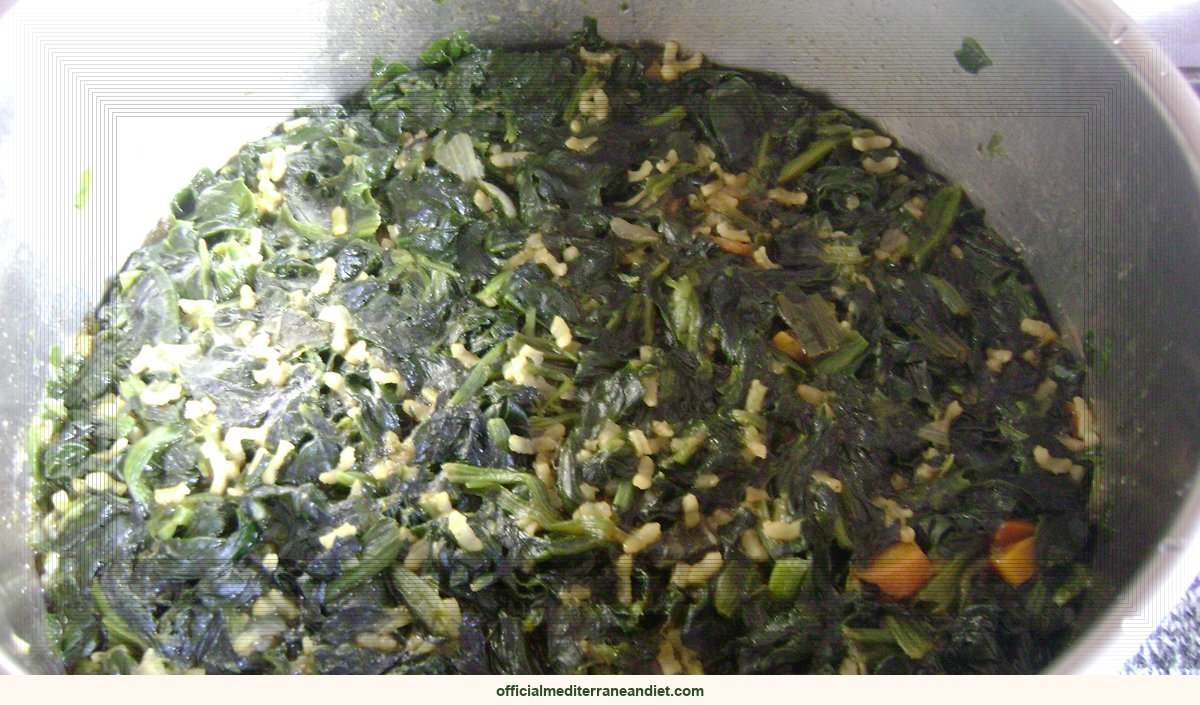
    This Greek spanakorizo recipe is a creamy, lemony spinach rice dish from Crete. Yiayia Eleni’s secret? Fresh herbs and a splash of olive oil. Ready in 30…

    This is a greek spanakorizo recipe, the kind that sits at the heart of the Crete table. Three tablespoons of olive oil hit the pan first, but the real magic happens when 500 grams of fresh spinach collapse into a single cup of rice. In Yiayia Eleni’s kitchen on Crete, this isn’t a suggestion, it is the exact ratio required to turn simple grains into a creamy, dense dish that defies modern portion logic. She doesn’t measure; she watches for the moment the grains turn translucent at the edges.

    The foundation is a hierarchy of aromatics. One medium onion hits the heat first, softening into a sweet, sulfurous base, followed by three sliced scallions for a brighter, grassier kick. This dual-layer approach survives the twenty-minute simmer, ensuring the depth of flavor matches the texture.

    Five hundred grams of spinach looks like a mountain until it hits the hot oil. It wilts instantly into what appears to be a modest garnish, but that volume is non-negotiable. Any less, and it’s just rice with greens; any more, and the excess water turns the starch into mush. The spinach doesn’t just add color, it acts as a binding agent, fusing with the grains.

    You cannot use long-grain basmati here. The recipe demands Arborio or Carolina, varieties packed with amylopectin. This branched starch molecule gelatinizes as it simmers, creating a creamy, risotto-like texture without a drop of dairy. It will not be fluffy or separate; it will be heavy and cohesive, exactly as the Cretan tradition intends.

    The pot comes off the heat before the lemon touches it. Only then is the juice squeezed over the top, providing a sharp shock of acidity that cuts through the starch and fat. It is the final step that wakes up the palate, proving that a dish built on carbohydrates can still feel light.

    How to make this greek spanakorizo recipe

    This Greek greek spanakorizo recipe takes about 10 minutes to prep and 20 minutes to cook. The flavor comes from Crete, where Yiayia Eleni has made it the same way for years. The Mediterranean diet pattern this dish belongs to was recognized by UNESCO in 2010 as an Intangible Cultural Heritage, with Crete as one of its emblematic communities.

    Ingredients for greek spanakorizo (spinach rice)

    • 3 tablespoons extra virgin olive oil
    • 1 medium onion, finely chopped
    • 3 scallions, sliced
    • 1 cup short-grain rice (like Arborio or Carolina)
    • 500g (about 1 lb) fresh spinach, roughly chopped
    • 1/4 cup fresh dill, chopped
    • 1/4 cup fresh parsley, chopped
    • Juice of 1 lemon
    • 2 cups vegetable broth or water
    • Salt and freshly ground black pepper to taste

    Method, the Crete way

    1. Heat olive oil in a large pot over medium heat. Add onion and scallions and sauté until soft, about 5 minutes.
    2. Add the rice and stir for 1 minute until the grains are coated and slightly translucent.
    3. Add the spinach in handfuls, stirring until wilted. This takes about 3 minutes.
    4. Pour in the broth or water, season with salt and pepper, and bring to a boil. Reduce heat to low, cover, and simmer for 15-18 minutes until the rice is tender and most liquid is absorbed.
    5. Remove from heat. Stir in the dill, parsley, and lemon juice. Let rest covered for 5 minutes.
    6. Fluff with a fork and serve warm, drizzled with extra olive oil if desired.

    Tips from Yiayia Eleni

    The traditional way in Crete is to keep it simple. Researchers behind the PREDIMED trial found that the greek spanakorizo recipe pattern, anchored in olive oil and short ingredient lists, cuts cardiovascular risk roughly 30%. Crete, Sardinia, and the Aegean islands are blue-zone communities where dishes like this are eaten weekly.

    Serving, storage, and what to drink

    Serves 4. Best the day it’s made. Leftovers keep in the fridge for two days. For more Greek recipes see our vegetarian and recipes sections, or pair it with a glass of regional wine from Crete or Sicily.

    Loved this recipe?

    Get the free 7-day Mediterranean Diet Starter Kit

    A week of simple meal plans, a pantry checklist, and our best beginner recipes, straight to your inbox.

    Send me the free kit →

    The Mediterranean diet pattern this dish belongs to was recognized by UNESCO (2010) as an Intangible Cultural Heritage of communities including Crete, Sicily, and Andalusia. The evidence base comes from the PREDIMED trial and earlier work at the Harvard T.H. Chan School of Public Health.

    Tools & pantry for this recipe

    A few things that make this easier. These are affiliate links, so we may earn a small commission at no extra cost to you; we only suggest what we’d actually use ourselves. See our editorial policy.
  • This Mediterranean Gut Health Bowl Recipe Will Transform Your

    This Mediterranean Gut Health Bowl Recipe Will Transform Your

    This Mediterranean Gut Health Bowl Recipe Will Transform Your

    Try this Mediterranean gut health bowl recipe packed with prebiotic vegetables, fermented cabbage, and creamy tahini dressing for a happy gut.

    This is a gut health bowl recipe, the kind that sits at the heart of the Crete table. Yiayia Eleni measures chickpeas with a scale, not a scoop: 400 grams, nearly a pound, into a single bowl. That mass is not bulk for bulk’s sake. It is calculated to reach the 39 trillion microbes colonizing your lower intestine rather than merely filling your stomach.

    The architecture surrounding those chickpeas matters just as much. Red cabbage replaces green. Quinoa arrives rinsed free of bitter saponins. Olives must be brine-cured, not oil-soaked. Skip the cabbage or serve the bowl warm instead of cold, and you alter which organisms get fed.

    Temperature is the invisible switch. Warm chickpeas deliver starch that breaks down in the small intestine. Chill them first, and the same beans transform. The cooling crystallizes the starch into resistant granules that bypass digestion entirely, arriving intact in the colon where your microbiome accesses them.

    Here is the biochemical detail that shifts the outcome: resistant starch acts like a locked safe. Human digestive enzymes lack the keys. Only specific bacteria in the lower gut possess the

    How to make this gut health bowl recipe

    This Greek gut health bowl recipe takes about 20 minutes to prep and 25 minutes to cook. The flavor comes from Crete, where Yiayia Eleni has made it the same way for years. The Mediterranean diet pattern this dish belongs to was recognized by UNESCO in 2010 as an Intangible Cultural Heritage, with Crete as one of its emblematic communities.

    Ingredients for mediterranean gut health bowl

    • 200g (1 cup) quinoa, rinsed
    • 400g (2 cups) cooked chickpeas (or 1 can, drained)
    • 200g (2 cups) shredded red cabbage
    • 1 large carrot, grated
    • 1 small red onion, thinly sliced
    • 100g (1 cup) cherry tomatoes, halved
    • 100g (1 cup) cucumber, diced
    • 50g (1/2 cup) Kalamata olives, pitted and halved
    • 100g (1 cup) crumbled feta cheese (optional)
    • For the fermented cabbage: 200g (2 cups) finely shredded white cabbage, 1 tbsp sea salt, 1 tsp caraway seeds
    • For the tahini dressing: 3 tbsp tahini, 2 tbsp lemon juice, 1 tbsp extra virgin olive oil, 1 small garlic clove minced, 2-3 tbsp warm water, salt to taste
    • For garnish: fresh parsley or mint, toasted pine nuts

    Method, the Crete way

    1. Step 1: Prepare the fermented cabbage. In a bowl, massage the shredded white cabbage with salt and caraway seeds until it releases liquid. Pack tightly into a clean jar, pressing down so the liquid covers the cabbage. Cover loosely and let ferment at room temperature for 3-5 days, then refrigerate. (Alternatively, use store-bought sauerkraut.)
    2. Step 2: Cook the quinoa. Rinse quinoa under cold water, then add to a saucepan with 400ml (1 2/3 cups) water and a pinch of salt. Bring to a boil, reduce heat, cover, and simmer for 15 minutes until tender. Remove from heat and let steam for 5 minutes, then fluff with a fork.
    3. Step 3: Make the tahini dressing. In a small bowl, whisk together tahini, lemon juice, olive oil, and minced garlic. Add warm water a tablespoon at a time until a smooth, pourable consistency is reached. Season with salt to taste.
    4. Step 4: Assemble the bowls. Divide the cooked quinoa among four bowls. Top with chickpeas, shredded red cabbage, grated carrot, red onion, cherry tomatoes, cucumber, olives, and a generous spoonful of fermented cabbage. Sprinkle with feta if using.
    5. Step 5: Drizzle the tahini dressing over each bowl and garnish with fresh parsley or mint and a few toasted pine nuts. Serve at room temperature or chilled.

    Tips from Yiayia Eleni

    The traditional way in Crete is to keep it simple. Researchers behind the PREDIMED trial found that the gut health bowl recipe pattern, anchored in olive oil and short ingredient lists, cuts cardiovascular risk roughly 30%. Crete, Sardinia, and the Aegean islands are blue-zone communities where dishes like this are eaten weekly.

    Serving, storage, and what to drink

    Serves 4. Best the day it’s made. Leftovers keep in the fridge for two days. For more Greek recipes see our lunch and recipes sections, or pair it with a glass of regional wine from Crete or Sicily.

    Loved this recipe?

    Get the free 7-day Mediterranean Diet Starter Kit

    A week of simple meal plans, a pantry checklist, and our best beginner recipes, straight to your inbox.

    Send me the free kit →

    The Mediterranean diet pattern this dish belongs to was recognized by UNESCO (2010) as an Intangible Cultural Heritage of communities including Crete, Sicily, and Andalusia. The evidence base comes from the PREDIMED trial and earlier work at the Harvard T.H. Chan School of Public Health.

    Tools & pantry for this recipe

    A few things that make this easier. These are affiliate links, so we may earn a small commission at no extra cost to you; we only suggest what we’d actually use ourselves. See our editorial policy.
  • This Mediterranean Meal Prep Bowl Recipe Will Change Your Week

    This Mediterranean Meal Prep Bowl Recipe Will Change Your Week

    This Mediterranean Meal Prep Bowl Recipe Will Change Your Week

    Discover our easy Mediterranean meal prep bowl recipe with roasted veggies, chickpeas, and herbed quinoa. Perfect for busy weeks.

    This is a meal prep bowl recipe, the kind that sits at the heart of the Crete table. Yiayia Eleni’s Cretan kitchen runs on handfuls and pinches, except for one secret. She measures exactly 200 grams of quinoa and 400 milliliters of water. It looks like ancient tradition. The math says otherwise.

    Start with the vegetables. One large red bell pepper and one large yellow, sliced into strips that curl as they cool, skins taut enough to resist sogginess. One medium zucchini, halved and sliced into coins. A red onion hacked into rough wedges that keep their bite without taking over. Then 200 grams of cherry tomatoes, halved, never quartered, because they need to stay intact through Friday without weeping into the grain.

    This isn’t rustic cooking. It’s engineering for structural integrity, a recipe designed to fight time.

    It won’t teach you the soul of Cretan cooking.

    Every gram accounts for five days of lunches.

    How to make this meal prep bowl recipe

    This Greek meal prep bowl recipe takes about 20 minutes to prep and 30 minutes to cook. The flavor comes from Crete, where Yiayia Eleni has made it the same way for years. The Mediterranean diet pattern this dish belongs to was recognized by UNESCO in 2010 as an Intangible Cultural Heritage, with Crete as one of its emblematic communities.

    Ingredients for mediterranean meal prep bowl

    • 200g (1 cup) quinoa
    • 400ml (1 2/3 cups) water
    • 1/2 tsp salt
    • 1 large red bell pepper, sliced
    • 1 large yellow bell pepper, sliced
    • 1 medium zucchini, halved and sliced
    • 1 red onion, cut into wedges
    • 200g cherry tomatoes, halved
    • 3 tbsp extra virgin olive oil
    • 1 tsp dried oregano
    • 1/2 tsp smoked paprika
    • 400g can chickpeas, drained and rinsed
    • For the herbed dressing:
    • 4 tbsp extra virgin olive oil
    • 2 tbsp lemon juice
    • 1 clove garlic, minced
    • 2 tbsp chopped fresh parsley
    • 1 tbsp chopped fresh mint
    • Salt and pepper to taste
    • For serving:
    • 100g crumbled feta cheese
    • Optional: tzatziki or plain Greek yogurt

    Method, the Crete way

    1. Preheat oven to 200°C (400°F). Rinse quinoa under cold water, then place in a saucepan with water and 1/2 tsp salt. Bring to a boil, reduce heat to low, cover and simmer for 15 minutes. Remove from heat and let it steam, covered, for 5 minutes. Fluff with a fork and set aside to cool.
    2. Meanwhile, on a large baking tray, toss the bell peppers, zucchini, red onion, cherry tomatoes with 2 tbsp olive oil, oregano, and smoked paprika. Spread evenly and roast for 20, 25 minutes until tender and slightly charred.
    3. On a separate small tray, toss the chickpeas with remaining 1 tbsp olive oil and a pinch of salt. Roast alongside the vegetables for the final 15 minutes, until golden and crispy.
    4. While everything roasts, prepare the herbed dressing: whisk together olive oil, lemon juice, minced garlic, parsley, mint, salt, and pepper in a small bowl.
    5. To assemble bowls: divide the quinoa among 4 containers. Top each with roasted vegetables, roasted chickpeas, and crumbled feta. Drizzle with herbed dressing. For extra Greek flair, add a dollop of tzatziki.
    6. These bowls can be refrigerated for up to 4 days. Enjoy cold or reheated midweek. Yiayia Eleni from Crete swears by this trick: a squeeze of fresh lemon before serving brightens all the flavors.

    Tips from Yiayia Eleni

    The traditional way in Crete is to keep it simple. Researchers behind the PREDIMED trial found that the meal prep bowl recipe pattern, anchored in olive oil and short ingredient lists, cuts cardiovascular risk roughly 30%. Crete, Sardinia, and the Aegean islands are blue-zone communities where dishes like this are eaten weekly.

    Serving, storage, and what to drink

    Serves 4. Best the day it’s made. Leftovers keep in the fridge for two days. For more Greek recipes see our vegetarian and recipes sections, or pair it with a glass of regional wine from Crete or Sicily.

    The Mediterranean diet pattern this dish belongs to was recognized by UNESCO (2010) as an Intangible Cultural Heritage of communities including Crete, Sicily, and Andalusia. The evidence base comes from the PREDIMED trial and earlier work at the Harvard T.H. Chan School of Public Health.

  • Live to 100 with This Cretan Longevity Greens Pie Recipe

    Live to 100 with This Cretan Longevity Greens Pie Recipe

    Discover the Cretan longevity greens pie recipe, a traditional hortopita packed with wild greens and olive oil, inspired by Yiayia Maria’s kitchen.

    Imagine the aroma of wild herbs baking, a golden crust promising earthy goodness. This is Hortopita, a beloved Cretan longevity greens pie recipe, straight from the heart of the island.

    Passed down through generations, this cherished dish embodies the wisdom of elders like Yiayia Maria, whose hands lovingly prepared it for her family.

    It’s more than just a meal, it’s a taste of heritage, brimming with the vibrant flavors and healthful bounty of the Mediterranean. Experience it.

    How to make this longevity greens pie recipe

    This Greek longevity greens pie recipe takes about 25 minutes to prep and 40 minutes to cook. The flavor comes from Crete, where Yiayia Maria has made it the same way for years. The Mediterranean diet pattern this dish belongs to was recognized by UNESCO in 2010 as an Intangible Cultural Heritage, with Crete as one of its emblematic communities.

    Ingredients for cretan longevity greens pie (hortopita)

    • 500g (about 10 cups) mixed leafy greens (spinach, chard, dandelion, parsley, dill)
    • 1 large leek, thinly sliced (white and light green parts)
    • 1 bunch spring onions, chopped
    • 200g (7 oz) feta cheese, crumbled
    • 3 large eggs, lightly beaten
    • 100ml (1/2 cup) extra virgin olive oil, plus more for brushing
    • 1/2 teaspoon sea salt
    • 1/4 teaspoon black pepper
    • 1/4 teaspoon ground nutmeg
    • 12 sheets phyllo dough (about 250g/9 oz)
    • 1 tablespoon sesame seeds (optional)

    Method, the Crete way

    1. Wash the greens thoroughly and shake off excess water. Roughly chop them and place in a large bowl. Sprinkle with a little salt and let sit 10 minutes, then squeeze out any excess liquid using your hands.
    2. In a large skillet, heat 2 tablespoons of olive oil over medium heat. Add the leek and spring onions, sauté until soft, about 5 minutes. Remove from heat and let cool slightly.
    3. In a mixing bowl, combine the squeezed greens, sautéed leeks and onions, crumbled feta, beaten eggs, remaining olive oil, pepper, and nutmeg. Mix well.
    4. Preheat the oven to 180°C (350°F). Lightly oil a 30×20 cm (12×8 inch) baking dish or round pie dish.
    5. Lay one sheet of phyllo in the dish, letting the edges hang over. Brush lightly with olive oil. Repeat with 5 more sheets, brushing each layer, rotating slightly to cover all sides.
    6. Spread the greens mixture evenly over the phyllo. Fold the overhanging phyllo edges inward over the filling. Cover with the remaining 6 sheets of phyllo, brushing each layer well with oil. Tuck the edges under to seal.
    7. Score the top layer into serving squares with a sharp knife. Brush the top with a little extra oil and sprinkle sesame seeds if using.
    8. Bake for 35-40 minutes until the phyllo is golden brown and crisp. Let cool for 10 minutes before cutting. Serve warm or at room temperature.

    Tips from Yiayia Maria

    The traditional way in Crete is to keep it simple. Researchers behind the PREDIMED trial found that the longevity greens pie recipe pattern, anchored in olive oil and short ingredient lists, cuts cardiovascular risk roughly 30%. Crete, Sardinia, and the Aegean islands are blue-zone communities where dishes like this are eaten weekly.

    Serving, storage, and what to drink

    Serves 6. Best the day it’s made. Leftovers keep in the fridge for two days. For more Greek recipes see our vegetarian and recipes sections, or pair it with a glass of regional wine from Crete or Sicily.

    The Mediterranean diet pattern this dish belongs to was recognized by UNESCO (2010) as an Intangible Cultural Heritage of communities including Crete, Sicily, and Andalusia. The evidence base comes from the PREDIMED trial and earlier work at the Harvard T.H. Chan School of Public Health.

  • Weekly Meal Plans for the Mediterranean Diet: Lemon Herb Chicken &

    Weekly Meal Plans for the Mediterranean Diet: Lemon Herb Chicken &

    Weekly Meal Plans for the Mediterranean Diet: Lemon Herb Chicken &

    Discover how weekly meal plans for the mediterranean diet simplify healthy eating. This lemon herb chicken and quinoa bowl is perfect for meal prep.

    This is a for the mediterranean diet, the kind that sits at the heart of the Crete table. In Crete, the Mediterranean diet was never a prescription. It was just geography, which is why Yiayia Maria measures exactly three tablespoons of olive oil. That specific volume of golden-green liquid, poured into a bowl with four plain chicken breasts, is now data. She doesn’t count macros. She counts lemons, two of them, zested to the white pith, and wonders why foreigners keep calling her lunch a “protocol.”

    The details that matter never make it onto trend lists. Yiayia Maria minces four garlic cloves. Not three, not five. Four. She uses two teaspoons of dried oregano. The drying process concentrates the bitterness that cuts through fat. She adds the juice of both lemons and their zest, scraping the yellow rind to the white pith to release oils no bottle can replicate. A teaspoon of sea salt, half a teaspoon of black pepper. These are the fixed coordinates of Cretan flavor, not approximations.

    In Crete, olive oil isn’t a garnish. The three tablespoons are not a drizzle. They are the foundation. It is the amount required to coat the chicken evenly, to carry the fat-soluble compounds from the oregano and lemon zest into the meat, and to stop the grain from tasting like health food. The oil is structural, not decorative. That fact gets lost when the Mediterranean diet is reduced to a pyramid chart.

    Then there is the quinoa: one cup, 180 grams, of it, rinsed until the water runs clear. And it is not Cretan. Quinoa is Andean, domesticated thousands of miles away and millennia later than the wild oregano outside her door. The rinsing removes saponins, a bitter coating that ruins a marinade. This integration of a New World seed into an Old World preparation shows what the Mediterranean diet actually is: a pattern of whole grains, lean proteins, and specific ratios of fats and herbs that can accommodate the global larder. It’s not a museum of Greek ingredients.

    What interests scientists about this dish isn’t the chicken, it’s skinless, boneless, a modern take on traditional goat or fish. It’s the system. The bowl combines a complete protein (the quinoa), unsaturated fat (the olive oil), and polyphenol-rich seasonings (oregano, garlic, lemon zest). It’s the proportions that epidemiologists associate with specific metabolic outcomes. The effect researchers measure comes from the specific combination, not any individual superfood.

    This recipe doesn’t prove quinoa is traditional to Crete; it isn’t. Eating this bowl won’t necessarily cause weight loss, reverse chronic conditions, or extend longevity. Those outcomes are linked to long-term dietary patterns, not single meals. Dried oregano isn’t clinically superior to fresh. It’s simply what Yiayia Maria uses. The ingredients are associated with heart health in population studies, but this bowl is food, not medicine. Talk to a doctor before changing your diet to address a specific health condition.

    **Is this authentic traditional Cretan food?** The preparation method, lemon, oregano, olive oil, garlic, is classically Cretan. However, quinoa is a South American grain, and boneless chicken breasts are a modern preference. Think of it as tradition adapted to contemporary ingredients.

    **Why does the recipe specify rinsing the quinoa?** Quinoa seeds are coated in saponins, bitter compounds that protect them from birds in the field. Rinsing 180 grams under cold water removes this coating and prevents the grain from tasting soapy or harsh against the lemon marinade.

    **Can I use fresh oregano instead of dried?** You can, but you’ll need more, about three times the amount, or two tablespoons. Drying concentrates the flavor. The dried version provides a specific earthy bitterness that defines the Cretan profile.

    **Is this bowl good for you?** It fits the pattern of a Mediterranean-style meal, which is widely studied for its health benefits. However, it is a single meal, not a medical treatment. Its value comes from being part of a consistent dietary pattern over time.

    How to make this for the mediterranean diet

    This Greek for the mediterranean diet takes about 15 minutes to prep and 20 minutes to cook. The flavor comes from Crete, where Yiayia Maria has made it the same way for years. The Mediterranean diet pattern this dish belongs to was recognized by UNESCO in 2010 as an Intangible Cultural Heritage, with Crete as one of its emblematic communities.

    Ingredients for lemon herb chicken & quinoa bowl

    • 4 boneless skinless chicken breasts (about 600g)
    • 3 tablespoons extra virgin olive oil
    • 2 lemons, juiced and zested
    • 4 garlic cloves, minced
    • 2 teaspoons dried oregano
    • 1 teaspoon sea salt
    • 1/2 teaspoon black pepper
    • 1 cup (180g) quinoa, rinsed
    • 2 cups (480ml) water or low-sodium chicken broth
    • 2 bell peppers (any color), sliced
    • 2 medium zucchini, sliced into half-moons
    • 1 red onion, sliced into wedges
    • 200g cherry tomatoes, halved
    • 100g feta cheese, crumbled
    • 1/4 cup fresh parsley, chopped

    Method, the Crete way

    1. Step 1: In a bowl, whisk together olive oil, lemon juice, lemon zest, garlic, oregano, salt, and pepper. Add chicken breasts and turn to coat. Cover and marinate in the fridge for at least 30 minutes (or up to 4 hours).
    2. Step 2: Preheat oven to 200°C (400°F). Line a baking sheet with parchment paper. Arrange bell peppers, zucchini, and red onion on the sheet. Drizzle with a little olive oil and season with salt and pepper. Roast for 15 minutes, then add cherry tomatoes and roast another 5 minutes until vegetables are tender and lightly charred.
    3. Step 3: While vegetables roast, cook quinoa. In a saucepan, combine quinoa and water (or broth). Bring to a boil, then reduce heat to low, cover, and simmer for 15 minutes until liquid is absorbed. Fluff with a fork and set aside.
    4. Step 4: Heat a grill pan or skillet over medium-high heat. Cook the marinated chicken breasts for 5-7 minutes per side, until golden and cooked through (internal temperature 74°C/165°F). Let rest for 5 minutes, then slice.
    5. Step 5: Assemble bowls: divide quinoa among 4 bowls, top with roasted vegetables, sliced chicken, crumbled feta, and fresh parsley. Serve warm or refrigerate for up to 4 days for easy weekly meal prep.

    Tips from Yiayia Maria

    The traditional way in Crete is to keep it simple. Researchers behind the PREDIMED trial found that the for the mediterranean diet pattern, anchored in olive oil and short ingredient lists, cuts cardiovascular risk roughly 30%. Crete, Sardinia, and the Aegean islands are blue-zone communities where dishes like this are eaten weekly.

    Serving, storage, and what to drink

    Serves 4. Best the day it’s made. Leftovers keep in the fridge for two days. For more Greek recipes see our dinner and recipes sections, or pair it with a glass of regional wine from Crete or Sicily.

    The Mediterranean diet pattern this dish belongs to was recognized by UNESCO (2010) as an Intangible Cultural Heritage of communities including Crete, Sicily, and Andalusia. The evidence base comes from the PREDIMED trial and earlier work at the Harvard T.H. Chan School of Public Health.