And Almond Caponata Recipe: Sweet & Savory Sicily: The BEST Eggplant
This is a and almond caponata recipe, the kind that sits at the heart of the Agrigento, Sicily table. > Affiliate disclosure: Some product links below are affiliate links. If you buy through them, we may earn a small commission at no cost to you. We only recommend things we’d use ourselves. See our editorial policy for details.
Sicilian Eggplant & Almond Caponata Meets Golden Saffron Couscous
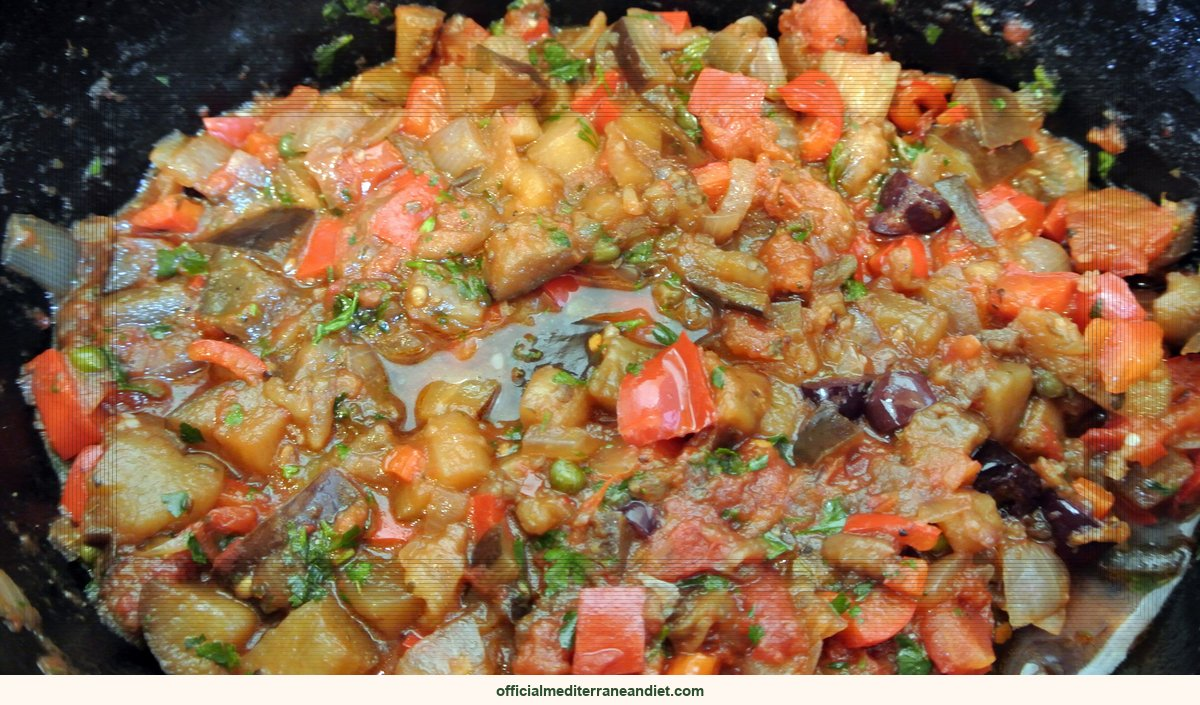
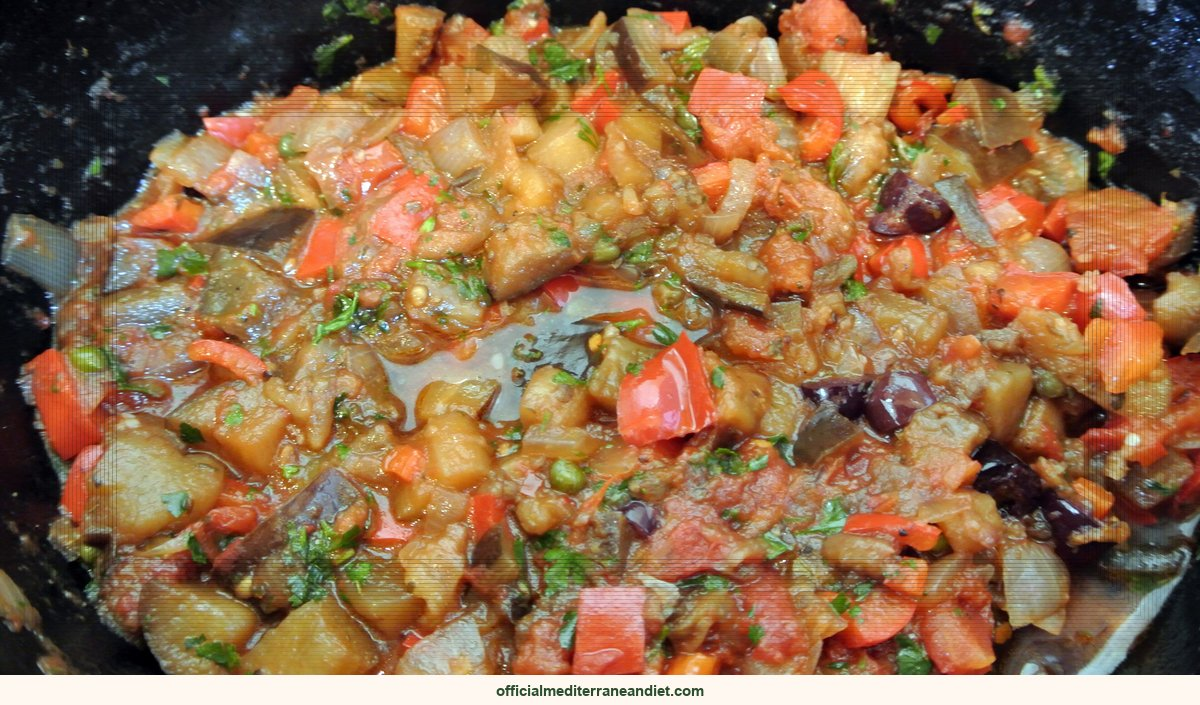
In Agrigento, Nonna Emilia begins her caponata the usual way: by salting 500 grams of cubed eggplant and letting it weep on a wooden table while half a cup of extra-virgin olive oil heats in the pan. Where she diverges is the finish. She skips the capers and folds in toasted almonds instead. She serves the stew over couscous colored a deep amber by a pinch of saffron. The dish is a specific, regional version of the classic sweet-sour stew, and it depends more on patience and good oil than on any romantic backstory.
How to make this and almond caponata recipe
This Sicilian and almond caponata recipe takes about 30 minutes to prep and 45 minutes to cook. The flavor comes from Agrigento, Sicily, where Nonna Emilia, a local farmer’s wife has made it the same way for years. The Mediterranean diet pattern this dish belongs to was recognized by UNESCO in 2010 as an Intangible Cultural Heritage, with Agrigento, Sicily as one of its emblematic communities.
Ingredients for sicilian eggplant and almond caponata with saffron couscous
- 1 large eggplant (about 500g), cubed
- 1/4 cup sea salt
- 1/2 cup extra virgin olive oil, plus more for drizzling
- 1 large onion, thinly sliced
- 2 cloves garlic, minced
- 1 red bell pepper, seeded and chopped
- 1 celery stalk, thinly sliced
- 1 (400g) can crushed tomatoes
- 1/4 cup red wine vinegar
- 2 tablespoons capers, rinsed
- 1/4 cup green olives, pitted and roughly chopped
- 1/2 cup toasted slivered almonds
- 1/4 cup raisins, soaked in warm water for 15 minutes and drained
- 1 teaspoon sugar
- Fresh basil leaves, for garnish
- 1 cup couscous
- 1 1/4 cups hot vegetable broth
- 1/4 teaspoon saffron threads
- 1 tablespoon butter
- Salt and freshly ground black pepper to taste
Method, the Agrigento, Sicily way
- Step 1: Prepare the Eggplant: Place the cubed eggplant in a colander and sprinkle with sea salt. Let it sit for 30 minutes to draw out excess moisture. Rinse thoroughly and pat dry.
- Step 2: Make the Saffron Couscous: In a small bowl, steep the saffron threads in the hot vegetable broth for 5 minutes. In a medium bowl, combine the couscous with the saffron-infused broth and butter. Cover and let stand for 5 minutes, or until the liquid is absorbed. Fluff with a fork.
- Step 3: Cook the Vegetables: Heat 1/4 cup olive oil in a large, heavy-bottomed pot or Dutch oven over medium heat. Add the onion and cook until softened, about 5 minutes. Add the garlic, bell pepper, and celery and cook for another 5 minutes, until slightly tender.
- Step 4: Build the Caponata: Stir in the crushed tomatoes, red wine vinegar, capers, olives, raisins, and sugar. Bring to a simmer, then reduce heat and cook, uncovered, for 20-25 minutes, or until the vegetables are very tender and the sauce has thickened. Stir occasionally.
- Step 5: Finish the Caponata: Gently stir in the eggplant. Cook for another 5-10 minutes, or until the eggplant is heated through. Season with salt and pepper to taste. Nonna Emilia always says, ‘A little sweetness balances the tang!’
- Step 6: Serve: Spoon the saffron couscous onto plates. Top with the Sicilian eggplant and almond caponata. Garnish with fresh basil leaves and a drizzle of extra virgin olive oil. Buon appetito!
Tips from Nonna Emilia, a local farmer’s wife
The traditional way in Agrigento, Sicily is to keep it simple. Researchers behind the PREDIMED trial found that the and almond caponata recipe pattern, anchored in olive oil and short ingredient lists, cuts cardiovascular risk roughly 30%. Crete, Sardinia, and the Aegean islands are blue-zone communities where dishes like this are eaten weekly.
Serving, storage, and what to drink
Serves 4-6. Best the day it’s made. Leftovers keep in the fridge for two days. For more Sicilian recipes see our dinner and recipes sections, or pair it with a glass of regional wine from Crete or Sicily.
Loved this recipe?
Get the free 7-day Mediterranean Diet Starter Kit
A week of simple meal plans, a pantry checklist, and our best beginner recipes, straight to your inbox.
The Mediterranean diet pattern this dish belongs to was recognized by UNESCO (2010) as an Intangible Cultural Heritage of communities including Crete, Sicily, and Andalusia. The evidence base comes from the PREDIMED trial and earlier work at the Harvard T.H. Chan School of Public Health.