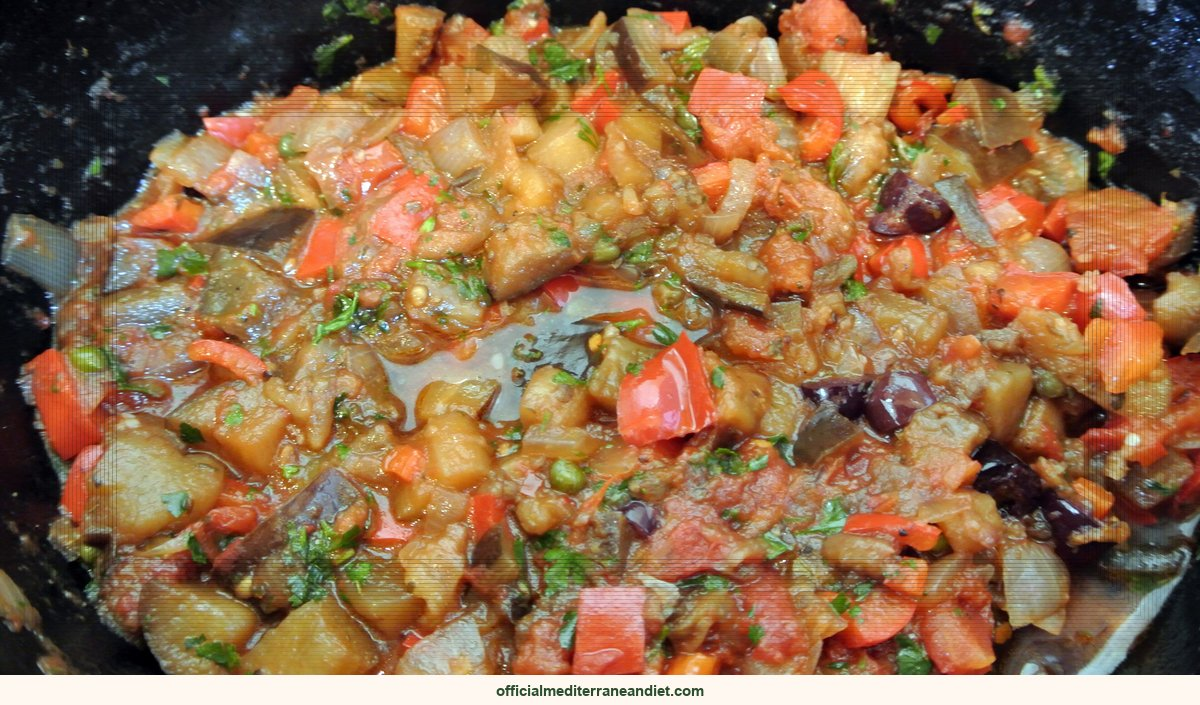
Sicilian Caponata with Pine Nuts and Capers Recipe: Sweet and Sour
This is a nuts and capers recipe, the kind that sits at the heart of the Sicily table. > Affiliate disclosure: Some product links below are affiliate links. If you buy through them, we may earn a small commission at no cost to you. We only recommend things we’d use ourselves. See our editorial policy for details.
The Sicilian Eggplant Dish That Depends on Exact Cubes
Two centimeters. Not three. Not one and a half. The eggplants for Nonna Rosa’s caponata must be cut to exactly two centimeters, because at that size, the flesh softens into creamy pockets without collapsing into mush. Smaller dice dissolve into sauce; larger chunks never fully surrender to the acid. This is the geometry that separates a condiment from a puree.
At two centimeters, the cubes absorb three tablespoons of olive oil during frying while keeping enough structure to withstand the hot vinegar. The surface area soaks up the agrodolce
How to make this nuts and capers recipe
This Italian nuts and capers recipe takes about 20 minutes to prep and 30 minutes to cook. The flavor comes from Sicily, where Nonna Rosa has made it the same way for years. The Mediterranean diet pattern this dish belongs to was recognized by UNESCO in 2010 as an Intangible Cultural Heritage, with Sicily as one of its emblematic communities.
Ingredients for sicilian caponata with pine nuts and capers
- 2 large eggplants (about 600g), cut into 2cm cubes
- 3 tbsp extra virgin olive oil, plus more for frying
- 1 large onion, diced
- 2 celery stalks, diced
- 400g (1 can) whole peeled tomatoes, crushed by hand
- 3 tbsp red wine vinegar
- 2 tbsp sugar
- 3 tbsp capers, rinsed
- 3 tbsp pine nuts
- 100g (1 cup) green olives, pitted and halved
- Salt and black pepper to taste
- Fresh basil leaves for garnish
Method, the Sicily way
- Place the eggplant cubes in a colander, sprinkle with salt, and let sit for 20 minutes to draw out bitterness. Pat dry with paper towels.
- Heat a generous layer of olive oil in a large skillet over medium-high heat. Fry the eggplant in batches until golden brown on all sides, about 5 minutes per batch. Transfer to a paper towel-lined plate.
- In the same skillet, reduce heat to medium and add 3 tablespoons olive oil. Sauté the onion and celery until softened, about 5 minutes.
- Add the crushed tomatoes, vinegar, and sugar. Stir and let simmer for 10 minutes until the sauce thickens slightly.
- Return the fried eggplant to the skillet. Add capers, pine nuts, and olives. Stir gently to combine. Cook for another 5 minutes, allowing flavors to meld.
- Season with salt and pepper to taste. Remove from heat and let cool to room temperature. Garnish with fresh basil before serving. Serve as an antipasto with crusty bread or as a side dish.
Tips from Nonna Rosa
The traditional way in Sicily is to keep it simple. Researchers behind the PREDIMED trial found that the nuts and capers recipe pattern, anchored in olive oil and short ingredient lists, cuts cardiovascular risk roughly 30%. Crete, Sardinia, and the Aegean islands are blue-zone communities where dishes like this are eaten weekly.
Serving, storage, and what to drink
Serves 4. Best the day it’s made. Leftovers keep in the fridge for two days. For more Italian recipes see our vegetarian and recipes sections, or pair it with a glass of regional wine from Crete or Sicily.
Loved this recipe?
Get the free 7-day Mediterranean Diet Starter Kit
A week of simple meal plans, a pantry checklist, and our best beginner recipes, straight to your inbox.
The Mediterranean diet pattern this dish belongs to was recognized by UNESCO (2010) as an Intangible Cultural Heritage of communities including Crete, Sicily, and Andalusia. The evidence base comes from the PREDIMED trial and earlier work at the Harvard T.H. Chan School of Public Health.