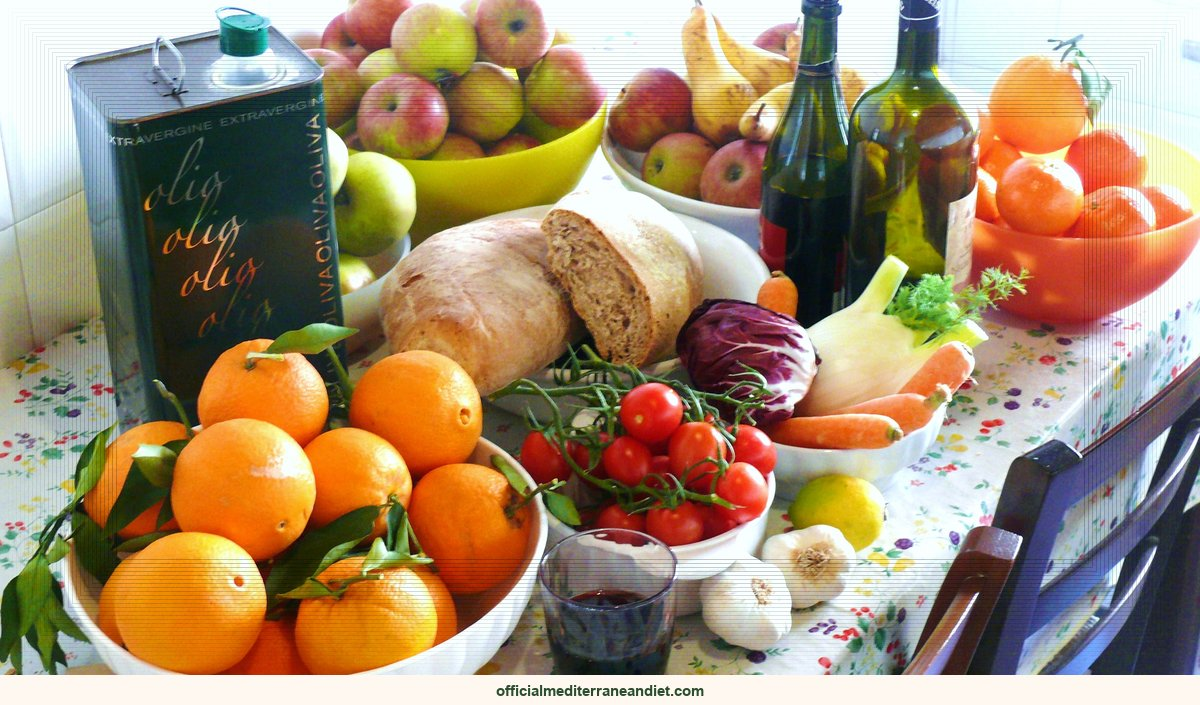
Maria Papadakis was 54 when her inflammatory markers came back high enough to worry her cardiologist. But the real story wasn’t in her bloodwork, it was in her gut. Inside her lived a community of 3.3 million microbial genes, roughly 150 times larger than her own human genome, quietly waiting for instructions. Those instructions arrived in the form of cold-pressed Cretan olive oil and wild mountain herbs.
Mediterranean diet: The Genetic Republic Within
When Maria’s cardiologist reviewed her labs, the concern centered on her hs-CRP levels, biomarkers indicating a smoldering immune system that had shifted from protective defense to chronic threat. This low-grade inflammation represents a distinct physiological state: not the acute redness and swelling of a cut or infection, but a persistent, subclinical activation of immune signaling that erodes tissues over decades. For Maria, this meant her risk of progression toward cardiovascular events had moved from theoretical to imminent.
The 2010 metagenomic sequencing study published in Nature reveals why the gut becomes the critical intervention point for such inflammation. Researchers sequenced 576.7 gigabases of genetic material from faecal samples of 124 European individuals, assembling a catalogue of 3.3 million non-redundant microbial genes. This dataset, approximately 150 times larger than the human gene complement, indicates that each individual harbors at least 160 prevalent bacterial species, with the entire cohort sharing between 1,000 and 1,150 such species. Over 99% of these genes are bacterial, creating a genetic workforce that outnumbers human genes by orders of magnitude.
These microbial genes do not merely digest food; they manufacture metabolites that communicate directly with human immune cells. Short-chain fatty acids, lipopolysaccharides, and secondary bile acids produced by bacterial gene products bind to receptors on intestinal epithelial cells, triggering signaling cascades that either dampen or amplify inflammatory responses throughout the body. When Maria consumed industrial seed oils prior to her diagnosis, she was feeding bacterial populations that favored pro-inflammatory lipid profiles. The shift to Cretan eating did not simply add nutrients, it altered the transcriptional activity of millions of microbial genes, shifting their metabolic output toward anti-inflammatory compounds that regulate the very pathways measured in her bloodwork.
The Mathematics of Chronic Risk
To understand why Maria’s cardiologist worried, one must examine the quantified burden of inflammatory-driven disease. The Global Burden of Disease Study 2010, published in The Lancet, analyzed 67 distinct risk factors across 21 global regions, measuring health loss in disability-adjusted life years (DALYs), the sum of years lived with disability (YLD) and years of life lost (YLL) due to premature mortality. This systematic analysis reveals that chronic inflammation operates as a central mechanism connecting disparate conditions: cardiovascular disease, metabolic dysfunction, and autoimmune pathologies all share inflammatory pathways as causal intermediaries.
Maria’s elevated markers placed her within a statistical framework where low-grade immune activation compounds silently over years. Unlike acute inflammation, which resolves after injury repair, chronic inflammation involves the continuous recruitment of macrophages and the sustained release of cytokines such as interleukin-6 and tumor necrosis factor-alpha. These molecules promote endothelial dysfunction, arterial plaque instability, and insulin resistance. The American Heart Association’s 2021 statistical update confirms that such inflammatory processes remain primary drivers of heart disease and stroke burden, creating a trajectory of accumulating disability that manifests first in subtle symptoms, fatigue, joint stiffness, brain fog, before emerging as diagnosed pathology.
The intervention had to address not just calories or macronutrients, but the molecular environment driving this persistent activation. Maria required a dietary strategy that could modulate the cellular machinery of inflammation itself.
Cellular Mail and Mountain Herbs
The mechanism by which Cretan eating alters inflammation extends beyond simple antioxidant delivery or fiber fermentation. It involves extracellular vesicles (EVs), nanoscale lipid-bound particles that cells release to transfer proteins, lipids, and nucleic acids between tissues. Once dismissed as cellular debris, EVs are now recognized, per a 2015 comprehensive analysis drawing on expertise from 27 European countries, the United States, and Australasia, as potent vehicles of intercellular communication capable of modulating both physiological homeostasis and pathological processes.
When Maria consumed unfiltered extra agoureleo, early-harvest olive oil rich in oleocanthal, a polyphenol with ibuprofen-like properties, and omega-3s from marida (small whitebait fish eaten whole), she may have altered the cargo of EVs released by her intestinal epithelial cells. These vesicles travel through the bloodstream, delivering their molecular contents to distant immune cells. Dietary fats influence the lipid composition of EV membranes, potentially changing which proteins and RNA molecules get packaged inside. In this model, food functions as information at the nanoscale: the specific chemistry of Cretan olive oil and wild fish rewrites the cellular mail being sent between the gut and the immune system, potentially modulating macrophage behavior and cytokine production in distant tissues.
Maria’s actual diet grounded this mechanism in specific, accessible foods. She foraged horta, wild greens such as chicory, dandelion, and amaranth, from the hillsides, boiling them and dressing them with lemon and oil. These bitter greens contain prebiotic fibers that feed anti-inflammatory bacterial species while delivering polyphenols that pass into the bloodstream. The marida she consumed provided not just omega-3 fatty acids, but intact calcium from tiny bones and organ meats containing fat-soluble nutrients often lost in filleted fish. This was not a diet of isolation or supplementation, but of whole-food matrices where nutrients exist in their natural complexes, interacting with the gut’s 3.3 million genes in ways that isolated extracts cannot replicate.
Translating Cretan Eating to Your Kitchen
Adopting Maria’s approach requires understanding the specific qualities that make Cretan foods distinct, then finding practical equivalents. For olive oil, seek agoureleo or early-harvest oils pressed from unripe olives, these contain higher concentrations of oleocanthal, detectable by the peppery, throat-catching sensation when swallowed. Unfiltered oils retain polyphenol-rich sediment that filtered varieties lose. Store in dark glass and consume within months of pressing, as these compounds oxidize rapidly.
For horta, substitute with dandelion greens, chicory, mustard greens, or beet tops from farmers markets, cultivated varieties lack the wild bitterness but retain similar fiber and phytonutrient profiles. Prepare by boiling until tender, then dressing generously with olive oil and lemon juice; the acid and fat increase bioavailability of fat-soluble compounds while the cooking process reduces oxalates that might otherwise irritate sensitive guts.
Replace marida with sardines, anchovies, or smelt, eaten whole including bones and organs. The calcium from softened bones and the omega-3s from the flesh provide the matrix of nutrients that support anti-inflammatory pathways. If fish is unavailable, walnuts and flaxseeds offer omega-3s but lack the complete nutrient profile of whole small fish.
Implement this not as a temporary cleanse but as a restructuring of your dietary foundation. The gut’s
Regional traditions worth knowing
What gets called “the Mediterranean diet” is really a constellation of distinct regional habits. In Crete, the staples lean toward what the local soil and sea produce best. In Provence, the same broad principles get expressed through different ingredients and cooking traditions. And in Puglia, you’ll find another variation again, same spirit, different specifics. The closer you get to a specific place, the more useful the diet becomes as a model.
For more, see our Mediterranean diet for beginners guide and browse all our Mediterranean recipes.
Studies referenced
- A human gut microbial gene catalogue established by metagenomic sequencing — Nature (2010).
- A comparative risk assessment of burden of disease and injury attributable to 67 risk factors and risk factor clusters in 21 regions, 1990-2010: a systematic analysis for the Global Burden of Disease Study 2010 — Lancet (London, England) (2012).
- Biological properties of extracellular vesicles and their physiological functions — Journal of extracellular vesicles (2015).
- Heart Disease and Stroke Statistics-2021 Update: A Report From the American Heart Association — Circulation (2021).
Want to eat this way without the guesswork?
Get the free 7-day Mediterranean Diet Starter Kit
A week of simple meal plans, a pantry checklist, and our best beginner recipes — straight to your inbox.
Tools & pantry for this recipe
A few things that make this easier. These are affiliate links, so we may earn a small commission at no extra cost to you; we only suggest what we’d actually use ourselves. See our editorial policy.