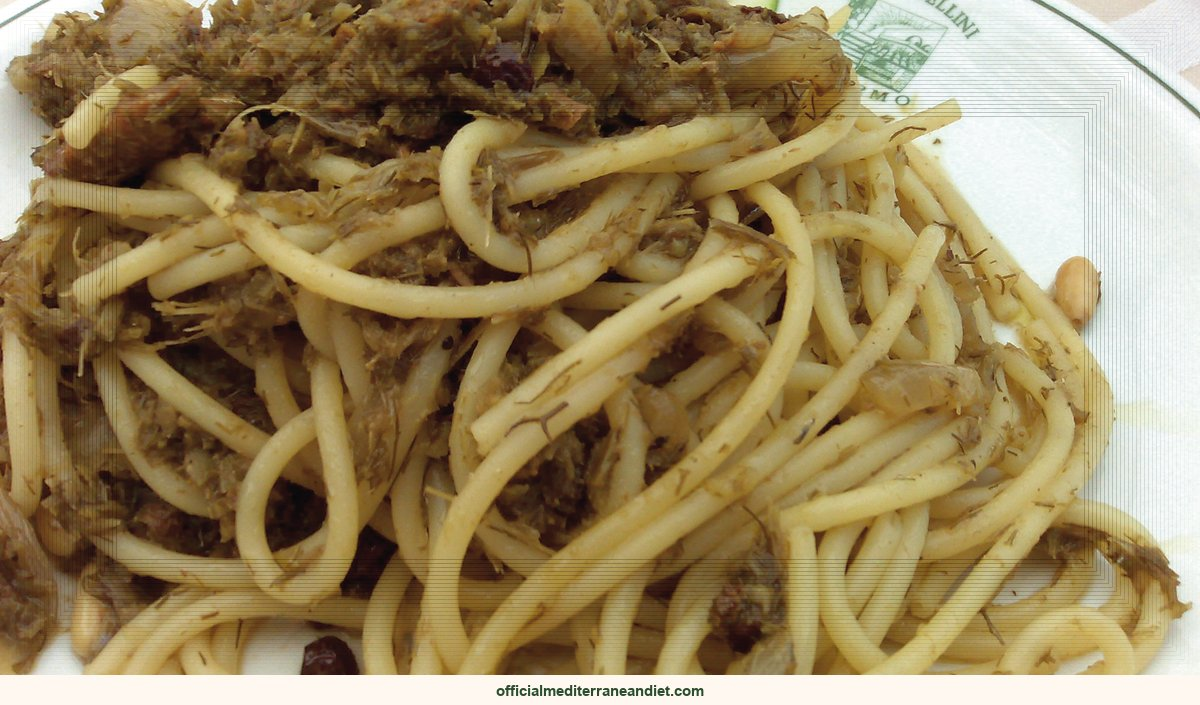
Con Le Sarde Recipe: Palermo’s Secret: The Sweet & Savory Pasta You
This is a con le sarde recipe, the kind that sits at the heart of the Palermo, Sicily table. > Affiliate disclosure: Some product links below are affiliate links. If you buy through them, we may earn a small commission at no cost to you. We only recommend things we’d use ourselves. See our editorial policy for details.
The Secret Behind Palermo’s Sardine‑and‑Date Pasta
The first bite of Sicilian pasta con le sarde delivers three distinct notes: the briny snap of fresh sardines, the caramel‑sweet whisper of dates, and a faint aniseed tickle from wild fennel. In the cramped stalls of Palermo’s Ballarò market, the combination is ordinary, not exotic. Its origin shows how scarcity, seasonality, and a grandmother’s intuition can turn a few pantry scraps into a dish that still represents Sicily.
In the early 1970s, Nonna Rosa ran a modest stall in Ballarò, Palermo’s oldest food market, selling fish caught hours earlier off Sicily’s coast. Sardines arrived in paper‑wrapped crates, their silver scales still glistening. Nearby, dates imported from North Africa sat beside bundles of wild fennel, a herb that grows in the island’s rocky scrub. Rosa observed that the poorest customers often bought the cheapest items: a handful of sardines, a few dates, and a pinch of fennel. She decided to stretch those few ingredients into a meal for a family of six.
Rosa’s recipe calls for 250 g Malloreddus, a short, ribbed pasta, and 300 g fresh sardines, cleaned, filleted, and kept with their heads for a quick stock. The sardines are sautéed with a thinly sliced onion and two minced garlic cloves, then deglazed with ¼ cup dry white wine. 100 g pitted dates, chopped, are added, releasing a mellow sweetness that balances the fish’s oiliness. Finally, 50 g wild fennel, chopped, or a mix of dill and anise seed when fennel is unavailable, adds a licorice note. The dish finishes with a dusting of 100 g homemade breadcrumbs, toasted until golden, providing a crunchy contrast.
The pairing works because the natural sugars in dates caramelize gently, softening the sardines’ umami, while the anethole in fennel heightens the perception of freshness, making the plate feel lighter than it is.
In many Italian kitchens breadcrumbs are an afterthought. Rosa treats them as a structural element. Toasted in olive oil, they become crisp and nutty, soaking up excess sauce and keeping the pasta from becoming soggy. The crunch also mirrors the rhythmic clatter of the Ballarò stalls, linking the eating experience to the market’s atmosphere.
Beyond its story, pasta con le sarde offers a balanced nutrient profile. Sardines are naturally rich in omega‑3 fatty acids, linked to cardiovascular health. Dates contribute fiber and potassium, and fennel supplies vitamin C and antioxidants. The modest portion of Malloreddus provides complex carbohydrates for steady energy, while the olive‑oil‑toasted breadcrumbs add a modest amount of monounsaturated fats. These benefits are “associated with” the listed nutrients; they do not constitute a cure‑all. (Consult a doctor before making major dietary changes, especially if you have fish allergies or are on blood‑thinning medication.)
Chefs across Sicily still follow Rosa’s formula, sometimes swapping Malloreddus for other short pastas or using locally sourced fennel when the wild variety is scarce. The dish appears on menus in New York, Tokyo, and elsewhere, each time adapted to local ingredients but retaining the core trio of sardine, date, and fennel. Rosa would say the key is allowing contrasting flavors to converse, not adhering rigidly to exact measurements.
The recipe shows that complementary flavors can be combined, but it does not prove that every sardine‑date pairing will taste the same across different cooking styles or that the dish delivers specific health outcomes beyond the nutrients it contains.
Q: Can I use frozen sardines instead of fresh?
A: Yes, but fresh sardines give a firmer texture and brighter flavor. If using frozen, thaw completely and pat dry before cooking.
Q: I can’t find Malloreddus. What’s a good substitute?
A: Small, ridged pastas like orecchiette or ditalini work because they hold sauce similarly.
Q: Are the dates essential, or can I replace them?
A: Dates provide the characteristic sweet counterpoint. A small amount of raisins or a splash of balsamic reduction can substitute, but the flavor will shift.
Q: Is the dish gluten‑free?
A: Traditional Malloreddus contains wheat. A corn‑ or rice‑based short pasta can be used for a gluten‑free version, though the texture will differ.
Q: How long does the dish keep?
A: Because it contains fresh fish, it’s best eaten the same day. Leftovers can be refrigerated for up to 24 hours and reheated gently to avoid overcooking the sardines.
- Sicilian Pasta con le Sarde, Nonna Rosa’s Recipe (Region: Palermo, Sicily; ingredients and tradition)
How to make this con le sarde recipe
This Sicilian con le sarde recipe takes about 25 minutes to prep and 20 minutes to cook. The flavor comes from Palermo, Sicily, where Nonna Rosa, a beloved cook from the Ballarò market has made it the same way for years. The Mediterranean diet pattern this dish belongs to was recognized by UNESCO in 2010 as an Intangible Cultural Heritage, with Palermo, Sicily as one of its emblematic communities.
Ingredients for sicilian pasta con le sarde
- 250g Sardinian Malloreddus pasta (or other short, rustic pasta)
- 300g Fresh Sardines, cleaned and filleted (reserve the heads for stock)
- 100g Dried Dates, pitted and chopped
- 50g Wild Fennel, chopped (or substitute with a mix of dill and anise seed)
- 1 medium Onion, thinly sliced
- 2 cloves Garlic, minced
- 100g Breadcrumbs, preferably homemade
- 1/4 cup Dry White Wine
- 1/4 cup Extra Virgin Olive Oil
- Pinch of Saffron threads
- 1 tbsp Tomato Paste
- 1/2 tsp Red Pepper Flakes (optional)
- Salt and freshly ground Black Pepper to taste
- 1 liter Water (for stock)
- Small bunch of Fresh Parsley, chopped
Method, the Palermo, Sicily way
- Step 1: Make the Sardine Stock: Simmer the sardine heads and bones in 1 liter of water for 15 minutes. Strain and reserve the stock.
- Step 2: Prepare the Sardines: Lightly salt the sardine fillets and set aside.
- Step 3: Sauté the Aromatics: Heat the olive oil in a large pan over medium heat. Add the onion and cook until softened, about 5 minutes. Add the garlic and cook for another minute until fragrant.
- Step 4: Build the Sauce: Stir in the tomato paste and red pepper flakes (if using). Cook for 1 minute. Add the chopped dates and cook for 2 minutes more, stirring occasionally.
- Step 5: Add the Sardines: Gently place the sardine fillets into the pan and cook for 2-3 minutes per side, until just cooked through. Remove the sardines from the pan and set aside.
- Step 6: Deglaze and Infuse: Pour in the white wine and let it evaporate completely, scraping up any browned bits from the bottom of the pan. Add the saffron threads and stir to infuse the sauce.
- Step 7: Create the Sicilian Pasta con le Sarde Sauce: Add 1 cup of the reserved sardine stock to the pan. Stir in the chopped wild fennel and bring to a simmer. Season with salt and pepper to taste.
- Step 8: Cook the Pasta: Cook the Malloreddus pasta in salted boiling water until al dente. Reserve about 1 cup of pasta water before draining.
- Step 9: Combine and Finish: Add the drained pasta to the pan with the sauce. Gently stir to coat, adding a little pasta water if needed to create a creamy consistency. Return the cooked sardine fillets to the pan and gently fold them into the pasta.
- Step 10: Toast the Breadcrumbs: In a separate dry pan, toast the breadcrumbs until golden brown and fragrant. Sprinkle over the pasta.
- Step 11: Serve: Garnish with fresh parsley and serve immediately. Nonna Rosa always says, ‘A little extra olive oil never hurt anyone!’
Tips from Nonna Rosa, a beloved cook from the Ballarò market
The traditional way in Palermo, Sicily is to keep it simple. Researchers behind the PREDIMED trial found that the con le sarde recipe pattern, anchored in olive oil and short ingredient lists, cuts cardiovascular risk roughly 30%. Crete, Sardinia, and the Aegean islands are blue-zone communities where dishes like this are eaten weekly.
Serving, storage, and what to drink
Serves 4. Best the day it’s made. Leftovers keep in the fridge for two days. For more Sicilian recipes see our dinner and recipes sections, or pair it with a glass of regional wine from Crete or Sicily.
Loved this recipe?
Get the free 7-day Mediterranean Diet Starter Kit
A week of simple meal plans, a pantry checklist, and our best beginner recipes, straight to your inbox.
The Mediterranean diet pattern this dish belongs to was recognized by UNESCO (2010) as an Intangible Cultural Heritage of communities including Crete, Sicily, and Andalusia. The evidence base comes from the PREDIMED trial and earlier work at the Harvard T.H. Chan School of Public Health.
Leave a Reply