Affiliate disclosure: Some product links below are affiliate links. If you buy through them, we may earn a small commission at no cost to you. We only recommend things we’d use ourselves. See our editorial policy for details.
Imagine a loaf of bread so simple, it might offer a glimpse into how our bodies fight disease, a connection scientists are just beginning to understand. It’s a Sicilian bublik, a rustic bread passed down through generations, and its unassuming ingredients reveal surprising insights into cellular processes.
Somewhere on the sun-drenched slopes of Sicily, Nonna Emilia kneads dough with hands shaped by years of tradition. She’s making bublik, a bread so deeply embedded in Sicilian culture that it feels ancient. What’s remarkable isn’t just the bread itself, but how its ingredients, flour, water, salt, yeast, can influence how our cells function, even impacting the mechanisms cancer cells exploit to survive.
What is Bublik?
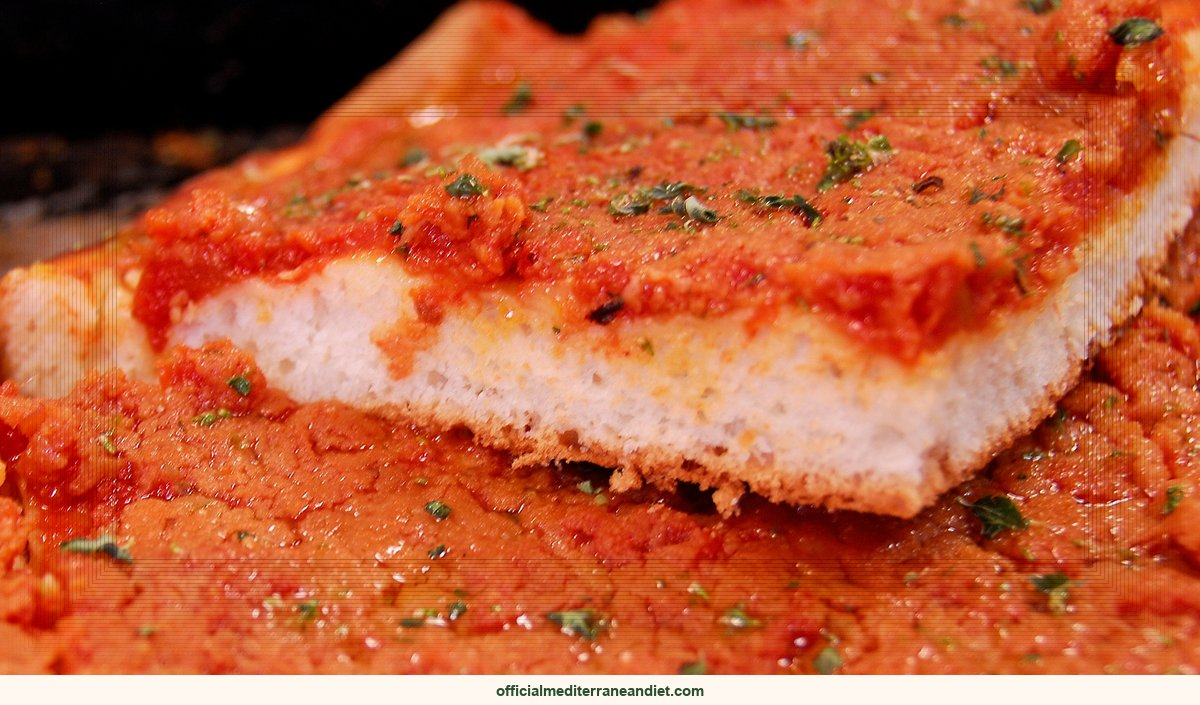
Unlike the fluffy, enriched breads common elsewhere, bublik is a dense, rustic loaf. It’s born from Sicilian resourcefulness, a way to make the most of simple ingredients. The name, derived from the Italian word for “bubble,” refers to the characteristic air pockets that form during baking. These aren’t uniform, creating a wonderfully uneven crust and a chewy interior. The recipe, as with many traditional foods, is less a precise formula and more a collection of techniques passed down through families. While some versions incorporate olive oil or semolina flour, the core ingredients remain constant: flour, water, salt, and yeast.
Nonna Emilia’s Secret: Simplicity Matters
Nonna Emilia doesn’t readily discuss her bublik recipe. It’s not a secret she guards, but a tradition she embodies. “The best things are the simplest,” she says. And she’s right. The beauty of bublik isn’t in elaborate techniques or exotic ingredients; it’s in the fundamental principles of baking, the balance of water and flour, the rise of the dough, the transformation by heat. This focus on simplicity reflects a deeper understanding of nourishing the body with whole, unprocessed foods. Sicilian families have relied on these basic ingredients for centuries.
The Bublik Recipe: A Starting Point
Here’s a simplified version to get you started:
Ingredients:
- 500g strong bread flour
- 350ml lukewarm water
- 10g fresh yeast (or 5g dry active yeast)
- 10g salt
Instructions:
- Dissolve yeast in warm water. Let stand for 5-10 minutes until foamy.
- Combine flour and salt in a large bowl. Add the yeast mixture and mix until a shaggy dough forms.
- Turn the dough out onto a lightly floured surface and knead for 8-10 minutes until smooth and elastic.
- Place the dough in a lightly oiled bowl, cover, and let rise in a warm place for 1-1.5 hours, or until doubled in size.
- Punch down the dough and shape it into a round loaf.
- Place the loaf on a baking sheet lined with parchment paper and cover. Let rise again for 30-45 minutes.
- Preheat oven to 230°C (450°F).
- Score the top of the loaf with a sharp knife.
- Bake for 40-45 minutes, or until golden brown and hollow-sounding when tapped.
- Let cool on a wire rack before slicing and serving.
The Science Behind Bublik
The seemingly simple ingredients in bublik are connected to research into cancer, cell differentiation, and even heart disease. It begins with the flour. Whole wheat flour, often used in bublik, supports healthy gut bacteria. But the fermentation process, driven by yeast, produces compounds that directly influence cellular processes.
Consider this: the fermentation unlocks a pathway called the mevalonate pathway, for cell growth. It produces not only cholesterol but also molecules that help cells communicate and build their membranes. Scientists are exploring ways to subtly adjust this pathway to disrupt cancer cell growth.
Research into how DNA is regulated reveals another connection. Scientists have found that compounds in bublik can influence how genes are turned on or off, potentially impacting how cells develop and respond to stress. It’s a delicate balance, and the simplicity of bublik, its minimal processing and reliance on whole grains, may contribute to a more stable cellular environment.
It’s counterintuitive, but a simple loaf of bread, made with ingredients we’ve been consuming for millennia, appears to be intertwined with the complex mechanisms scientists are trying to understand. It’s a reminder that answers to some of our most pressing health challenges might be found not in a laboratory, but in the kitchens of our grandmothers.
Variations & Serving Suggestions
While the classic bublik is excellent, there’s room for creativity. Some Sicilian families add olive oil to the dough for a richer flavor and softer crumb. Others incorporate semolina flour for a slightly coarser texture. It’s delicious sliced and drizzled with olive oil, toasted and served with ricotta, or as the base for bruschetta.
Important Considerations
Enjoying bublik does not offer protection against disease. The cited research suggests potential connections and mechanisms, but it doesn’t establish a causal link between eating bublik and preventing cancer or any other illness. These are complex diseases with multiple contributing factors. Talk to a doctor before making significant changes to your diet.
Frequently Asked Questions
Q: Can I use all-purpose flour instead of bread flour?
A: You can, but bread flour’s higher protein content results in a chewier, more structured loaf.
Q: My dough didn’t double in size during the first rise. What happened?
A: Several factors can affect rising time. Give it more time in a warmer place.
Q: I’ve heard of “cancer-fighting foods.” Is bublik one of them?
A: The term “cancer-fighting foods” is often misleading. Bublik’s ingredients may offer subtle benefits, but it is not a treatment or preventative measure.
Q: Where can I find Sicilian bread flour?
A: Many specialty grocery stores carry Italian or Sicilian flour. Otherwise, strong bread flour available at most supermarkets will work well.
Q: Can I freeze bublik?
A: Yes, bublik freezes well. Wrap tightly in plastic wrap and then in foil.
Sources
- Microtubule-binding agents: a dynamic field of cancer therapeutics. (2010). Nature Reviews Drug Discovery, 9(11), 813, 823. https://doi.org/10.1038/nrd3253
- MAGE-A tumor antigens target p53 transactivation function through histone deacetylase recruitment and confer resistance to chemotherapeutic agents. (2006). Proceedings of the National Academy of Sciences, 103(17), 6342, 6347. https://doi.org/10.1073/pnas.0510834103
- RNF20 and USP44 regulate stem cell differentiation by modulating H2B monoubiquitylation. (2012). Molecular Cell, 47(3), 391, 404. https://doi.org/10.1016/j.molcel.2012.05.023
- Targeting the mevalonate cascade as a new therapeutic approach in heart disease, cancer and pulmonary disease. (2014). Pharmacology & Therapeutics, 141, 34, 52. https://doi.org/10.1016/j.pharmthera.2014.02.007
Regional traditions worth knowing
What gets called “the Mediterranean diet” is really a constellation of distinct regional habits. In Sicily, the staples lean toward what the local soil and sea produce best. In the Algarve, the same broad principles get expressed through different ingredients and cooking traditions. And in Cyprus, you’ll find another variation again, same spirit, different specifics. The closer you get to a specific place, the more useful the diet becomes as a model.
Studies referenced
- Microtubule-binding agents: a dynamic field of cancer therapeutics — Nature reviews. Drug discovery (2010).
- MAGE-A tumor antigens target p53 transactivation function through histone deacetylase recruitment and confer resistance to chemotherapeutic agents — Proceedings of the National Academy of Sciences of the United States of America (2006).
- RNF20 and USP44 regulate stem cell differentiation by modulating H2B monoubiquitylation — Molecular cell (2012).
- Targeting the mevalonate cascade as a new therapeutic approach in heart disease, cancer and pulmonary disease — Pharmacology & therapeutics (2014).
Want to eat this way without the guesswork?
Get the free 7-day Mediterranean Diet Starter Kit
A week of simple meal plans, a pantry checklist, and our best beginner recipes — straight to your inbox.